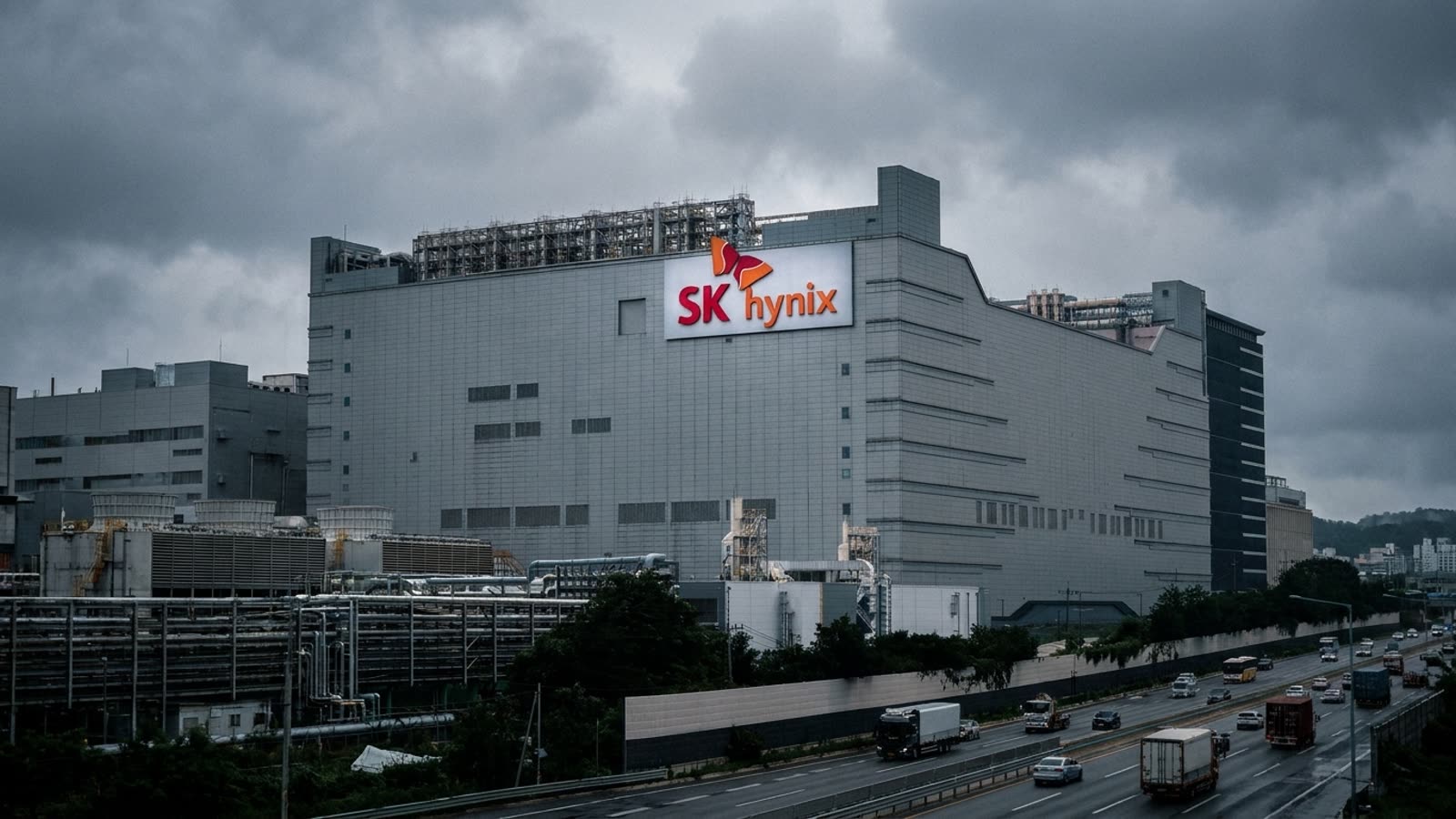
The artificial intelligence boom has a favorite chipmaker, and it is not the one most people would have guessed five years ago. SK Hynix just reported third-quarter operating profit that crushed analyst expectations, driven by insatiable demand for the high-bandwidth memory chips that power Nvidia's data-center GPUs. The company also announced a stock buyback, the universal signal that management believes its shares are undervalued even after a year of extraordinary gains. This is no longer a cyclical upturn; it is a structural reshaping of the semiconductor hierarchy.
The HBM goldmine
High-bandwidth memory has become the bottleneck component in AI training clusters. Nvidia cannot ship enough H100 and H200 accelerators, and each of those cards requires stacks of HBM chips that only three companies on Earth can manufacture at scale: SK Hynix, Samsung, and Micron. SK Hynix moved earliest and most aggressively into HBM3 and HBM3E production, locking in multi-year supply agreements with Nvidia that effectively guaranteed it the lion's share of the market during the critical ramp-up phase. Samsung, long the dominant force in memory, fumbled its HBM yield rates and lost ground it is still struggling to recover.
Samsung's stumble
The contrast is stark. Samsung Electronics, which once seemed invincible in semiconductors, has spent the past eighteen months issuing apologies and reorganizing its chip division. Its HBM3 yields lagged badly, and Nvidia reportedly rejected early batches. The company has announced emergency investments and management shake-ups, but catching up in advanced packaging — the three-dimensional stacking technology that makes HBM possible — is not a matter of simply writing larger checks. SK Hynix's lead is measured in engineering know-how and production experience, assets that cannot be acquired overnight.
What the buyback signals
Stock buybacks in the semiconductor industry are often defensive, a way to support share prices during downturns. This one is different. SK Hynix is buying back stock from a position of strength, signaling that it believes the AI infrastructure cycle has years left to run and that its current valuation does not fully reflect its earnings trajectory. For investors parsing the AI supply chain, this is a more reliable indicator than any conference-call rhetoric.
Our take
The AI trade has been dominated by Nvidia's gravitational pull, but the real story is the reordering of its suppliers. SK Hynix has executed flawlessly while Samsung has stumbled, and in capital-intensive industries, leads compound. Barring a major Samsung breakthrough or a sudden collapse in AI spending — neither of which appears imminent — SK Hynix is on track to become the defining memory company of the AI era. Sometimes the most important technology stories are not about who builds the brain, but who builds the blood vessels.