The last time a serious player tried to manufacture consumer electronics entirely on American soil, the effort collapsed under the weight of economics. Foxconn's Wisconsin factory, announced with fanfare in 2017, became a cautionary tale of political theater meeting industrial reality. Now Palmer Luckey, the defense-tech wunderkind who sold Oculus to Facebook and parlayed the proceeds into a drone empire, is betting that national security anxiety has finally made the impossible viable.
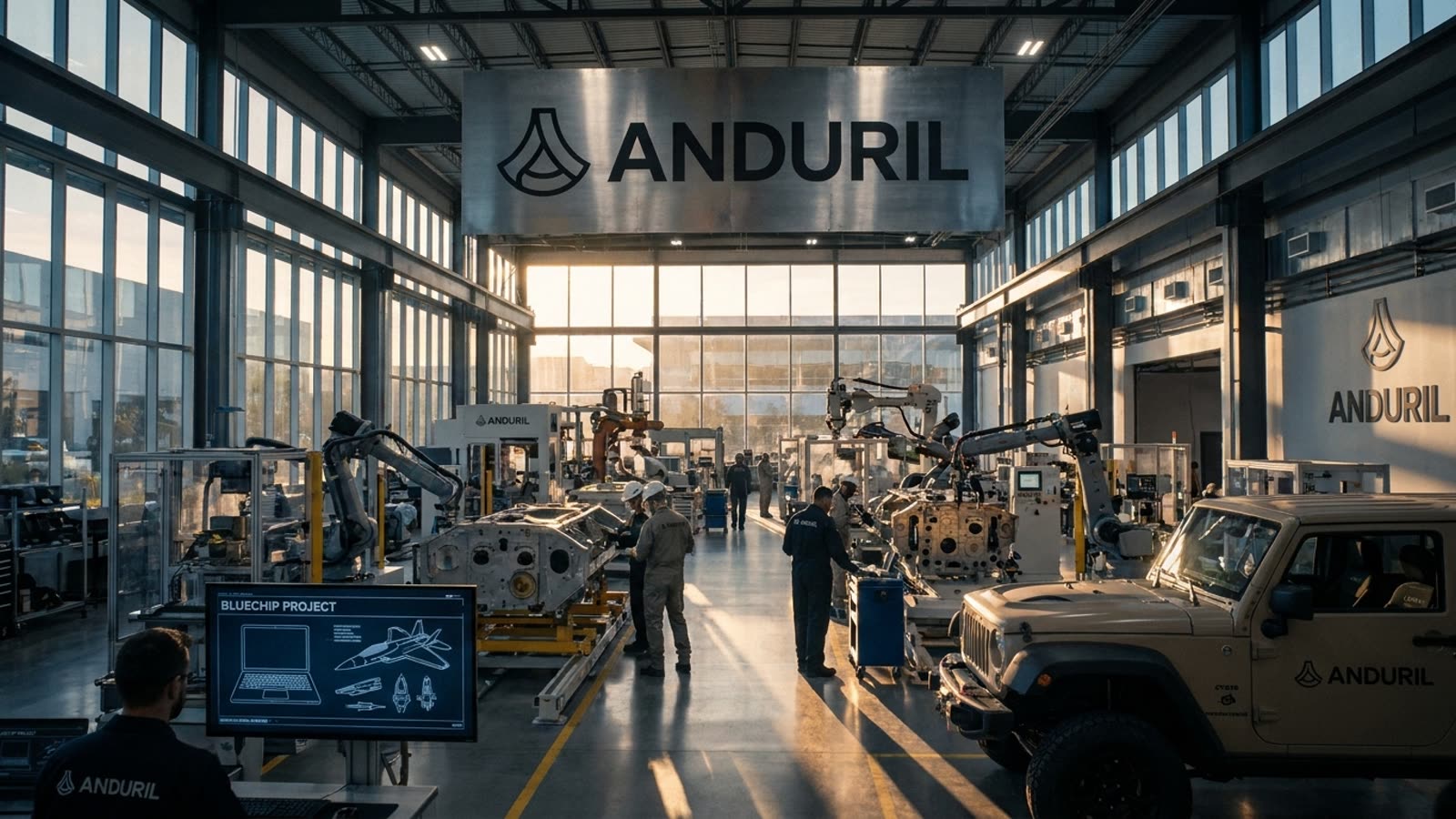
BlueChip, the joint venture between Anduril and Qualcomm announced Tuesday, is not merely an assembly operation with patriotic branding. Luckey is promising something far more ambitious: a laptop whose every component—processor, memory, display glass, battery cells—is manufactured within American borders. The claim, if realized, would represent a genuine industrial achievement. It would also represent a direct challenge to the semiconductor supply chains that currently run through Taiwan, South Korea, and China.
The security premium
The pitch is straightforward. Government agencies and defense contractors operate under increasingly strict rules about hardware provenance. A laptop with a verifiable American pedigree commands a premium that might—might—offset the cost differential of domestic production. Anduril already sells autonomous systems to the Pentagon at prices that would make consumer-electronics executives weep. The question is whether that model scales down to something resembling a commercial product.
Qualcomm's involvement is the credibility anchor. The San Diego chipmaker has spent years developing ARM-based processors for Windows machines, and its Snapdragon X Elite chips now power laptops from every major manufacturer. Building those chips in American fabs is technically possible, if expensive. Building the surrounding ecosystem—the capacitors, the connectors, the thermal paste—is the harder problem.
The CHIPS Act tailwind
BlueChip arrives at a convenient moment. The CHIPS and Science Act has poured tens of billions into domestic semiconductor manufacturing, with Intel, TSMC, and Samsung all breaking ground on American facilities. The political appetite for supply chain resilience remains bipartisan, one of the few issues where progressive economic nationalists and national security hawks find common ground. Luckey, who has cultivated relationships across the political spectrum with the deftness of a defense lobbyist, is positioning Anduril to capture subsidies from whoever wins in 2028.
The initial production run will reportedly number in the low thousands, aimed squarely at government buyers. Consumer availability, if it ever materializes, remains years away. The price point has not been disclosed, though industry analysts suggest a fully domestic laptop would need to retail at three to four times the cost of a comparable Dell or HP machine.
Our take
Luckey has a gift for making the implausible sound inevitable. BlueChip may ultimately prove to be vaporware with a press release, or it may become the template for a new category of premium patriotic hardware. What it certainly is, right now, is a bet that the political economy of technology has shifted permanently—that "made in China" has become a liability rather than a competitive advantage, at least for a certain class of buyer. Whether that class is large enough to sustain a manufacturing base remains the trillion-dollar question.