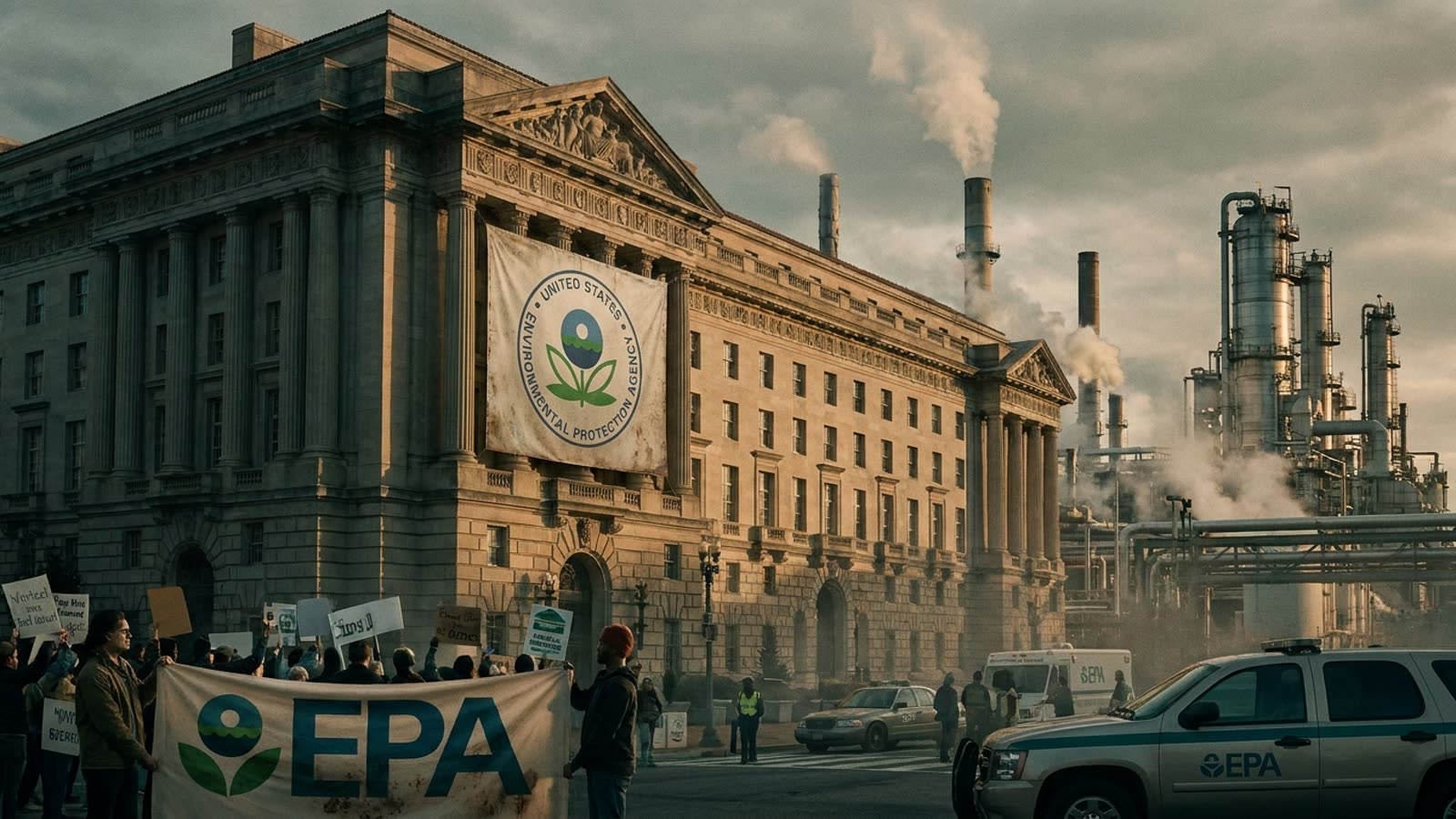
The Environmental Protection Agency is retreating from one of the most consequential climate regulations of the past decade, loosening methane rules for oil and gas producers in a reversal that hands the fossil fuel industry a victory it barely had to fight for.
The Biden administration's 2024 methane regulations were hailed as a breakthrough — the first direct federal limits on emissions of a gas roughly 80 times more potent than carbon dioxide over a 20-year horizon. Oil field flaring, leaky pipelines, and venting from storage tanks were finally going to face real scrutiny. The industry complained, lobbied, and waited. Now, with commodity prices soft and midterm politics looming, the rules are being quietly dismantled from within.
The arithmetic of inaction
Methane accounts for roughly 30 percent of global warming since the industrial revolution, and the oil and gas sector is its largest industrial source in the United States. The original EPA framework would have required continuous monitoring at thousands of well sites, mandatory leak repairs within days of detection, and steep fines for repeat offenders. Industry groups estimated compliance costs in the tens of billions over a decade.
The revised approach, according to people familiar with the agency's plans, shifts from mandatory monitoring to self-reporting, extends repair timelines, and narrows the definition of what constitutes a violation. Environmental groups calculate the changes could allow an additional several million metric tons of methane to escape annually — the climate equivalent of dozens of coal-fired power plants running at full capacity.
Why now?
The timing is nakedly political. With midterm elections weeks away, the administration is desperate to avoid headlines about rising energy costs. Natural gas prices have stabilized after last winter's volatility, and any regulatory action that could be blamed for price increases is being shelved. The oil lobby, meanwhile, has made clear that methane enforcement was its top grievance — more than drilling permits, more than pipeline approvals.
There is also a bureaucratic logic. The EPA under its current leadership has struggled to defend aggressive rules in federal court, losing several high-profile cases on procedural grounds. A preemptive softening of methane standards may be an attempt to avoid another embarrassing judicial rebuke.
The international credibility problem
The United States was the driving force behind the Global Methane Pledge, a 2021 commitment by more than 150 countries to cut methane emissions 30 percent by 2030. American diplomats have spent years lecturing developing nations about the urgency of plugging leaks and ending flaring. This rollback makes those lectures considerably harder to deliver with a straight face.
European regulators, already skeptical of American climate commitments after the Trump-era Paris withdrawal, are watching closely. The EU's own methane import standards, which will penalize gas from high-emission sources, could soon treat American LNG the same as Russian pipeline gas — a reputational and commercial blow.
Our take
This is what climate policy failure looks like in practice: not a dramatic withdrawal from international agreements, but a thousand small surrenders dressed up as regulatory flexibility. The Biden administration's methane rules were imperfect but meaningful. Their quiet gutting, two years later, confirms what the oil industry always suspected — that American climate ambition has a shelf life measured in election cycles, not atmospheric half-lives. The atmosphere, unfortunately, does not vote.