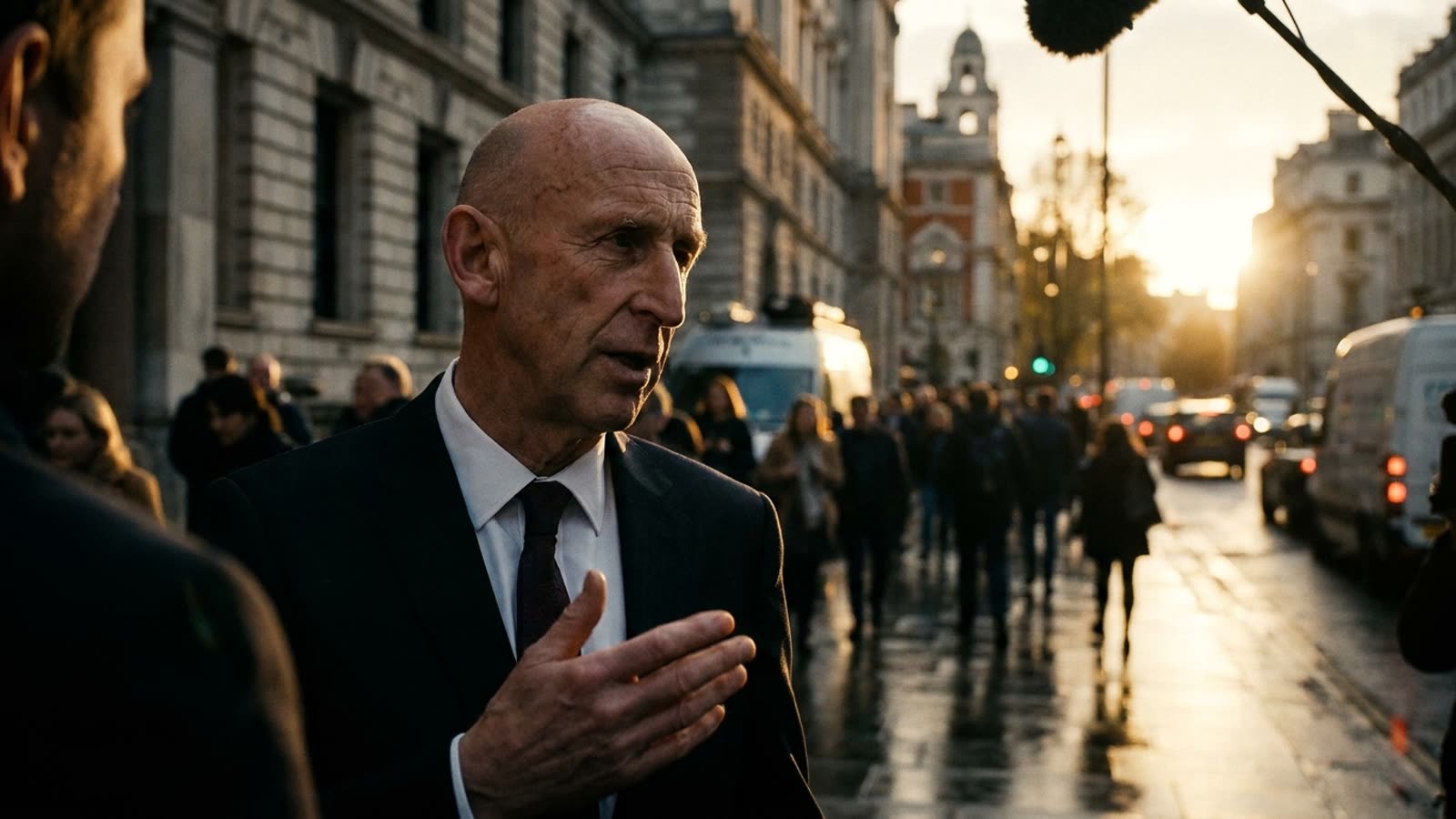
The phrase 'do no harm' belongs to medicine, not fiscal policy. Yet Chancellor John Healey has adopted it as the governing philosophy of his first Budget, a document that will land on Wednesday with all the revolutionary fervour of a well-organised spreadsheet. After fourteen years of Conservative rule punctuated by mini-Budget chaos and pandemic spending binges, Labour appears to have concluded that the British public craves tedium.
This is not entirely wrong. The Truss-Kwarteng episode of 2022 remains fresh enough in institutional memory that gilt markets still flinch at the word 'unfunded.' Healey's team has spent weeks briefing that there will be no surprises, no rabbit-from-hat moments, no growth-at-any-cost gambles. The result is a Budget whose broad contours are already known: a bank levy to raise revenue, targeted support for energy bills, a minimum wage increase, and infrastructure pledges designed to signal seriousness without spooking the Office for Budget Responsibility.
The energy pivot
At the centre of Healey's statement sits energy reform, a choice that is both politically convenient and economically necessary. Households remain squeezed by bills that, while lower than their 2022 peaks, have not returned to pre-crisis norms. Businesses, particularly energy-intensive manufacturers, continue to cite power costs as a competitive disadvantage against continental rivals with more interventionist industrial strategies.
The Chancellor's approach reportedly involves extending support mechanisms while accelerating planning permissions for renewable projects. It is the sort of policy that sounds transformative in press releases but amounts to incremental improvement in practice. The fundamental tension — that Britain needs massive capital investment in grid infrastructure while also keeping borrowing costs manageable — remains unresolved. Healey is not solving it so much as acknowledging it exists.
The revenue question
Labour's manifesto pledges constrained the Chancellor's options before he entered Number 11. With income tax, National Insurance, and VAT rates effectively frozen by political promise, the Treasury has been forced to hunt for revenue in narrower pastures. A levy on bank profits fits the populist brief without alienating the City entirely; financial institutions have been making handsome returns from higher interest rates and will struggle to generate public sympathy.
Whether such measures raise enough to fund Labour's spending ambitions remains doubtful. The fiscal headroom is thin, the global outlook uncertain, and the demands on public services — from NHS backlogs to crumbling school buildings — are vast. Healey's Budget is less a plan for transformation than a holding pattern, buying time until growth materialises or until the political capital exists for harder choices.
Our take
There is something admirable about a Chancellor who refuses to promise the moon. Healey's Budget will disappoint those who wanted Labour to arrive with a comprehensive industrial strategy or a radical rethink of the tax base. But after years of governance-by-announcement, a government that under-promises and over-delivers would be a novelty. The risk is that 'do no harm' becomes an excuse for drift — that steadying the ship means never actually leaving port. Competence is necessary; it is not sufficient. Healey has bought himself time. The question is what he intends to do with it.