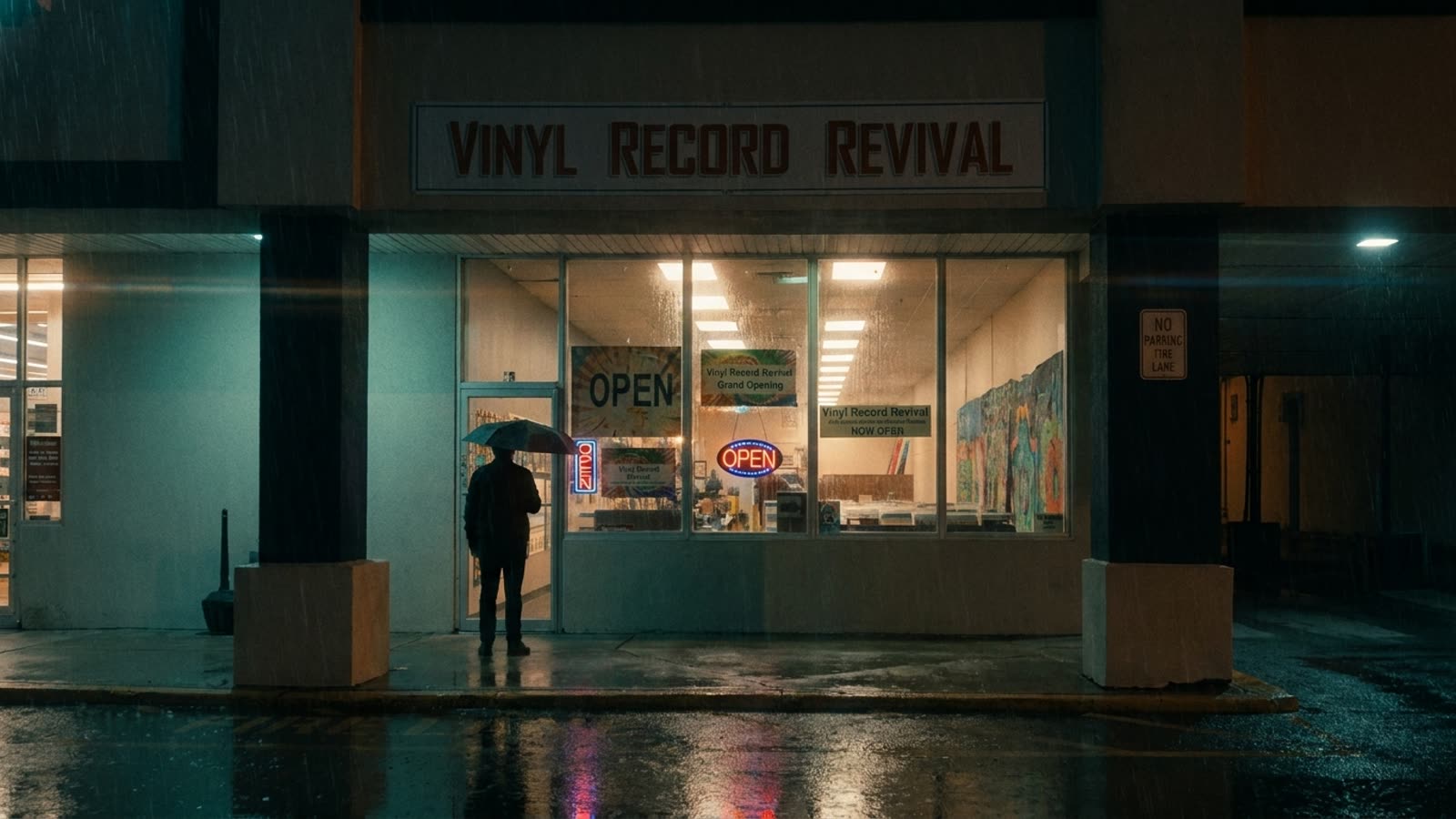
The compact disc was supposed to kill vinyl. Then the MP3 was supposed to kill everything. Instead, the LP record has staged one of the most improbable comebacks in consumer history, growing from a rounding error in the music industry to a format that now outsells CDs in multiple major markets. The explanation has almost nothing to do with audio fidelity and everything to do with the peculiar economics of nostalgia.
The standard defense of vinyl—that it sounds warmer, richer, more authentic—has always been more theology than physics. Most pressings derive from digital masters anyway, and the average turntable setup introduces more distortion than the cheapest Bluetooth speaker. Audiophiles know this. They buy vinyl regardless. The product being sold is not superior sound reproduction; it is the ritual of ownership itself.
The scarcity machine
Vinyl's resurgence has been turbocharged by artificial constraint. Only a handful of pressing plants survived the format's near-extinction, and ramping up capacity requires specialized equipment that takes years to manufacture. The result is a permanent bottleneck that keeps prices elevated and release dates unpredictable. Record Store Day, the annual event that drops limited-edition pressings, has become a masterclass in manufactured scarcity—colored variants, numbered editions, and regional exclusives that transform a commodity into a collectible.
Labels have noticed. A vinyl release now functions less as a distribution channel than as premium merchandise, often priced at multiples of what the same album costs on CD. The margins are extraordinary. Production costs have risen, but retail prices have risen faster, and consumers have absorbed the difference without complaint. In an era when streaming has collapsed the perceived value of recorded music to approximately zero, vinyl offers something increasingly rare: a product people will pay real money for.
The ownership illusion
Streaming services have trained a generation to access rather than possess. You do not own your Spotify library; you rent it, subject to licensing agreements that can vanish songs overnight. Vinyl offers the opposite proposition: a physical object that cannot be revoked, that occupies space, that requires intention to play. The inconvenience is the point. In a world of infinite, frictionless choice, the act of selecting a single album, removing it from its sleeve, and placing needle to groove feels almost subversive.
This psychology extends beyond music. The broader resurgence of physical media—film photography, printed books, even cassette tapes—reflects a generational correction against the weightlessness of digital life. Ownership, it turns out, is a feeling, and feelings have economic value.
Our take
The vinyl revival is often framed as a victory for authenticity over convenience, but the framing flatters the buyer. What the market has actually discovered is that nostalgia scales beautifully. The format's limitations—the expense, the fragility, the storage demands—have been rebranded as features, and a generation too young to remember vinyl's original dominance has embraced it precisely because it feels like an antidote to the present. Whether this constitutes genuine cultural recovery or merely sophisticated marketing is, perhaps, a distinction without a difference. The music industry spent decades trying to sell people sound. It turns out the smarter play was selling them a feeling of permanence in a world that offers very little.