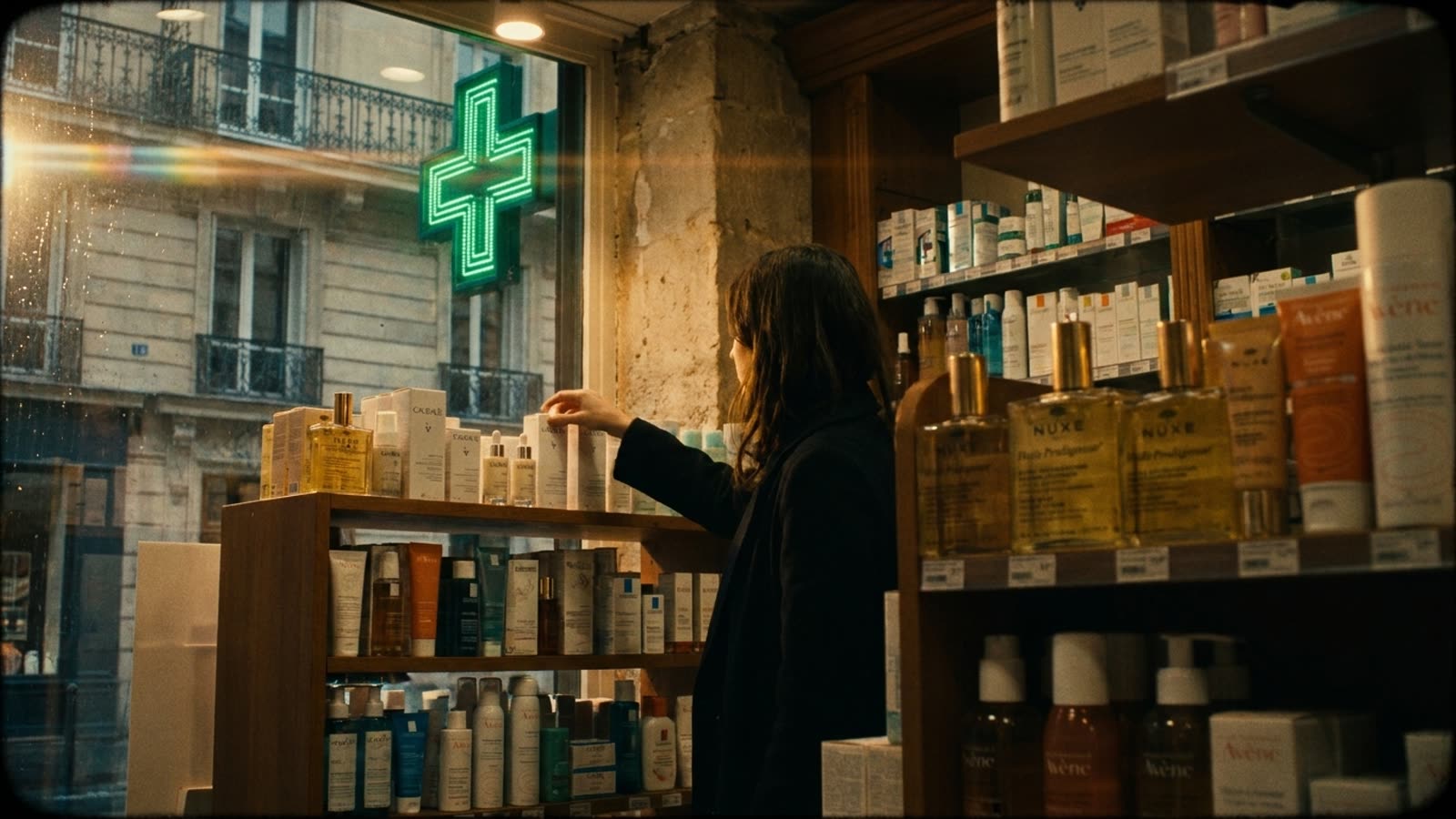
The most coveted skincare in America comes not from sleek laboratories or celebrity-backed startups but from fluorescent-lit pharmacies in the 6th arrondissement. Brands like La Roche-Posay, Avène, Bioderma, and Embryolisse have achieved something remarkable: they've convinced American consumers that the secret to French beauty lies in products that French women buy while picking up cough syrup.
This is, of course, a carefully constructed illusion. But it's an illusion that works precisely because it pretends not to be one.
The myth of the unbothered French woman
The French pharmacy phenomenon rests on a foundational cultural belief: that French women possess an effortless beauty that American women, with their twelve-step routines and aggressive actives, have overcomplicated themselves out of. The French woman, in this mythology, uses three products and looks better than you do with thirty. She doesn't try. She simply is.
This narrative conveniently ignores that French women spend considerable money and attention on their appearance—they simply perform the labor differently. The genius of French pharmacy brands is that they've positioned themselves as the tools of this performed nonchalance. A $15 tube of Embryolisse reads as sophistication rather than frugality, European wisdom rather than mere affordability.
The distribution game
The American embrace of French pharmacy products accelerated dramatically with the rise of e-commerce and specialty retailers. What once required a trip to Paris or a friend willing to stuff their suitcase became available through a few clicks. Retailers recognized that these products occupied a lucrative middle ground: affordable enough for impulse purchases, foreign enough to feel special, and dermatologist-adjacent enough to seem serious.
The brands themselves have played this expansion carefully. They've maintained their clinical, unflashy packaging—a deliberate contrast to the Instagram-optimized aesthetics of American competitors. The message is clear: we don't need to seduce you with design because our formulas speak for themselves. That this restraint has become its own form of seduction is the central irony of the whole enterprise.
What the products actually deliver
Stripped of mythology, French pharmacy skincare tends toward the sensible rather than the revolutionary. These are products built around thermal spring water, gentle cleansing, and barrier repair—philosophies that American dermatology has belatedly embraced after years of pushing aggressive exfoliation. The formulas are generally well-made, reasonably priced, and unlikely to irritate sensitive skin.
They are not, however, magic. The same results could be achieved with dozens of American or Korean products at similar price points. What cannot be replicated is the story—the sense that by using Bioderma micellar water, you are participating in a tradition of Parisian elegance that transcends mere skincare.
Our take
The French pharmacy phenomenon is a masterclass in selling identity rather than ingredients. Americans aren't buying thermal spring water; they're buying membership in a club of women who know better, who've seen through the marketing of flashier brands and arrived at something more authentic. That this authenticity is itself a marketing construction doesn't diminish its appeal—it may even enhance it. In a beauty landscape cluttered with influencer launches and impossible promises, the French pharmacy offers something genuinely seductive: the permission to do less and call it sophistication.