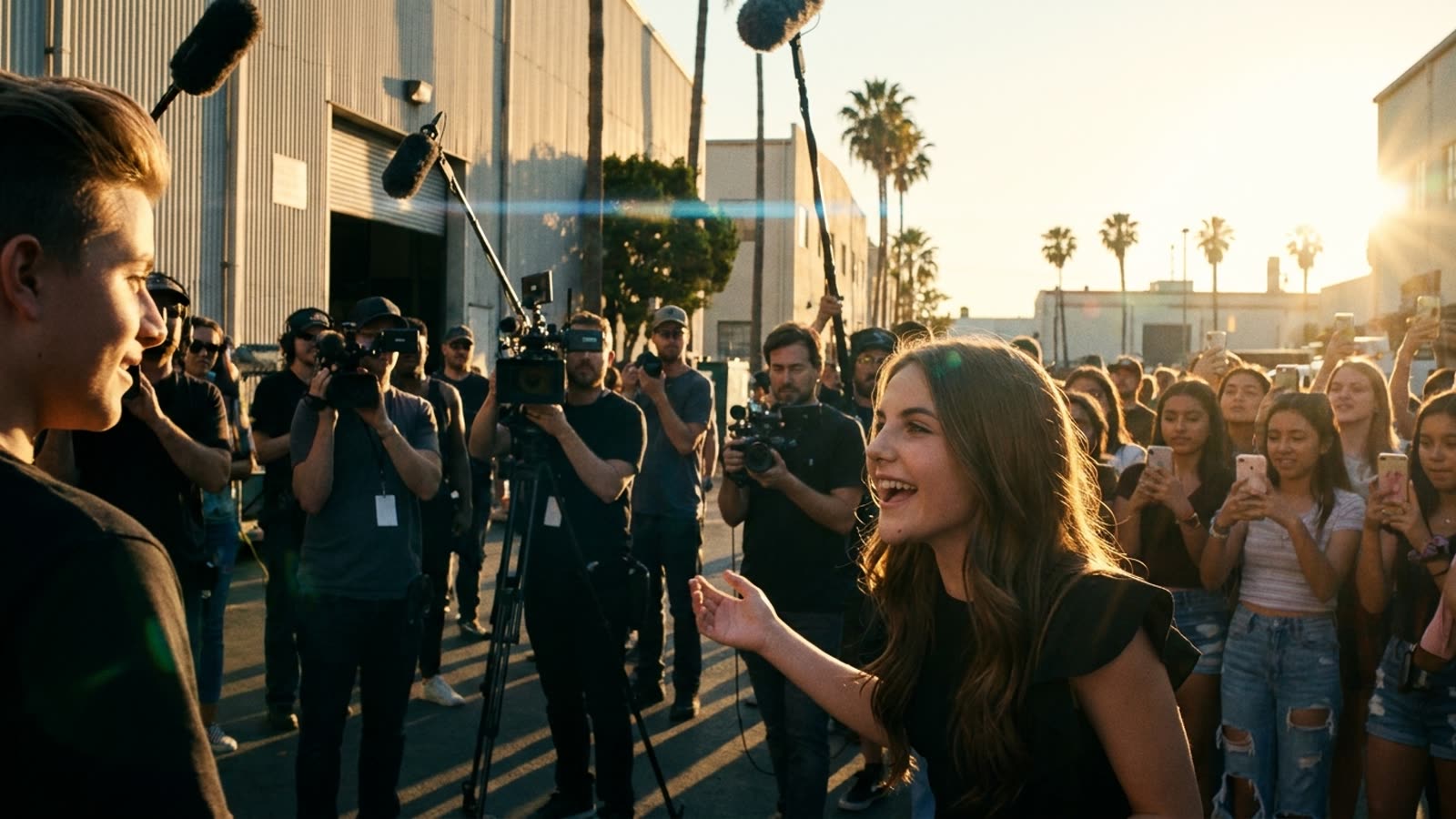
The news that Gavin Magnus and Piper Rockelle have rekindled their relationship will mean nothing to anyone over twenty-five, and that is precisely why it matters. The two YouTube personalities—he with 11 million subscribers, she with nearly 10 million—first dated as teenagers, broke up publicly, and have now reunited, all while their combined audience of children and tweens watched every beat unfold. This is not celebrity gossip in the traditional sense. It is the supply chain of parasocial intimacy operating exactly as designed.
Magnus, now twenty, and Rockelle, nineteen, belong to a cohort of creators who have never known a distinction between private life and public performance. They came of age making videos for other children, monetizing their friendships, their pranks, their breakups. When they split in 2022, both posted tearful explanations to their respective channels. When they reconciled—reportedly confirmed through social media posts this week—the content cycle simply resumed.
The economics of young love
The influencer economy has always understood that relationships drive engagement. Couples channels, proposal videos, gender reveals—these formats exist because the algorithm rewards emotional stakes. Magnus and Rockelle learned this early. Their first relationship was documented exhaustively: date nights, gift exchanges, the inevitable "we need to talk" video. The breakup generated millions of views. The reunion will generate millions more.
What distinguishes their generation from previous child stars is the absence of any mediating institution. There is no Disney Channel managing their image, no stage parent negotiating contracts with a studio. The platform is the studio, and the platform's only note is: keep posting. Magnus and Rockelle are their own producers, their own publicists, their own product.
The audience grows up (sort of)
The children who watched Magnus and Rockelle's first relationship are now teenagers themselves. Some have aged out of the content; others remain loyal, having grown alongside their favorite creators. This is the bet every young influencer makes: that the audience will mature with them, that the parasocial bond forged at eight will hold at eighteen.
It is a precarious bet. The history of child fame is littered with cautionary tales, and the influencer era has added new variables: algorithmic volatility, platform dependency, the psychic toll of performing adolescence for strangers. Magnus and Rockelle have so far avoided the more spectacular implosions that have befallen some of their peers. Whether that reflects genuine resilience or simply a story still in progress remains to be seen.
Our take
There is something faintly melancholy about watching two young people whose entire romantic history exists as searchable content. Every awkward moment, every reconciliation, every fight preserved in the amber of YouTube's servers. Magnus and Rockelle did not invent this system, and they are navigating it with more apparent self-awareness than many adults manage. But the system itself—one that transforms teenage heartbreak into inventory—deserves more scrutiny than it typically receives. The kids are alright, probably. The business model is another matter.