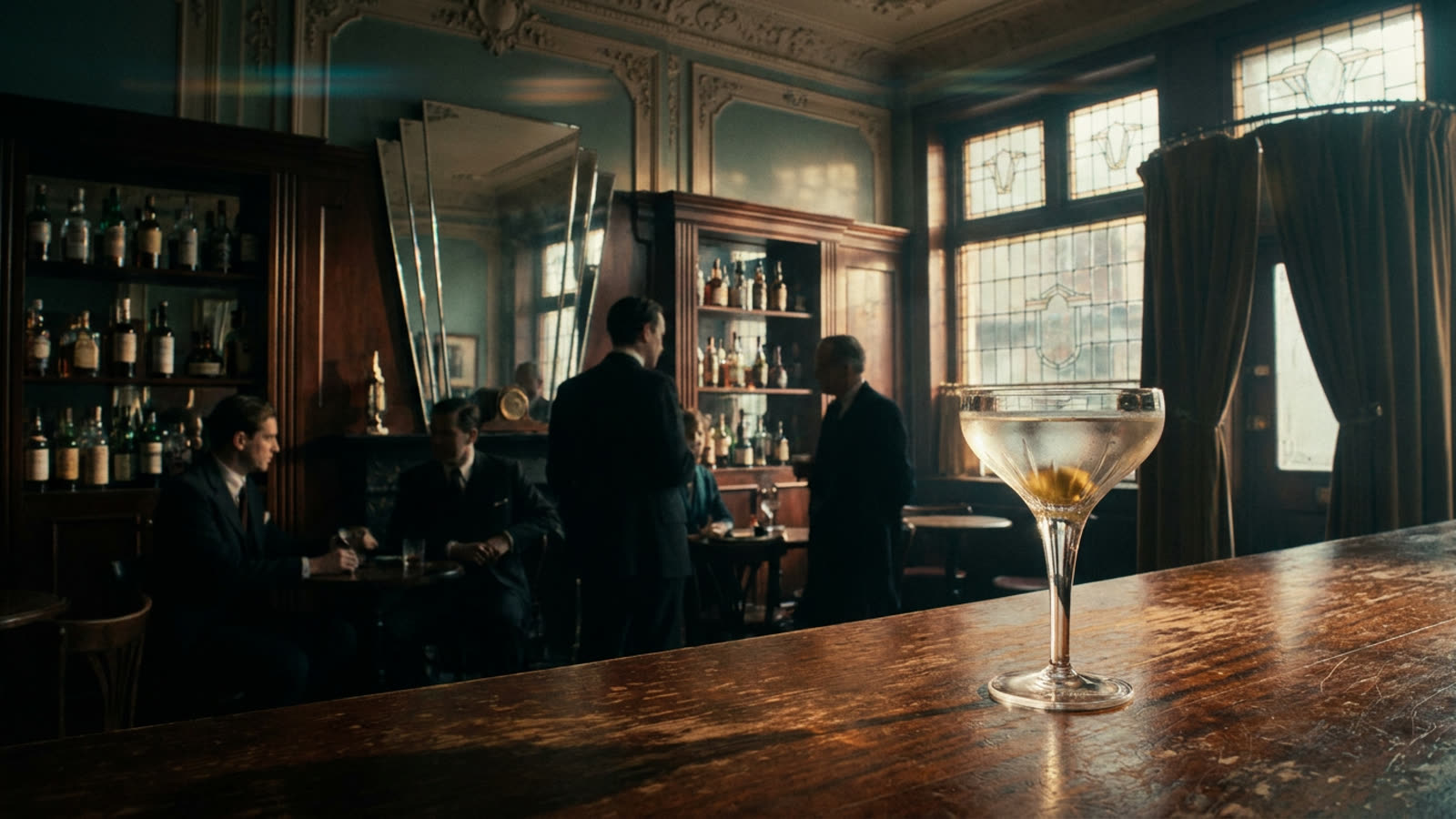
Every cocktail tells a story, but the martini tells on you. Order one and you have announced, in a single breath, your preferences on gin versus vodka, your tolerance for vermouth, your feelings about olives versus twists, and your position on the most contentious question in hospitality: stirred or shaken. No other drink demands this much self-knowledge before the first sip.
The martini's peculiar durability stems not from its flavor—which ranges from bracingly herbal to essentially chilled vodka, depending on construction—but from its status as a negotiation. Unlike a daiquiri or an old fashioned, which have canonical forms that bartenders defend with religious intensity, the martini exists as a spectrum. The customer must locate themselves on it.
The vermouth question
The great martini war of the twentieth century was fought over vermouth. In the drink's early decades, the ratio ran close to equal parts gin and vermouth, producing something closer to a fortified wine cocktail than the austere pour we know today. Then came the long dry march. By mid-century, vermouth had become a punchline—Winston Churchill allegedly glanced at the bottle from across the room; others simply whispered the word over the glass.
This was, in retrospect, a quality problem masquerading as a taste preference. Vermouth oxidizes quickly once opened, and most American bars treated it like whiskey, leaving bottles open for months until the contents turned to vinegar. Customers learned to fear the ingredient. The "extra dry" martini—meaning almost no vermouth—became the default order for anyone who had been burned.
The craft cocktail revival has rehabilitated vermouth's reputation, and contemporary bartenders increasingly advocate for wetter ratios. A well-made martini with fresh vermouth at three-to-one or even two-to-one offers botanical complexity that the bone-dry version cannot match. Yet the damage persists: many drinkers still order their martinis dry out of inherited caution, never having tasted what they are refusing.
Bond's grammatical error
James Bond did not invent the shaken martini, but he certainly popularized it, and mixologists have spent decades explaining why he was wrong. Shaking a martini introduces air bubbles and ice shards that cloud the drink and dilute it more rapidly than stirring. The texture becomes lighter, almost frothy, which some find refreshing and purists find offensive.
The orthodox position holds that cocktails containing only spirits should be stirred, while those with citrus or cream should be shaken. By this logic, Bond's preference is simply incorrect—a character detail that reveals the spy's performative masculinity more than his palate. He wants to be seen ordering a martini. He does not particularly care how it tastes.
Yet the shaken martini has its defenders. The colder temperature and different mouthfeel suit certain vodka martinis, and the theatrical violence of the shaker communicates urgency to a bartender in a crowded room. Ordering a drink shaken is, at minimum, a way of announcing that you have opinions.
The appletini and its descendants
The nineteen-nineties and early two-thousands saw the martini glass colonized by imposters: chocolate martinis, espresso martinis, cosmopolitans marketed as martinis, and the infamous appletini, which contained neither gin nor vermouth and bore no relationship to its namesake beyond the vessel. This was the martini's wilderness period, when the word came to mean "any drink served in a V-shaped glass."
Purists mourned, but the bastardization may have saved the format. A generation discovered the martini glass through sweet, approachable drinks and eventually graduated to the real thing. The espresso martini, in particular, has proven surprisingly durable, outlasting its critics and establishing itself as a legitimate category rather than a gimmick.
Our take
The martini endures because it flatters the drinker's sense of sophistication while demanding genuine engagement. You cannot order one passively; you must make choices and defend them. In an era of algorithmic recommendations and default settings, the martini remains stubbornly analog—a small act of self-definition disguised as a drink order. That it also happens to taste good, when made properly, is almost beside the point.