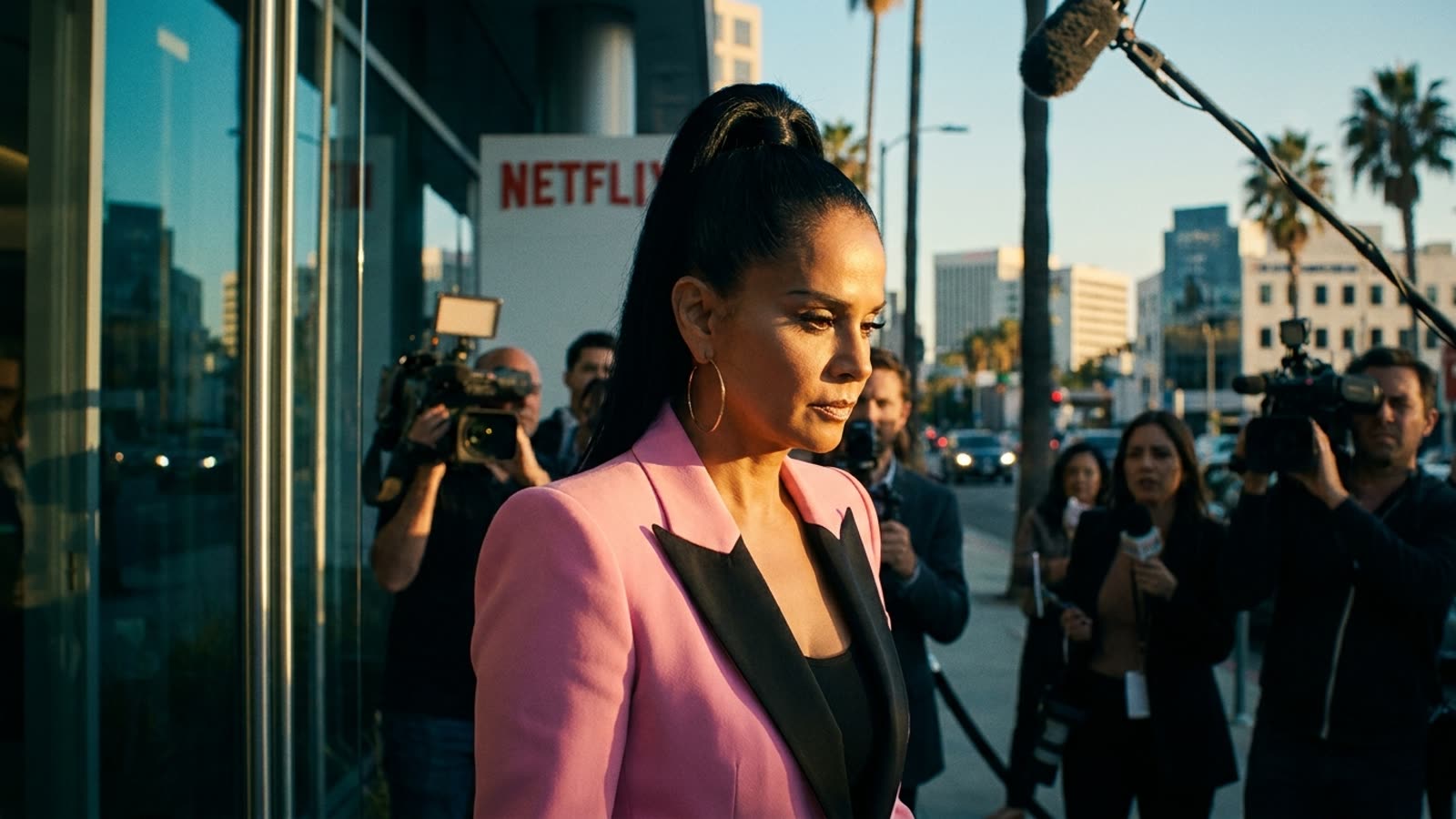
When Netflix popularized the "keeper test"—the ruthless internal question of whether a manager would fight to retain an employee—it never quite anticipated the test being applied to the person who greenlit Squid Game, Wednesday, and Bridgerton. Yet here we are: Bela Bajaria, the chief content officer who transformed Netflix from a licensed-content warehouse into a genuine creative force, was shown the door Thursday with the kind of sudden efficiency the company usually reserves for underperforming regional dramas.
The timing is exquisite in its awkwardness. Netflix's stock sits near all-time highs. Its subscriber numbers have stabilized after the password-sharing crackdown. By most conventional metrics, Bajaria was winning. But conventional metrics, it turns out, are precisely what Netflix's leadership now craves—and Bajaria's expensive taste in prestige programming had become a liability in a company increasingly obsessed with advertising revenue and cost-per-view efficiency.
The keeper who wasn't kept
Bajaria rose through Netflix's ranks by understanding something her predecessors didn't: global audiences wanted local stories with universal emotions, not American exports dubbed into forty languages. Her international strategy—betting big on Korean thrillers, Spanish heists, and British period pieces—created genuine cultural phenomena rather than mere content. Squid Game alone generated an estimated $900 million in impact value for roughly $21 million in production costs, a ratio that should have made her untouchable.
But Netflix's pivot toward advertising has reshuffled internal priorities. Ad-supported tiers demand predictable, high-volume programming that keeps viewers inside the app—not auteur-driven limited series that spike for a week and vanish. Bajaria's instincts ran toward quality; the new Netflix wants quantity with quality as a nice-to-have. The tension had been visible for months in budget negotiations and greenlight meetings that sources describe as increasingly contentious.
Hollywood's collective shudder
The reaction across the industry has been swift and anxious. Bajaria was one of the few streaming executives whom talent actually trusted—a rare figure who could get A-list directors to take meetings and who understood that creative people need creative freedom. Her departure removes a crucial bridge between Silicon Valley efficiency metrics and Hollywood's messier artistic process.
For the dozens of projects currently in development under her aegis, the uncertainty is immediate. Showrunners are already fielding calls from agents asking whether deals will be honored, whether notes will change, whether the entire creative direction might shift under new leadership. Netflix has named no successor, which in corporate-speak means either a restructuring is coming or internal candidates are being evaluated with the same cold calculus that just claimed Bajaria.
Our take
Netflix built its empire by being the anti-network: no pilots, no focus groups, no death by committee. Bajaria embodied that ethos at the content level, trusting creators and betting on weird. Her firing suggests Netflix has decided that the streaming wars are over and efficiency has won—that being HBO was a phase, and being cable is the future. They may be right about the business. But the company that gave us Stranger Things by taking creative risks is now optimizing for ad impressions, and that's a keeper test of a different kind entirely.