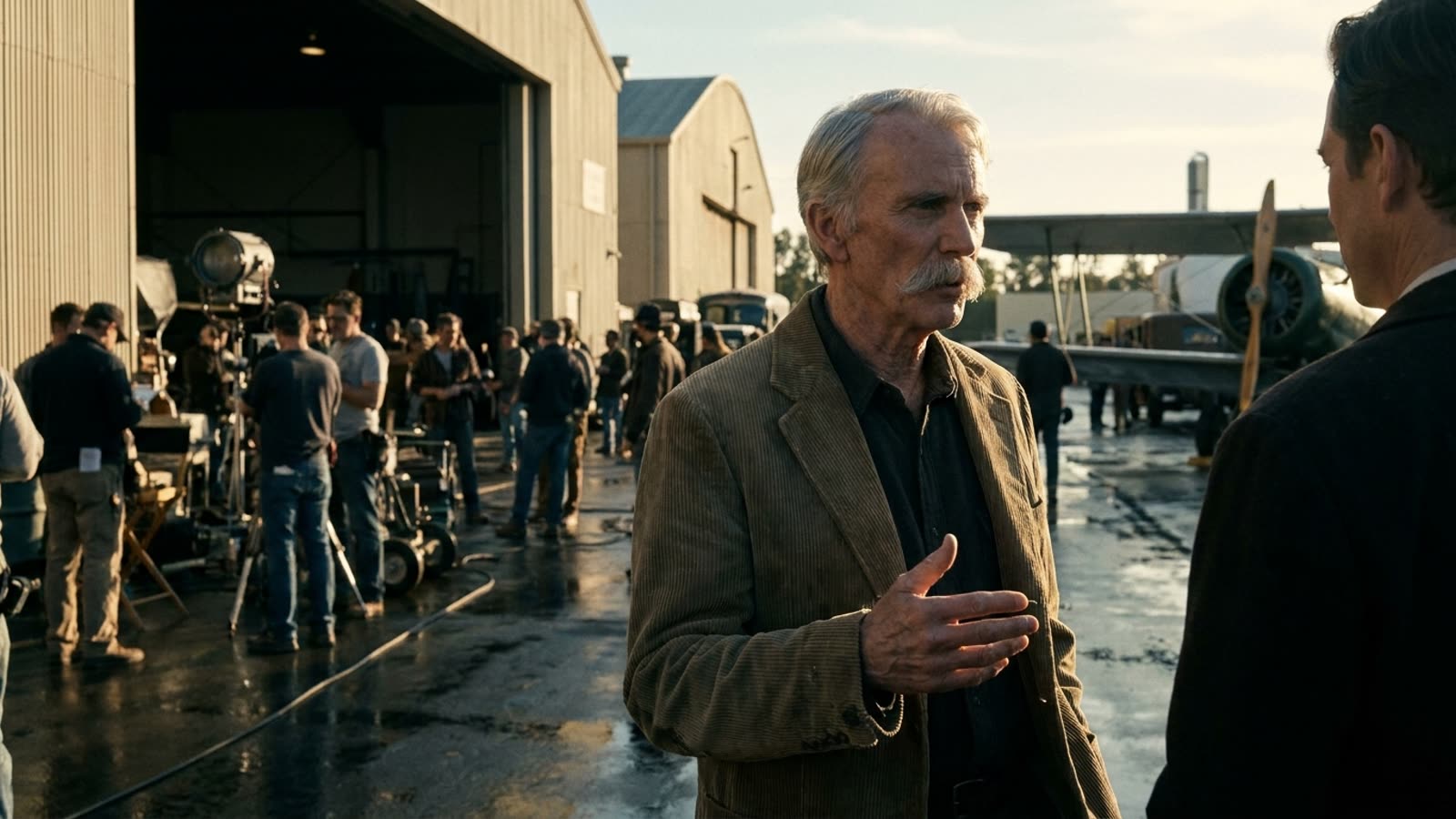
There is a particular kind of Hollywood career that exists almost entirely in the peripheral vision of American moviegoers. James Handy has had one for sixty years. You have seen his face in The Rocketeer, Arachnophobia, Jumanji, and dozens of procedural television episodes without ever knowing his name. Then Top Gun: Maverick happened, and suddenly the 82-year-old character actor found himself fielding interviews about a career most people did not know existed.
This is not a story about overnight success. It is a story about what happens when you refuse to leave.
The mathematics of showing up
Handy's filmography reads like a ledger of American entertainment: more than 150 credits spanning the Reagan administration through the streaming wars. The roles were rarely memorable in isolation—a judge here, a general there, the kind of middle-aged authority figure that scripts require but audiences forget. What accumulates, though, is a body of work that represents something increasingly rare in contemporary Hollywood: a sustainable middle-class acting career.
The economics of character acting have always been brutal. Union minimums, residual checks that arrive like postcards from another era, the constant audition treadmill. Handy navigated this for decades while his contemporaries either ascended to leading-man status or quietly exited the industry for real estate licenses and teaching positions. His persistence was not glamorous. It was, in its way, a kind of blue-collar labor performed in front of cameras.
The Maverick dividend
Joseph Kosinski's Top Gun: Maverick did something unexpected for several careers. It reminded audiences that Tom Cruise was still a movie star, yes, but it also provided visibility for the supporting players who populated its military hierarchy. Handy's role was not large, but the film's astonishing box-office performance—north of $1.4 billion globally—meant that even minor roles received exposure that would have been unthinkable in a mid-budget drama.
For a character actor in his eighties, this kind of late-career visibility is essentially a lottery win. Handy has spoken recently about the renewed interest in his work, the interview requests, the recognition from a younger generation of viewers who encountered him through a blockbuster rather than a rerun.
Our take
Hollywood loves a narrative of discovery, the young talent plucked from obscurity. What it rarely celebrates is the actor who simply refused to stop working, who treated the craft as a job rather than a calling and showed up anyway. James Handy is not having a moment so much as he is having a career, one that has quietly spanned more American history than most of us have lived. The lesson is not inspirational in the usual sense. It is something colder and more useful: sometimes the only strategy is duration.