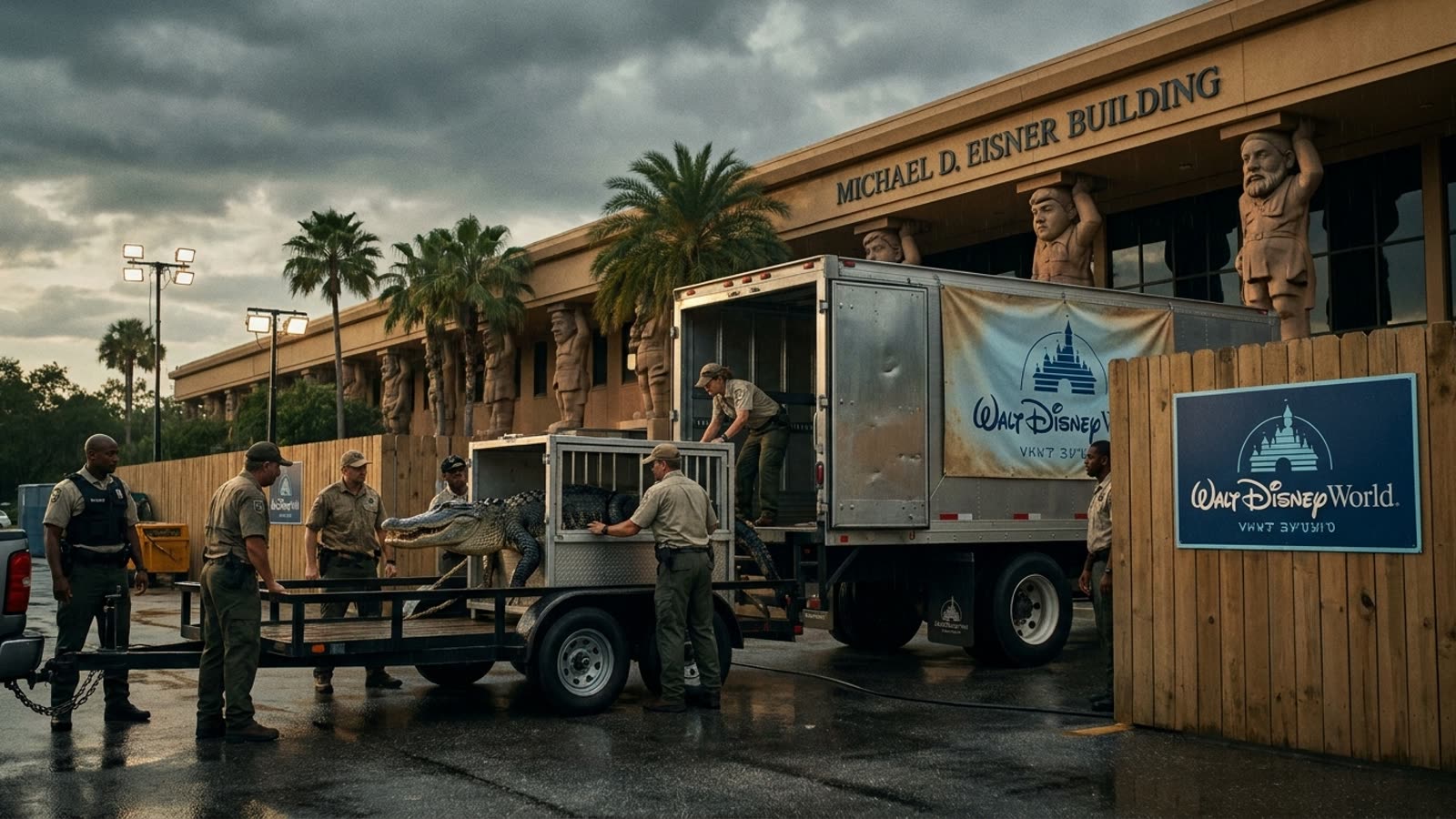
The statistic lands with the dull thud of institutional routine: 414 alligators removed from Walt Disney World property since June 2016, when two-year-old Lane Graves was dragged into the Seven Seas Lagoon by a gator while his family watched a movie screening on the beach. A decade later, the removals continue at a steady clip — roughly 40 per year — because the fundamental problem hasn't changed. Disney built a fantasy kingdom in the middle of alligator country, and no amount of signage, barriers, or wildlife management can fully reconcile that geography.
The Graves tragedy prompted immediate, visible changes: "No Swimming" signs replaced by explicit alligator warnings, beaches closed, new fencing installed around waterways. Disney settled with the family for an undisclosed sum and established the Lane Thomas Foundation in the boy's memory. The company did everything corporations do when catastrophe strikes — apologized, paid, and implemented protocols. What it couldn't do was move Florida.
The numbers behind the magic
Walt Disney World encompasses roughly 25,000 acres of Central Florida wetland, an ecosystem where alligators have thrived for millions of years. The American alligator population in Florida now exceeds 1.3 million, up from near-extinction levels in the 1960s — a conservation success story that creates perpetual human-wildlife conflict. Disney's property includes more than 20 miles of waterways, hundreds of ponds, and the massive Bay Lake and Seven Seas Lagoon system. For gators, it's prime real estate.
The 414 removals represent only the animals deemed threatening enough to warrant action — typically those over four feet long or displaying aggressive behavior. Countless smaller alligators live on property without incident. Florida law prohibits relocating nuisance alligators; removed animals are euthanized, a reality Disney doesn't advertise but doesn't deny. The company works with the Florida Fish and Wildlife Conservation Commission under a statewide nuisance alligator program that handles roughly 8,000 complaints annually across the state.
The impossible promise
Disney's brand proposition has always been the suspension of ordinary reality — a place where childhood dreams materialize and adult anxieties dissolve. That promise becomes complicated when the local fauna includes prehistoric carnivores. The company's response has been characteristically thorough: dedicated wildlife management teams patrol daily, motion-activated cameras monitor key waterways, and cast members receive training on alligator awareness. Guests, meanwhile, receive warnings that many ignore or dismiss as corporate liability theater.
The tension is inherent and permanent. Disney can't drain Florida's swamps, can't eliminate the gator population, can't relocate to a climate without large reptiles. What it can do — and has done — is manage risk to statistically negligible levels while acknowledging that zero risk is impossible. In the decade since Lane Graves died, no other guest has been killed by wildlife at Disney World. That's not nothing. It's also not the same as saying it can't happen again.
Our take
The 414 number will strike some as horrifying evidence of danger, others as reassuring proof of vigilance. Both reactions miss the point. Disney World exists because Americans wanted a fantasy escape built in subtropical wetland, and Florida wanted the economic engine. The alligators were here first and aren't leaving. The only honest response is the one Disney has quietly adopted: acknowledge the reality, manage it professionally, and stop pretending magic extends to wildlife biology. The Graves family paid the price for a collective delusion. The least we can do is stop being surprised when apex predators act like apex predators.