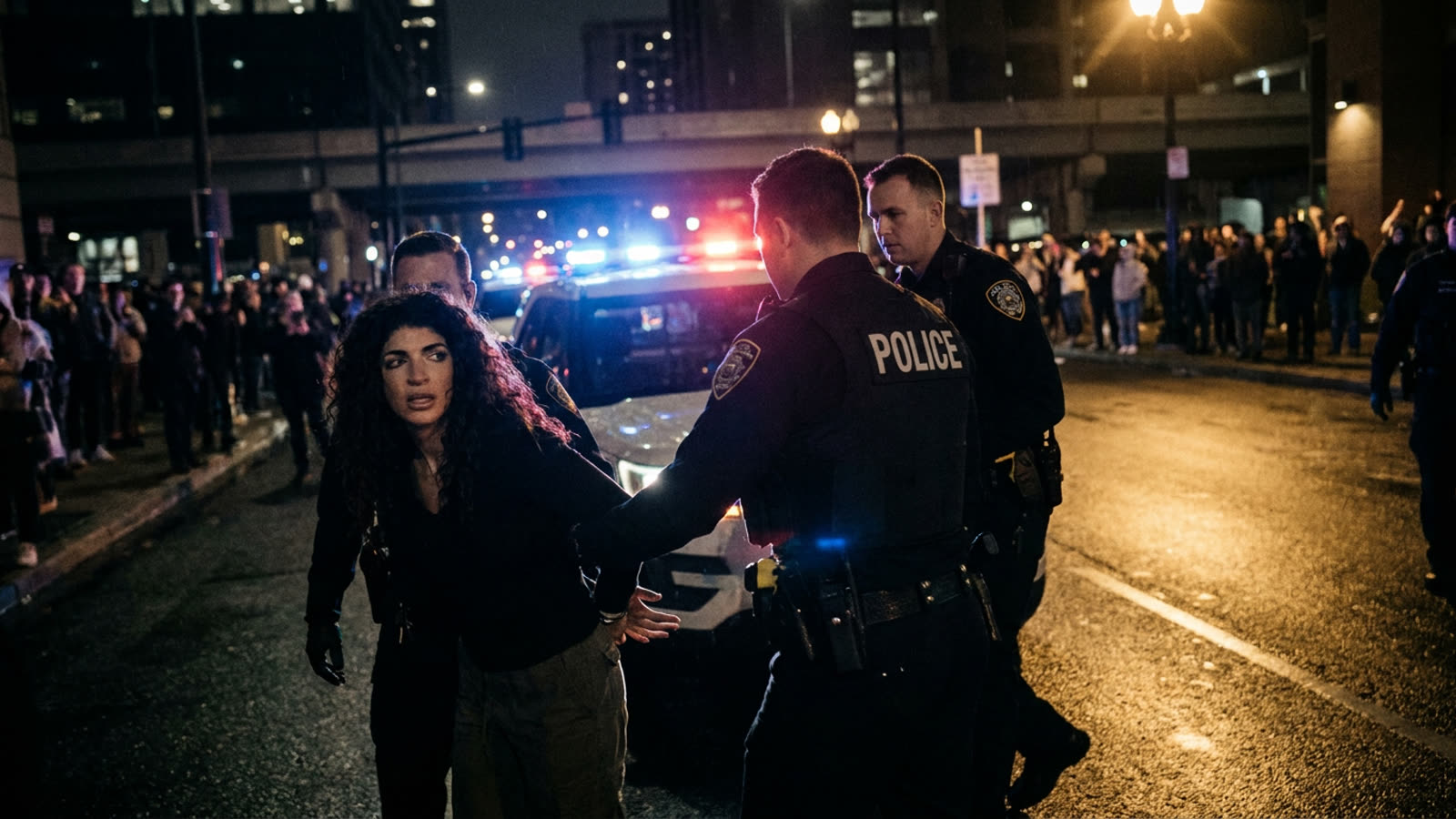
The Giudice family has spent fifteen years providing Bravo with its most reliable source of table-flipping, indictment-weathering, marriage-imploding content. Now the bill is coming due in a form the network never scripted: Milania Giudice, the middle daughter who grew up on camera from age four, has been arrested for assault.
The details remain thin—TMZ reports the arrest but specifics about the alleged incident are still emerging. What requires no elaboration is the context. Milania is now twenty, legally an adult, but she has never known a life that wasn't performed for an audience. Her childhood tantrums became GIFs. Her parents' federal fraud convictions played out in real time. Her father's deportation to Italy was a season arc. She learned to navigate adolescence while millions of strangers had opinions about her family's every dysfunction.
The experiment we pretend isn't happening
Reality television has been running an uncontrolled psychological experiment on children for two decades, and we've mostly declined to examine the results. The Giudice girls are among the longest-tenured subjects. Gia, the eldest, has spoken publicly about anxiety and the pressure of being the family's de facto spokesperson during her parents' legal troubles. Milania, by contrast, became famous for being the wild one—the kid who said outrageous things, who provided comic relief, who was edited into a character before she could possibly understand what that meant.
The entertainment industry has child labor laws and on-set tutors and trust funds managed by courts. Reality television has none of these guardrails. The children of Real Housewives franchises exist in a legal gray zone: they're not actors with contracts, they're just... there, living in homes where cameras are a permanent fixture. Their compensation, if any, flows through their parents. Their consent is presumed through proximity.
Teresa's long shadow
Teresa Giudice has built a career on being unapologetically herself, which is to say: combative, loyal to a fault, and constitutionally incapable of admitting wrongdoing. These qualities make for excellent television. They also make for a complicated model of adulthood. Her daughters have watched her serve federal prison time, deny culpability, feud publicly with relatives, and emerge from every scandal with her Bravo contract intact. The lesson is legible: consequences are negotiable if your audience stays engaged.
Milania's arrest may amount to nothing—charges get dropped, incidents get contextualized, young people make mistakes that don't define them. But the arrest itself is already content. It's already being discussed in the same breath as her mother's legacy. She cannot make a mistake in private because privacy was never part of the deal her parents made on her behalf.
Our take
We've spent years watching the Giudice children grow up and treating it as entertainment rather than evidence. Milania's arrest should prompt something other than another news cycle about the family's drama—it should force a genuine reckoning with what we're asking of children who never signed up to be public figures. The Giudices gave Bravo everything. The network, and its audience, took it. The kids are now adults, and they're carrying baggage that was packed for them before they could read.