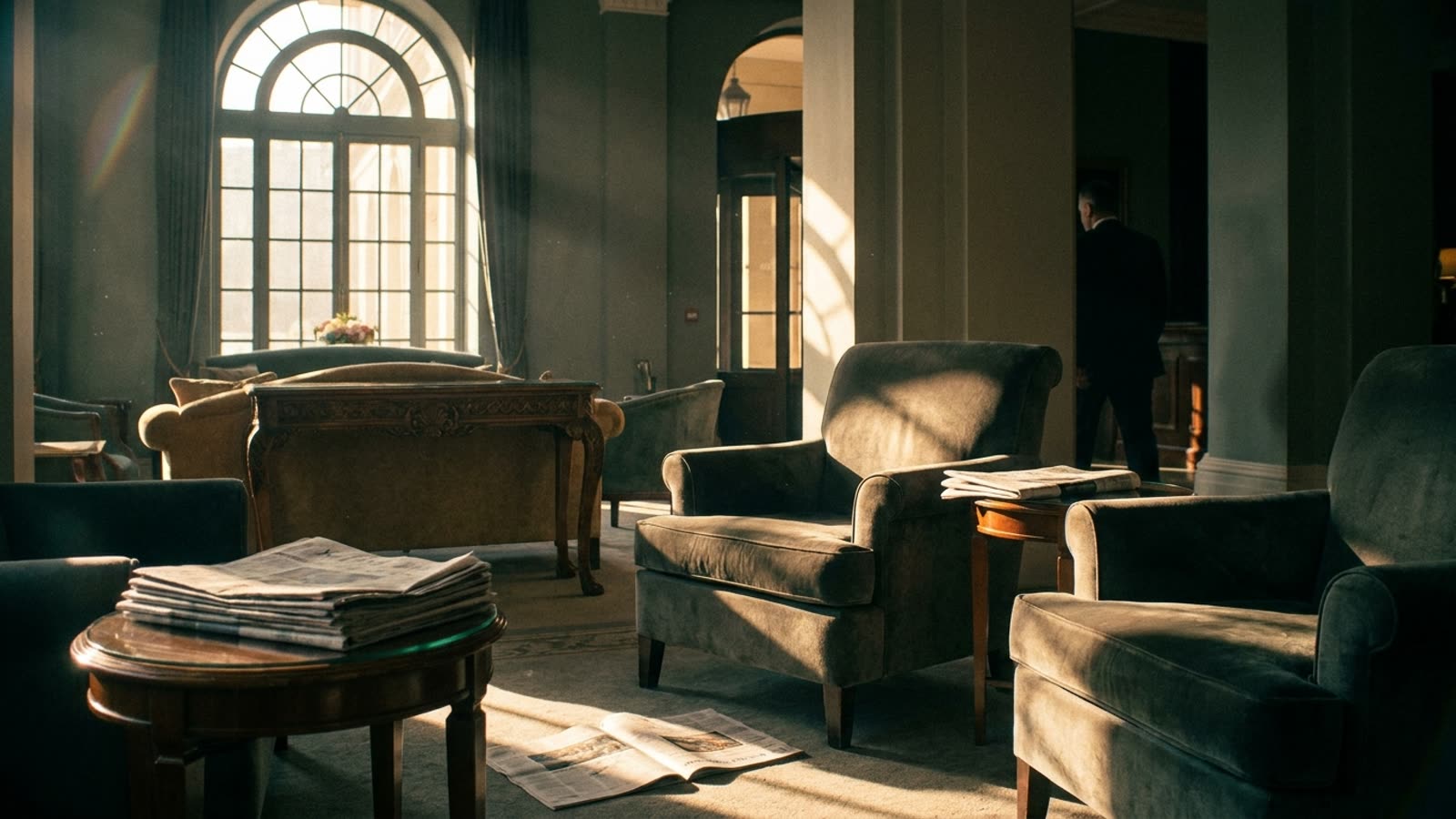
Walk into the lobby of any properly grand hotel—the kind with marble floors and staff who remember your name—and you will find them: crisp stacks of morning newspapers, fanned out like playing cards on a mahogany table. The Financial Times in salmon pink. The International New York Times. Perhaps a local broadsheet in the native language. Almost nobody takes one. The ritual persists anyway.
This is not inefficiency. This is luxury hospitality at its most precise, selling not information but the idea of a certain kind of guest: the sort of person who might, theoretically, read the newspaper over a proper breakfast. The newspapers are a prop in an elaborate theater of sophistication, and their survival in the smartphone age tells us more about what we actually buy when we buy luxury than a hundred trend reports ever could.
The economics of atmosphere
A five-star hotel might spend several thousand dollars annually on newspapers that guests largely ignore. The calculation is not about readership metrics. It is about what hoteliers call "arrival impression"—the cumulative sensory experience of the first ninety seconds in a property. Fresh flowers, the particular temperature of the lobby air, the weight of the room key, the newspapers. Each element signals that someone has thought carefully about your comfort before you arrived.
The genius is in the specificity. Not magazines, which feel like a dentist's waiting room. Not tablets, which feel like an airport lounge. Newspapers—physical, ephemeral, slightly inconvenient—because they evoke a world where people had the time and taste to read them. The guest does not need to actually read the paper. The guest needs to feel like the kind of person who could.
Nostalgia as amenity
Luxury hospitality has always trafficked in controlled anachronism. The best hotels maintain rituals that would be absurd anywhere else: turndown service with chocolate on the pillow, handwritten welcome notes, human elevator operators in white gloves. These are not conveniences. They are performances of a slower, more attentive world—one that probably never existed quite as we imagine it, but whose aesthetic we find deeply reassuring.
The newspaper fits this framework perfectly. It recalls a mid-century golden age of travel, when crossing the Atlantic was an event and hotels were genuinely the most glamorous buildings in a city. That era's signifiers—the cocktail cart, the concierge desk, the morning paper—have become luxury's visual vocabulary, repeated and refined across generations of hospitality design.
Our take
The persistence of the hotel newspaper is a small monument to a profound truth about luxury: we are not buying utility, we are buying identity. The newspapers will continue to appear each morning, continue to go largely unread, and continue to matter enormously—because what they sell is not news but the flattering reflection of ourselves as people of substance and taste. That reflection, it turns out, is worth quite a lot of money.