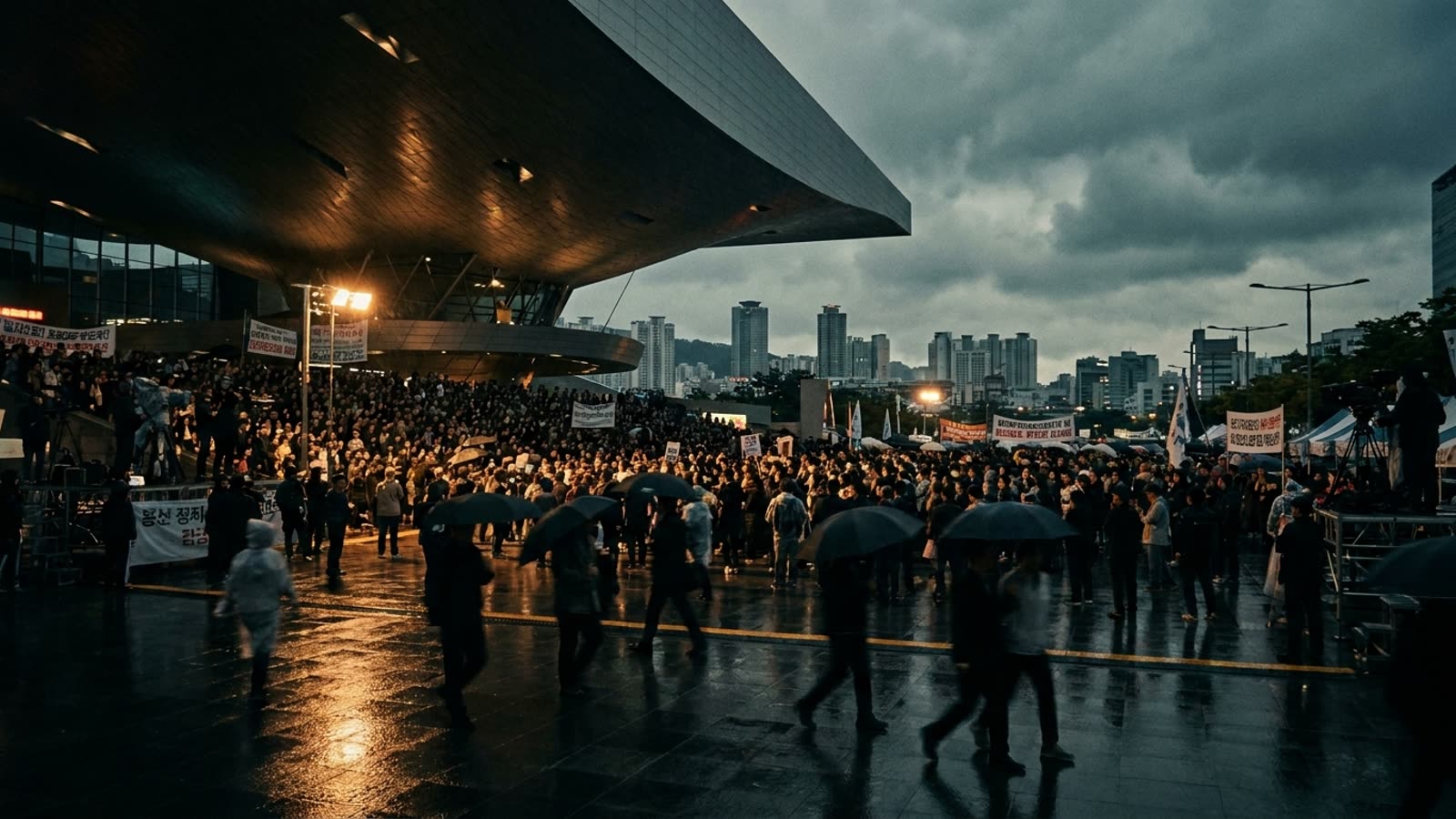
The Busan International Film Festival has long served as the bellwether for Asian cinema's commercial and artistic ambitions — a place where Korean auteurs meet Chinese money, Japanese distributors, and increasingly, Hollywood scouts hunting for the next Parasite. This year's 31st edition, which wrapped October 15, delivered the festival's largest audience in more than a decade. It also delivered a reminder that film festivals, however much they prefer to discuss mise-en-scène, cannot escape the geopolitics swirling around them.
The numbers were impressive: attendance surged past previous years, with industry accreditation up sharply as Asian producers sought co-production partners in an era of fragmenting streaming deals and tightening domestic markets. But the conversation in Busan's hotel lobbies and beachside bars kept circling back to two controversies that threatened to overshadow the programming.
The Korean box-office firestorm
A domestic hit sparked accusations of political bias, reigniting familiar debates about whether Korean cinema's global success has made it a target for ideological scrutiny at home. The details remain contested, but the pattern is recognizable: a commercially successful film becomes a proxy war for broader cultural anxieties. Festival organizers found themselves navigating complaints from multiple directions, a position that has become uncomfortably routine for major Asian festivals trying to balance artistic freedom with government relationships and sponsor sensitivities.
An Iranian director's war speech
More explosive was an Iranian filmmaker's remarks that veered into explicit commentary on ongoing conflicts in the Middle East. The speech drew immediate pushback from some delegations and quiet applause from others, exposing the fault lines that run through any gathering of filmmakers from countries with divergent foreign policies. Festival leadership issued carefully worded statements that satisfied no one — the diplomatic equivalent of a film that tests well but generates no passion.
Regional consolidation accelerates
Beyond the controversies, Busan's market floors told a quieter but arguably more consequential story. Asian producers are closing ranks, forming regional alliances as Hollywood's appetite for international co-productions cools and streaming platforms rationalize their global content budgets. Korean, Japanese, and Southeast Asian production companies announced a flurry of partnerships, suggesting that the next wave of prestige Asian cinema may be financed and distributed through intra-regional networks rather than the Los Angeles-Seoul pipeline that defined the previous decade.
Our take
Busan's record crowds are genuine good news for a festival circuit still recovering from pandemic-era disruptions. But the political turbulence is a feature, not a bug, of Asian cinema's growing global influence. When films matter enough to spark diplomatic incidents and domestic culture wars, it means they matter. The festival's challenge now is the same one facing every major cultural institution: how to remain a space for artistic provocation while navigating an era when every provocation carries geopolitical freight. Busan managed it this year, barely. The margins will only get thinner.