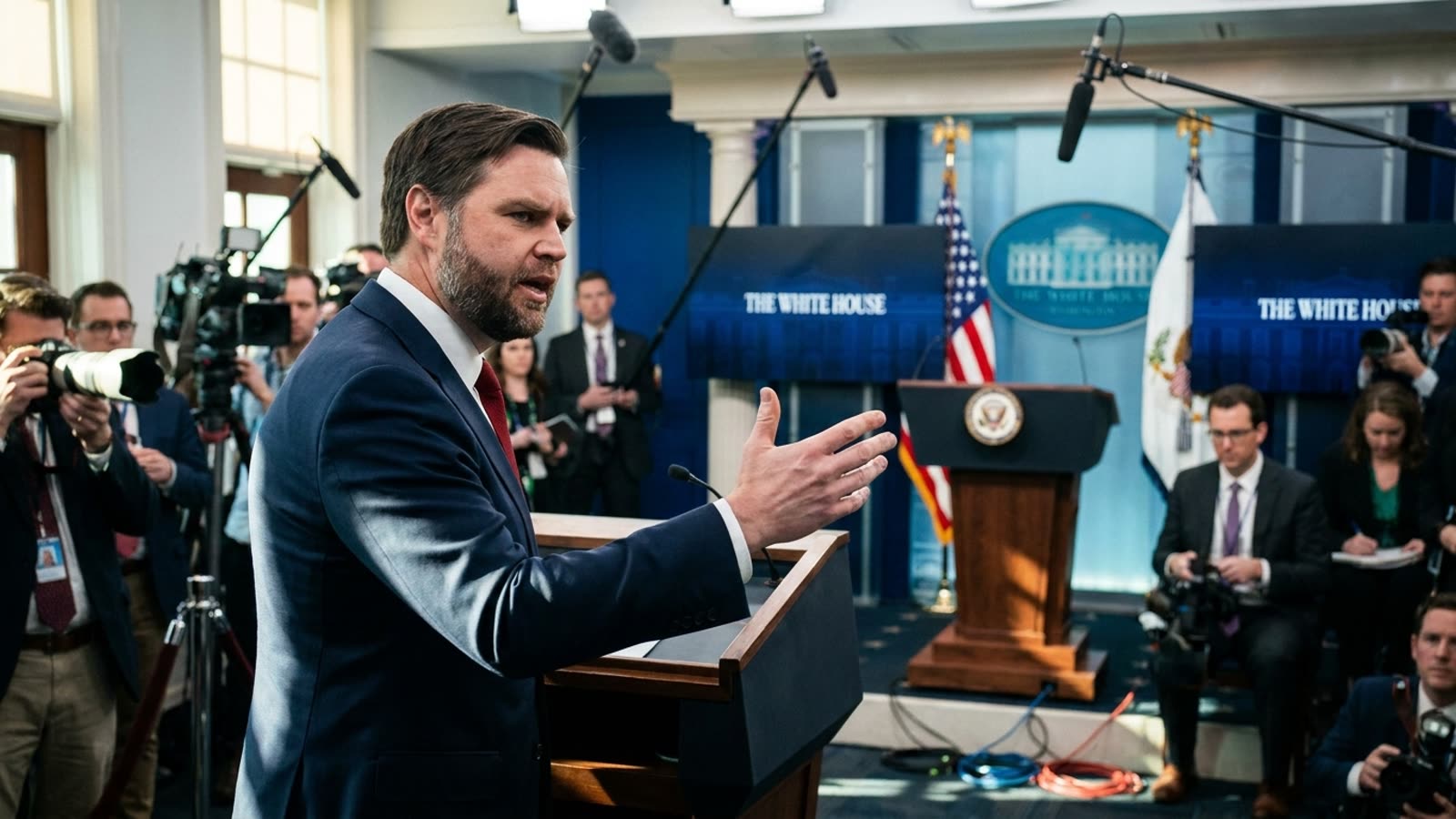
The vice president of the United States does not typically issue public warnings to Israel. That J.D. Vance did so this week—cautioning the Netanyahu government against actions that could destabilize the freshly signed Iran ceasefire—tells you everything about where this administration's priorities now sit.
Vance's remarks, delivered with the diplomatic subtlety of a dropped anvil, came just days after President Trump stood in Versailles claiming credit for ending hostilities between Washington and Tehran. The message to Jerusalem was unmistakable: this deal belongs to Trump, and anyone who threatens it—ally or otherwise—will find themselves on the wrong side of the White House.
The alliance recalibrated
Israel has spent decades operating under the assumption that American administrations, regardless of party, would ultimately defer to its security concerns regarding Iran. That assumption now looks dangerously outdated. Vance's intervention suggests the Trump White House views the ceasefire as a legacy-defining achievement worth protecting even at the cost of traditional alliance management.
The timing is pointed. Israeli officials have made little secret of their skepticism about any agreement that leaves Iran's nuclear infrastructure intact and its regional proxies operational. Netanyahu's government faces domestic pressure to maintain freedom of action against Iranian assets, particularly in Syria and Lebanon. Vance's warning effectively tells Israel that such freedom now comes with American consequences.
The domestic calculation
For Trump, the Iran deal serves multiple purposes beyond foreign policy. It provides a counter-narrative to critics who painted his first-term withdrawal from the Obama-era JCPOA as reckless. It offers a diplomatic win heading into the second half of his term. And it gives Vance—widely seen as positioning for 2028—a chance to demonstrate foreign policy muscle.
But the political math is delicate. Evangelical Christians and hawkish Republicans have traditionally formed the bedrock of pro-Israel sentiment within the GOP base. Vance's willingness to publicly pressure Jerusalem suggests either supreme confidence that the base will follow Trump anywhere, or a calculated bet that voters care more about ending Middle Eastern conflicts than about alliance maintenance.
What Netanyahu does next
The Israeli prime minister now faces an unenviable choice. He can accept the American framework and hope the ceasefire holds, banking political capital on other domestic priorities. Or he can test Washington's resolve, calculating that Trump's personal affinity for Israel will ultimately override Vance's tough talk.
History suggests Netanyahu will probe for weakness. He has outlasted multiple American administrations by understanding that Washington's bark often exceeds its bite on Israeli security matters. But this White House has shown unusual willingness to break with Republican orthodoxy when Trump's personal brand is at stake.
Our take
Vance's warning is less about Israel than about Trump. This administration has decided that owning a Middle Eastern peace deal—however imperfect—matters more than maintaining the reflexive deference to Jerusalem that has characterized American policy for generations. Whether that represents strategic clarity or diplomatic hubris will depend entirely on whether the ceasefire survives contact with reality. Netanyahu is surely already testing the proposition.