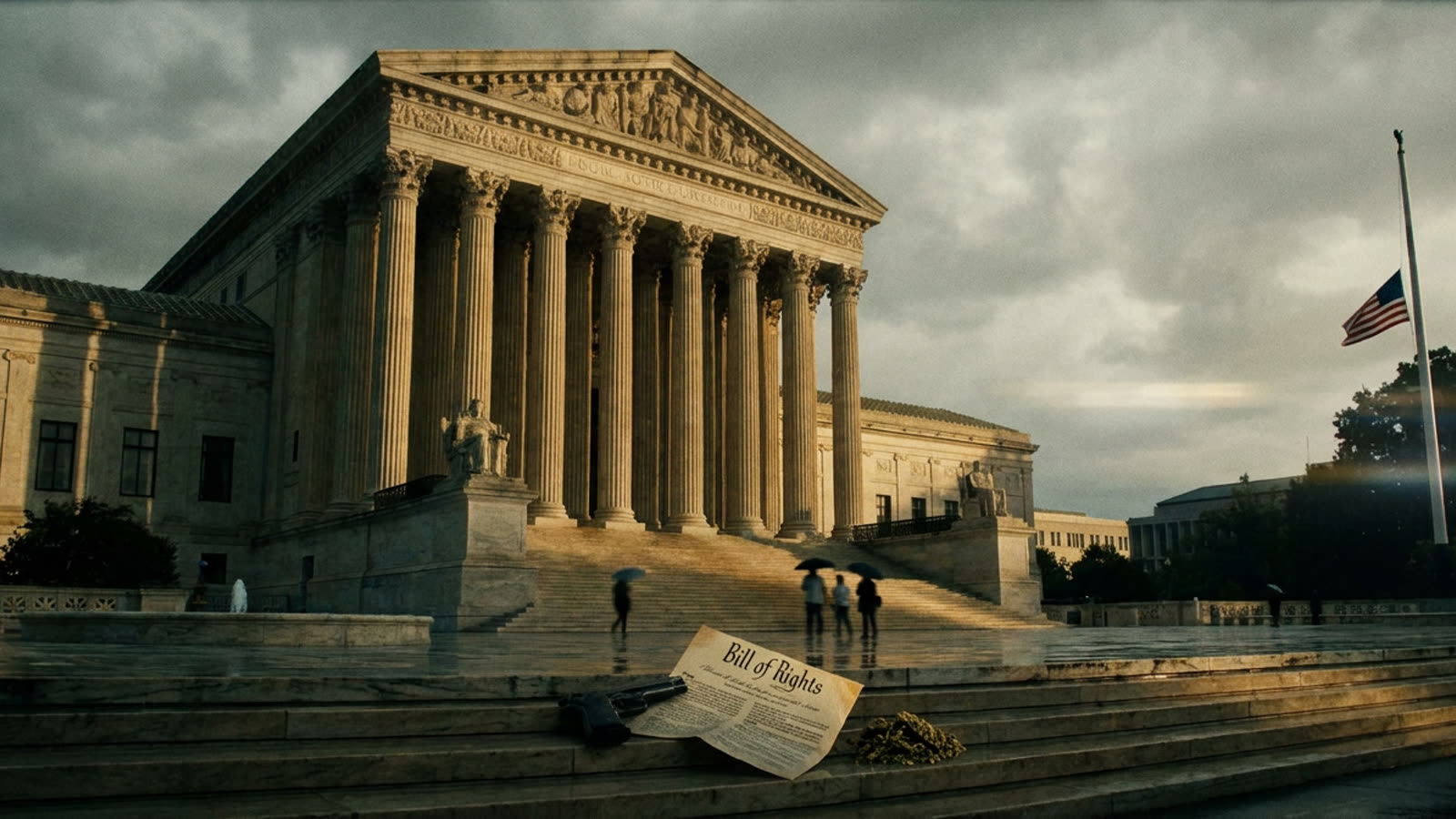
The Supreme Court has just made it significantly harder for the federal government to take guns away from people who use drugs, ruling that blanket prohibitions on firearm possession by drug users may violate the Second Amendment. The decision marks another expansion of gun rights under the Court's current conservative majority and creates new complications for federal law enforcement.
A constitutional collision course
The case centered on a federal law that makes it illegal for anyone who uses controlled substances to possess firearms. For decades, this statute has been a cornerstone of federal gun enforcement, allowing prosecutors to charge drug users found with weapons even when no violent crime occurred. The Court's ruling suggests this approach may be constitutionally suspect, at least when applied to non-violent drug users.
The decision arrives at a particularly awkward moment. As states continue legalizing cannabis for medical and recreational use, millions of Americans technically violate federal drug laws daily. Under the now-questioned statute, all of them were prohibited from owning guns. The Court appears to be saying that this sweeping disarmament goes too far.
Enforcement nightmare ahead
Federal prosecutors now face a predicament. The ruling doesn't completely invalidate the law but requires a more nuanced approach to enforcement. Authorities must likely show something beyond mere drug use to justify disarmament—perhaps evidence of addiction, impairment while armed, or violent behavior. This case-by-case analysis will consume resources and create inconsistent outcomes.
The decision also intersects uncomfortably with ongoing debates about marijuana legalization and criminal justice reform. Progressive prosecutors who've already deprioritized drug enforcement may welcome the ruling, while law-and-order conservatives find themselves defending an expansion of gun rights they might not have anticipated.
Our take
This ruling exposes the inherent tension in America's approach to both guns and drugs. A Court that champions gun rights can't coherently strip those rights from millions of otherwise law-abiding citizens who happen to use substances that many states have legalized. The decision forces a reckoning: either the federal drug classification system needs updating, or the Second Amendment means less than its advocates claim. The Court has chosen the former, and Congress will eventually have to follow.