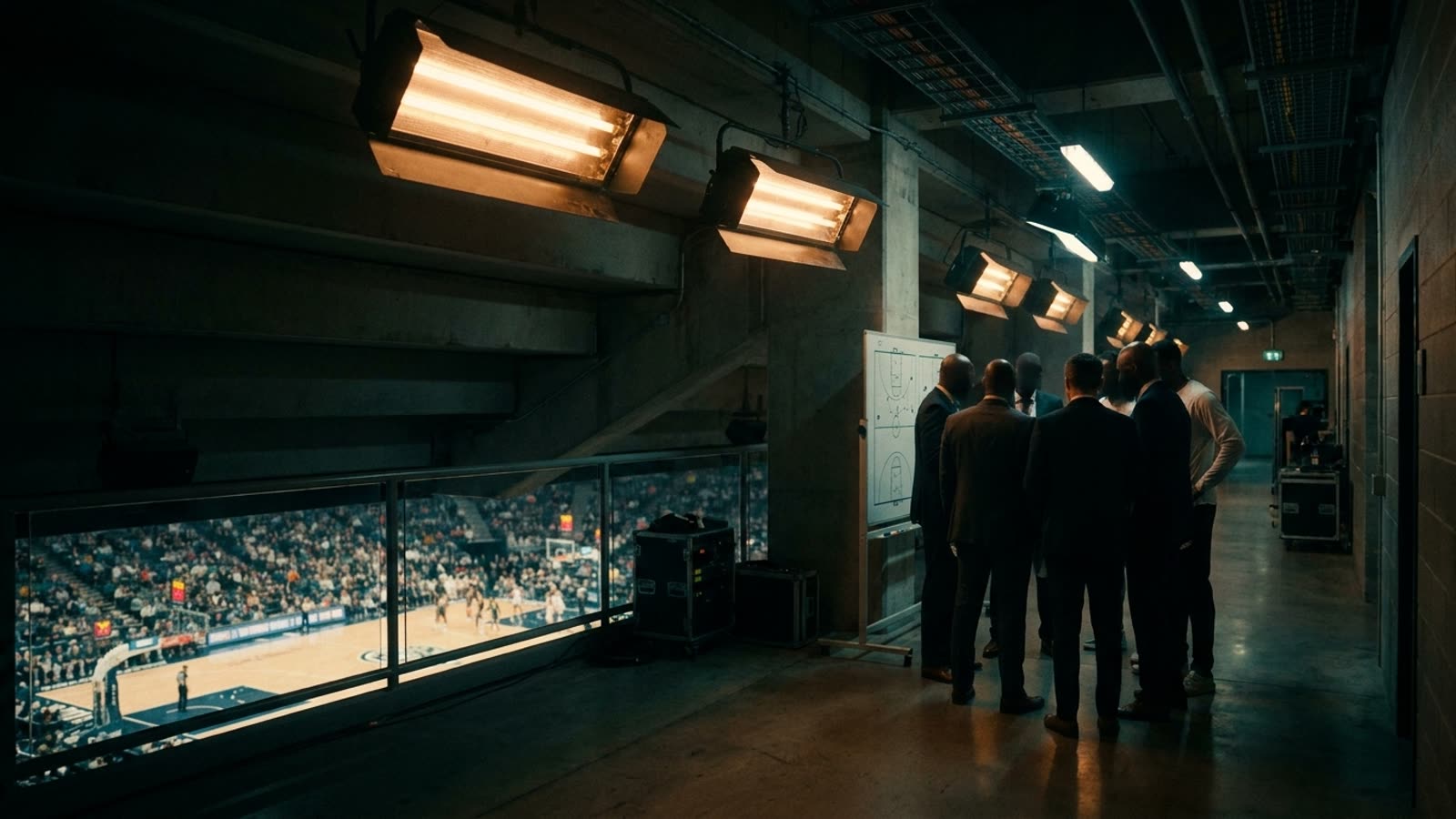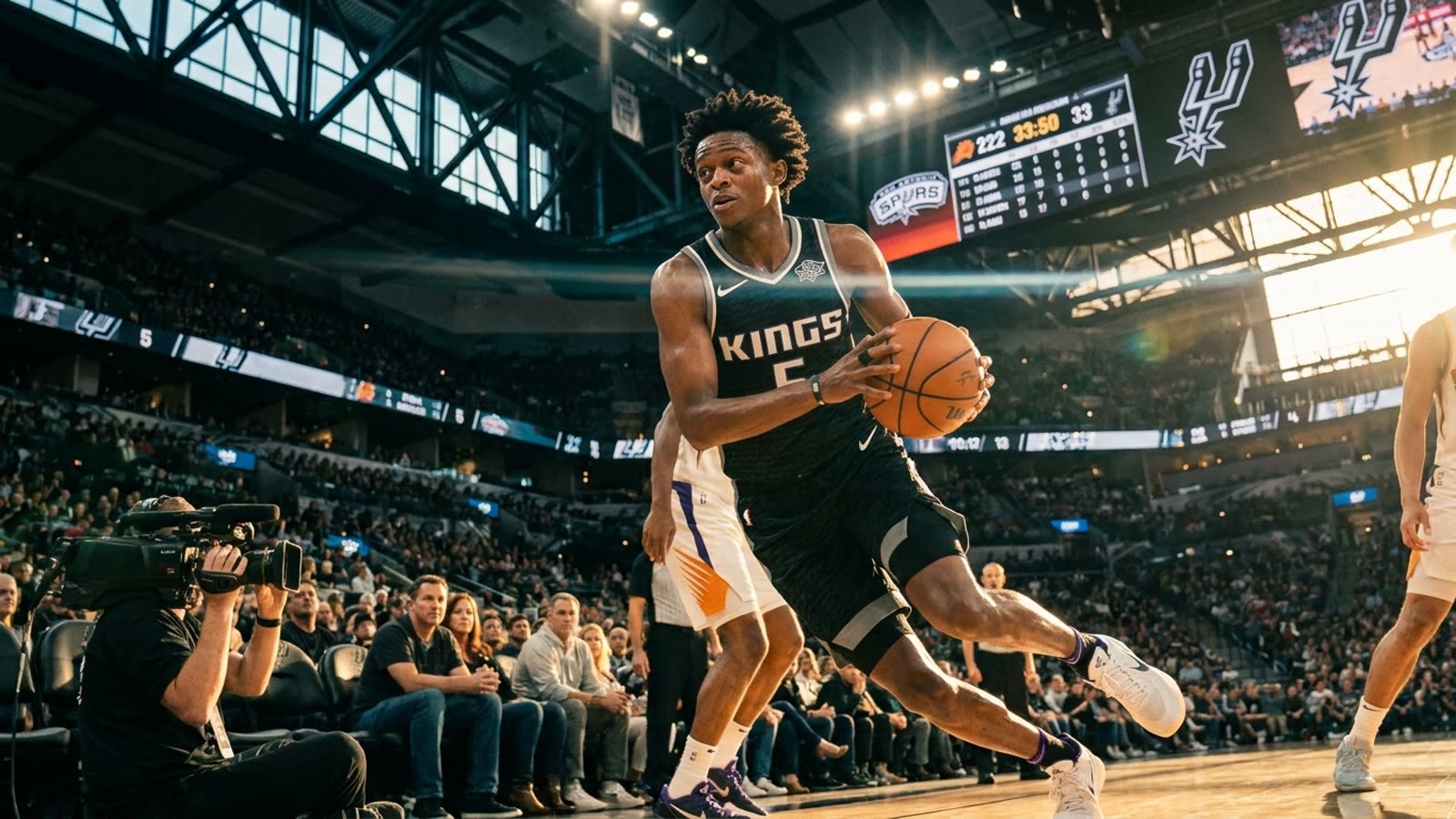
The Spurs have spent the better part of a year acquiring point guards the way some franchises collect draft picks — compulsively, optimistically, with a vague faith that talent eventually sorts itself out. On Thursday night in Phoenix, coach Mitch Johnson finally stopped hedging and put De'Aaron Fox, Dylan Harper, and Stephon Castle on the floor together. San Antonio won 123-103. The scoreboard answered nothing.
Preseason results are meaningless, of course, but lineups are not. Johnson's willingness to run three ball-handlers simultaneously — none of whom is a natural wing, all of whom need the ball to be effective — suggests the Spurs believe they can reinvent positional basketball through sheer skill density. It is either the logical extension of the pace-and-space era or its reductio ad absurdum.
The arithmetic problem
Fox arrived from Sacramento in February's blockbuster trade, a 28-year-old speedster who has averaged north of six assists per game for five consecutive seasons. Harper, the No. 2 pick last June, is a 6-foot-4 playmaker whose college tape screamed lead guard. Castle, taken fourth overall in 2024, spent his rookie year learning to play off Victor Wembanyama but remains most comfortable with the ball in his hands. Johnson now has three starting-caliber initiators and roughly 96 minutes of backcourt time to distribute.
The math does not math. Someone will sacrifice touches, shots, and development reps. In Phoenix, the trio shared the court for only 11 minutes — enough to glimpse the spacing chaos when all three gravitate toward the paint, not enough to see how defenses will scheme against it in April.
Why they are doing it anyway
The Spurs' logic is defensible, if aggressive. Fox's speed collapses defenses; Harper's size (6-4, 210 pounds) lets him guard bigger wings; Castle's defensive versatility was already evident as a rookie. In theory, San Antonio can switch everything, run in transition, and overwhelm opponents with decision-making before half-court sets even form. Wembanyama, meanwhile, provides a rim-protecting safety net that forgives backcourt gambling.
The risk is that theory rarely survives contact with playoff basketball, where half-court execution and reliable three-point shooting decide games. Fox shot 33 percent from deep last season. Harper's college percentage was 34. Castle's was 32. Three guards who cannot consistently space the floor is not innovation — it is a math error with good intentions.
Our take
San Antonio is betting that talent concentration trumps positional orthodoxy, and they may be right — the modern NBA rewards creators, and the Spurs now have four of them if you count Wembanyama. But the league's best teams still feature wings who can shoot and defend without needing the ball. Golden State's dynasty was built on Klay Thompson standing in corners. Boston's title came from Jaylen Brown playing off Jayson Tatum. The Spurs have assembled a fascinating roster and a genuinely novel problem. Solving it will determine whether this is the next great team or the most talented 45-win squad in memory.