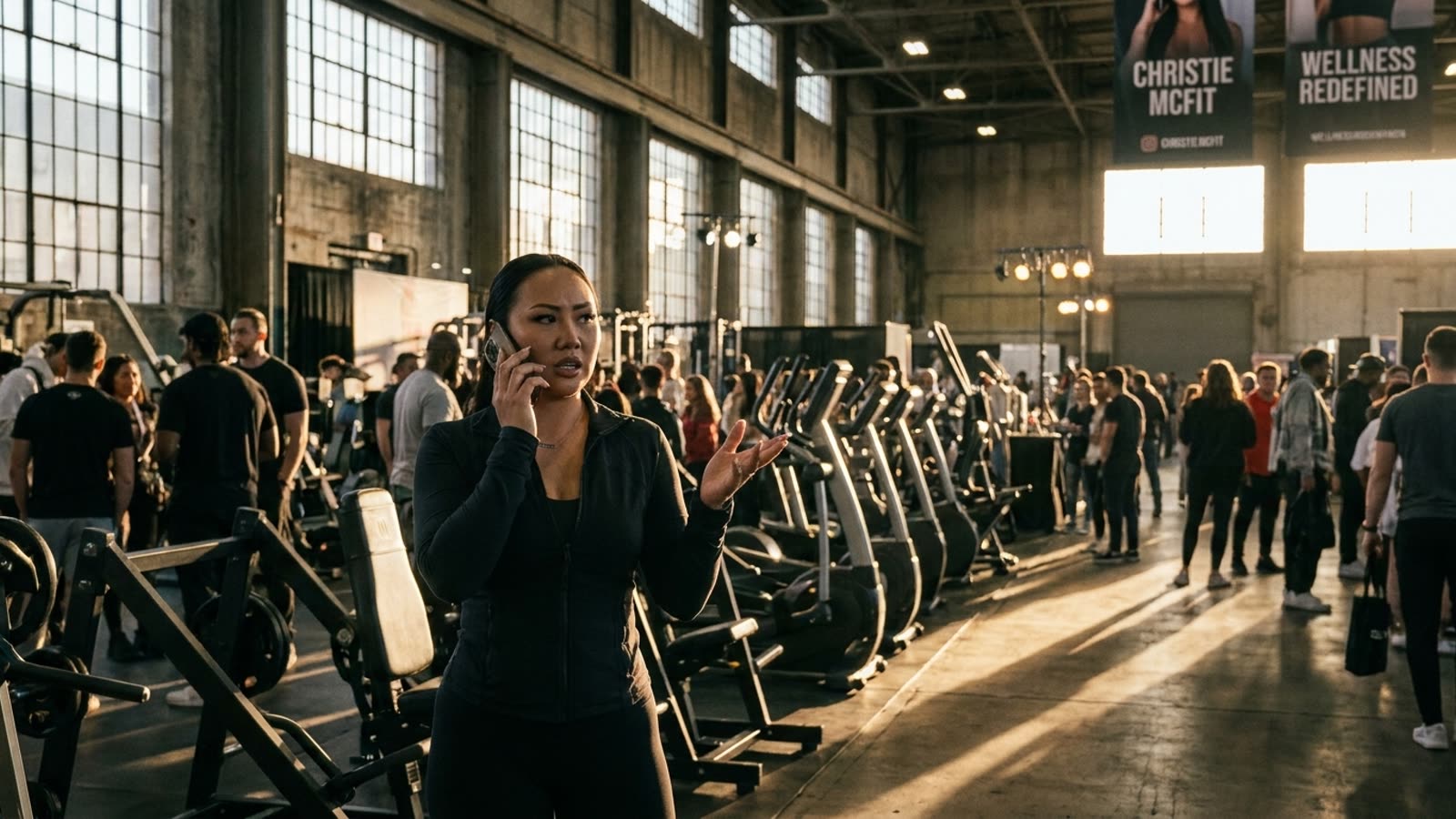
The traditional trajectory for fitness influencers with ambitions beyond brand deals has long been predictable: build an Instagram following, launch a workout app, maybe secure a supplement partnership, and if things go sideways financially, quietly migrate to OnlyFans. Christie McFit is attempting the journey in reverse, and her success or failure will tell us something important about where American attitudes toward sex work actually stand in 2026.
The 29-year-old, who built a subscriber base reportedly exceeding 100,000 on the adult platform through a combination of explicit content and fitness tutorials, has spent the past several months aggressively repositioning herself as a mainstream wellness personality. The strategy involves a new YouTube fitness series, a forthcoming workout app that conspicuously omits any reference to her OnlyFans origins, and a carefully curated Instagram presence that emphasizes athletic achievement over the content that made her wealthy.
The economics of destigmatization
What makes McFit's gambit interesting is not the ambition itself but the timing. The fitness industry has historically maintained rigid boundaries around association with adult content — supplement companies, athleisure brands, and gym chains have all demonstrated zero tolerance for creators with explicit portfolios. Yet those boundaries have grown porous. Mia Khalifa successfully transitioned into sports commentary. Bella Thorne's OnlyFans venture did not end her acting career. The question McFit is answering is whether the destigmatization has penetrated deeply enough to reach the wellness space, which trades on aspirational purity in ways that entertainment does not.
The financial incentives are substantial. Top fitness influencers with mainstream brand partnerships can earn seven figures annually without the platform dependency and content churn that OnlyFans demands. McFit reportedly continues to maintain her adult content presence — she has not burned the boats — but her public emphasis has shifted entirely toward the fitness brand she is attempting to build.
The platform's identity crisis
McFit's pivot also illuminates OnlyFans' own uncomfortable position. The platform has spent years attempting to shed its reputation as primarily an adult content marketplace, courting musicians, chefs, and fitness instructors who use it for non-explicit subscription content. Yet its most successful creators remain those in adult entertainment, and the company's 2021 attempt to ban explicit content — reversed within a week after creator backlash — demonstrated how dependent its business model remains on the very content it publicly distances itself from.
Creators like McFit who achieve success on the platform and then seek to leave it for mainstream opportunities represent both validation and threat: proof that OnlyFans can launch careers, but also evidence that those careers ultimately want to be somewhere else.
Our take
McFit's crossover attempt will likely succeed, not because American attitudes toward sex work have fundamentally transformed, but because the fitness influencer market has grown so saturated that brands are increasingly willing to overlook backgrounds they would have found disqualifying five years ago. The stigma has not vanished; it has simply become less expensive than the alternative of having no influencer partnerships at all. That is not cultural progress. It is market correction.