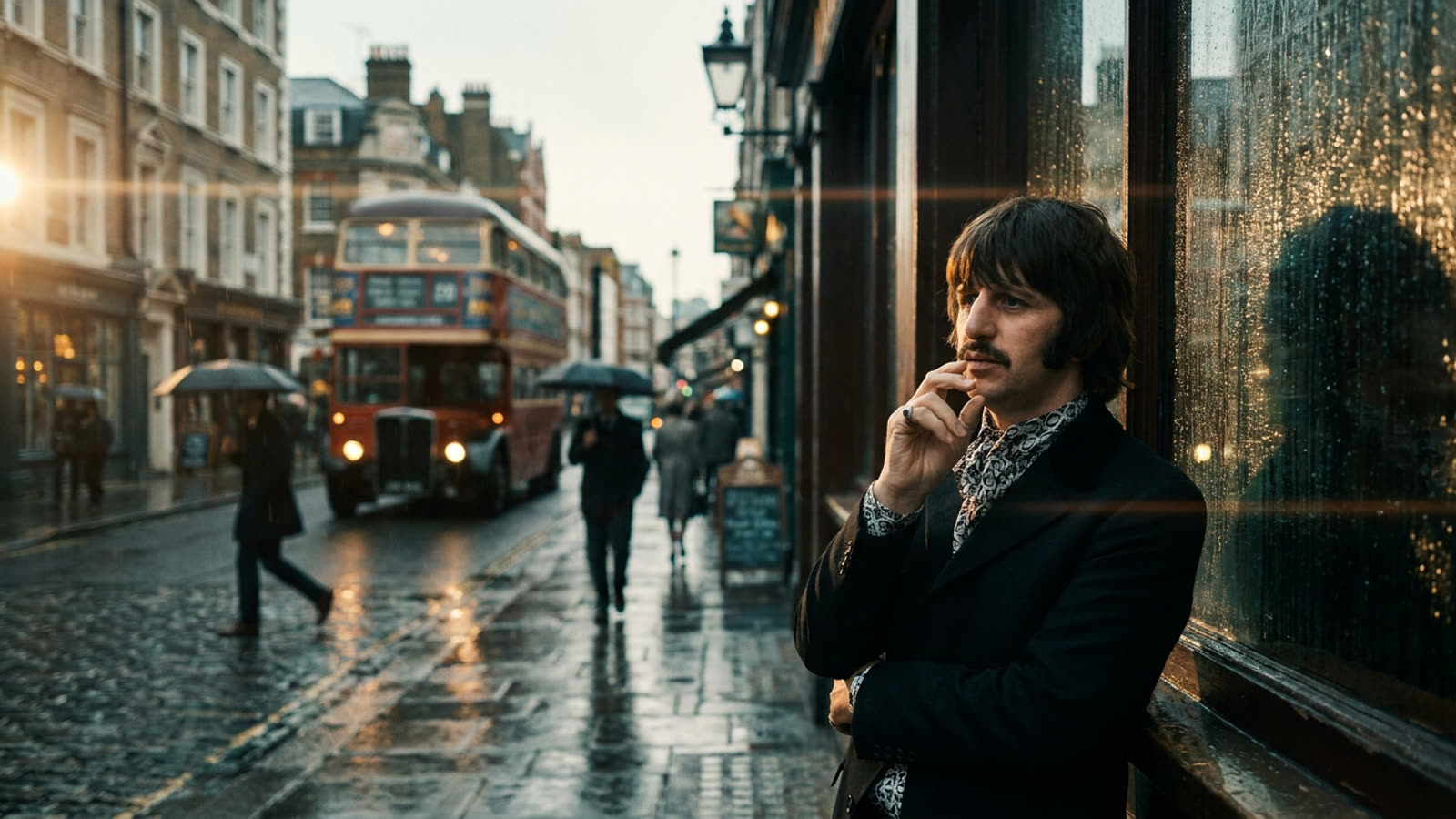
The Beatles biopic project has been the worst-kept secret in Hollywood for two years, but it acquired a new wrinkle this week: Ringo Starr is talking. The 85-year-old drummer—one of two surviving Beatles until Paul McCartney's continued presence makes it a pair—has been offering his thoughts on Sam Mendes's ambitious four-film undertaking, and his commentary reveals the peculiar burden of being the last witness to your own legend.
Starr's position is unprecedented in rock biography. When biopics tackled Freddie Mercury or Elvis Presley, the subjects were safely dead, their estates cooperative but voiceless. Here, a principal character can watch an actor inhabit his 25-year-old self and offer notes. It is unclear whether this is a gift to filmmakers or a curse.
The authenticity trap
Mendes has reportedly secured cooperation from both Starr and McCartney, along with the estates of John Lennon and George Harrison. This sounds like a producer's dream—access to the vault, blessing from the principals, no lawsuit risk. But living subjects create a gravitational pull toward hagiography. Every scene must pass through the filter of "would Ringo approve?" and the answer shapes what reaches the screen.
The most celebrated music biopics have thrived on distance. "Walk the Line" worked because Johnny Cash died before release, freeing the filmmakers to show his cruelty alongside his genius. "Bohemian Rhapsody" was criticized precisely because Queen's surviving members exercised too much control, sanding down Freddie Mercury's edges until he became a greeting card.
Four films, four perspectives
Mendes's structural gambit—one film from each Beatle's point of view, released simultaneously—is either visionary or logistically insane. The approach acknowledges that the Beatles story is fundamentally Rashomon: four men experienced the same decade together and emerged with four incompatible memories. Starr's version of the breakup differs from Lennon's, which differs from McCartney's, which differs from Harrison's quiet resentment.
But whose Ringo will we see? The self-deprecating everyman he's cultivated for sixty years, or the session drummer who was genuinely the best in Liverpool, whose fills on "Rain" and "A Day in the Life" were acts of quiet genius? Starr has spent a lifetime deflecting credit; a biopic supervised by Starr will likely continue the tradition.
Our take
There is something melancholy about watching the last Beatles grapple with their own mythology. Starr and McCartney have earned the right to shape their legacy, but legacy-shaping is the enemy of truth. The best thing Ringo could do for these films is what he did for the band: show up, play his part, and trust the others to make it work. The worst thing he could do is what every living subject does—remember himself as he wishes he had been.