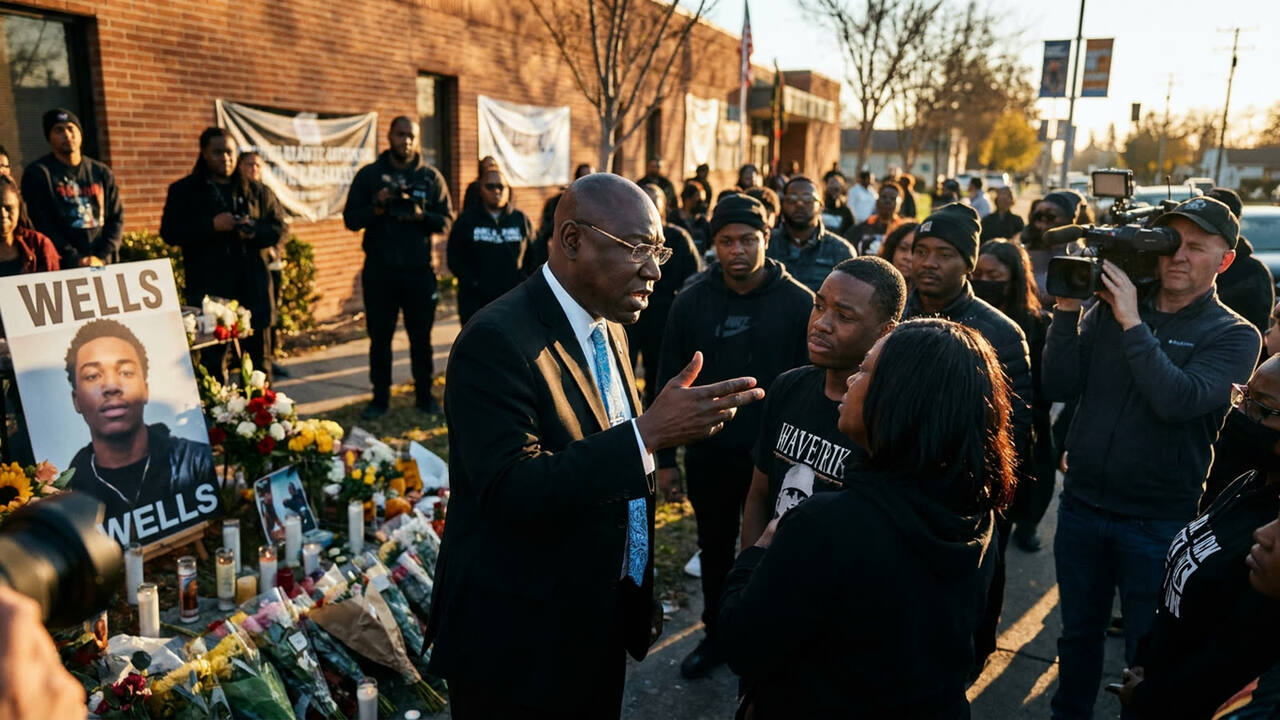
The hiring of Benjamin Crump is never merely a legal maneuver; it is a declaration of war against institutional silence. The family of Nolan Wells, a college athlete whose death has raised troubling questions, has retained the attorney who represented the families of George Floyd, Breonna Taylor, and Trayvon Martin. Whatever happened to Wells, the family has decided that the existing investigation is insufficient — and that the only path to answers runs through the court of public opinion.
Crump's involvement transforms cases. His practice has become a kind of national grief amplifier, turning local tragedies into cable-news fixtures and congressional talking points. For families who feel stonewalled by authorities, he offers something invaluable: visibility. For institutions under scrutiny, his appearance on the other side of the table is a signal that quiet settlements and bureaucratic delays will no longer suffice.
The Crump playbook
The attorney's method is by now familiar. He combines aggressive media engagement with civil litigation, understanding that public pressure often accomplishes what depositions cannot. His critics call it ambulance-chasing dressed in social-justice rhetoric; his admirers note that he has secured hundreds of millions of dollars for families who might otherwise have been ignored. The truth is probably that he is both a shrewd businessman and a genuine believer in the cause — a combination that makes him effective and polarizing in equal measure.
For the Wells family, the calculation is straightforward: if the investigation into their son's death has been inadequate, Crump's involvement guarantees that inadequacy will be examined under klieg lights.
What we don't know
The circumstances surrounding Wells's death remain murky. Details have emerged in fragments, and the family's decision to hire Crump suggests they believe crucial information is being withheld or overlooked. College athletics programs, with their institutional resources and legal teams, have historically been adept at managing narratives around athlete welfare. Whether that is happening here is precisely what the family intends to find out.
The coming weeks will likely bring press conferences, document requests, and the slow accretion of facts that characterizes Crump's high-profile cases. The university and any other parties involved should prepare for scrutiny they may have hoped to avoid.
Our take
The need for families to hire celebrity attorneys to get answers about their children's deaths is itself an indictment. Ben Crump's business model exists because American institutions — police departments, universities, corporations — have repeatedly demonstrated that they will not investigate themselves with rigor unless forced. The Wells family should not have to wage a media campaign to learn the truth. That they feel compelled to do so tells us something about the case, and something larger about the country.