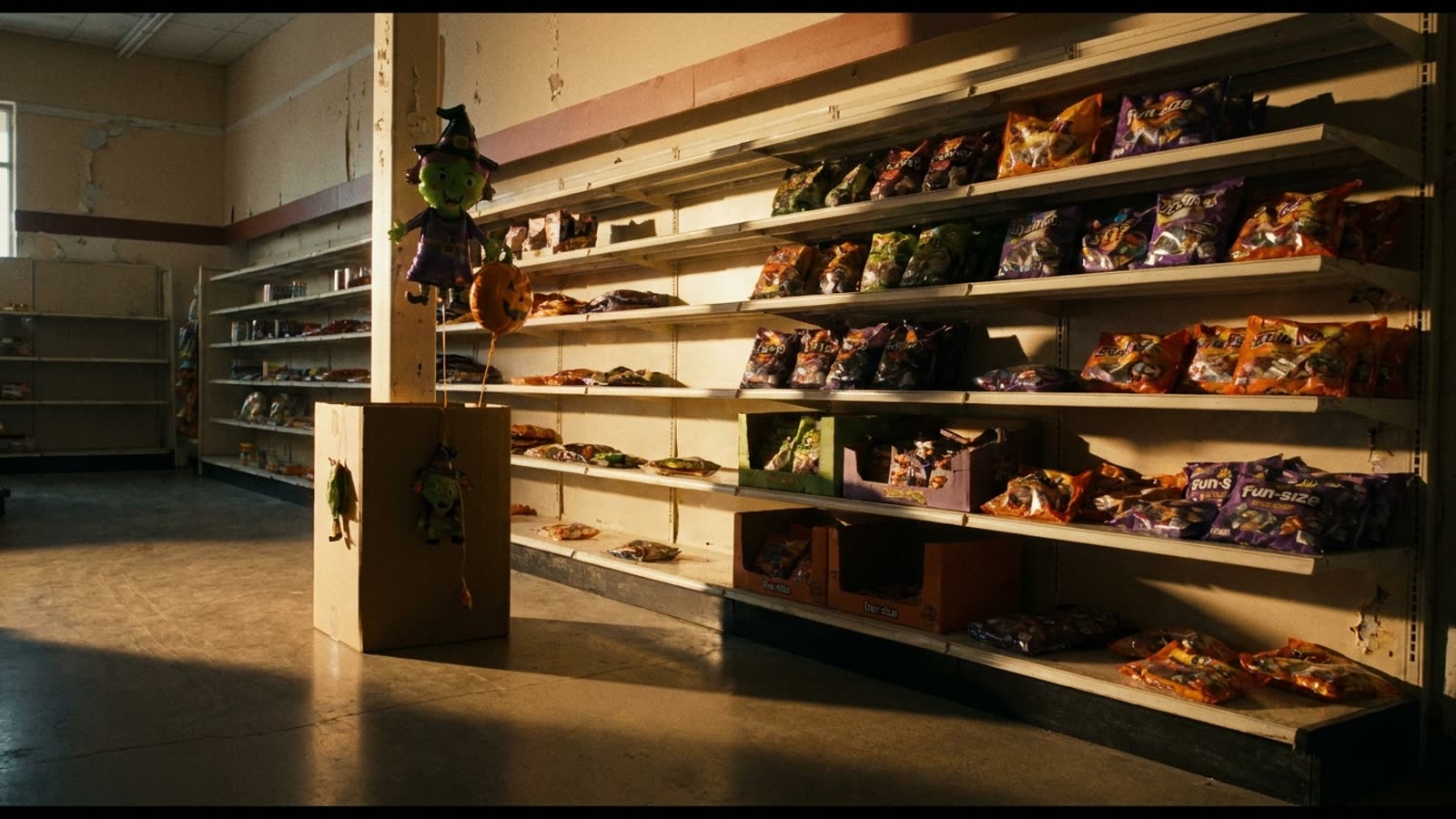
The 100-piece bag of assorted miniatures — that totemic orange mesh sack of Snickers, Reese's, and Kit Kats — now costs American households 71 percent more than it did in 2021. What was once a $15 impulse buy at Costco has become a $25-plus line item that families are actively budgeting around, skipping, or replacing with off-brand alternatives. Halloween, that most democratic of holidays, has quietly become a stress test for the middle-class pantry.
The numbers are stark, but they are not mysterious. They trace directly to the commodity chaos of the past three years.
The cocoa shock
Cocoa futures have spent much of 2025 and 2026 at or near record highs, driven by disease and adverse weather in West Africa, which supplies roughly 70 percent of the world's beans. Ghana and Côte d'Ivoire have both reported disappointing harvests, and the structural underinvestment in replanting aging trees is now impossible to ignore. Hershey, Mars, and Mondelez have all passed these costs through to consumers — sometimes visibly via price tags, sometimes invisibly via shrinkflation (fewer pieces per bag, smaller bars per piece).
Sugar, too, has been volatile. U.S. sugar policy — a baroque system of tariffs and quotas designed to protect domestic beet and cane producers — keeps American sugar prices well above world levels. When global supply tightens, American confectioners have even less room to maneuver.
The behavioral shift
Retailers report that shoppers are trading down aggressively. Store-brand candy sales are up double digits year-over-year. Some families are opting out of the traditional bowl-on-the-porch model entirely, choosing instead to take their children trick-or-treating without reciprocating. Others are buying earlier, hunting for September clearance deals, or turning to costume swaps and DIY treats to offset the confectionery bill.
This is not, in the grand scheme of household finance, a crisis. But it is a useful barometer. Halloween candy is a discretionary purchase with deep cultural stickiness — people want to participate, and they feel mild social shame if they don't. When even that category sees demand destruction, it signals that inflation fatigue has penetrated beyond essentials into the rituals that define American suburban life.
Our take
The candy aisle is a mirror. It reflects cocoa's climate vulnerability, the absurdity of U.S. sugar protectionism, and the cumulative exhaustion of consumers who have spent five years watching prices ratchet upward while wages lag. A 71 percent increase in the cost of fun-size Milky Ways will not destabilize the republic. But it will make a lot of parents feel, viscerally, that something has gone wrong — and that feeling has political consequences that outlast any single earnings report or Fed meeting.