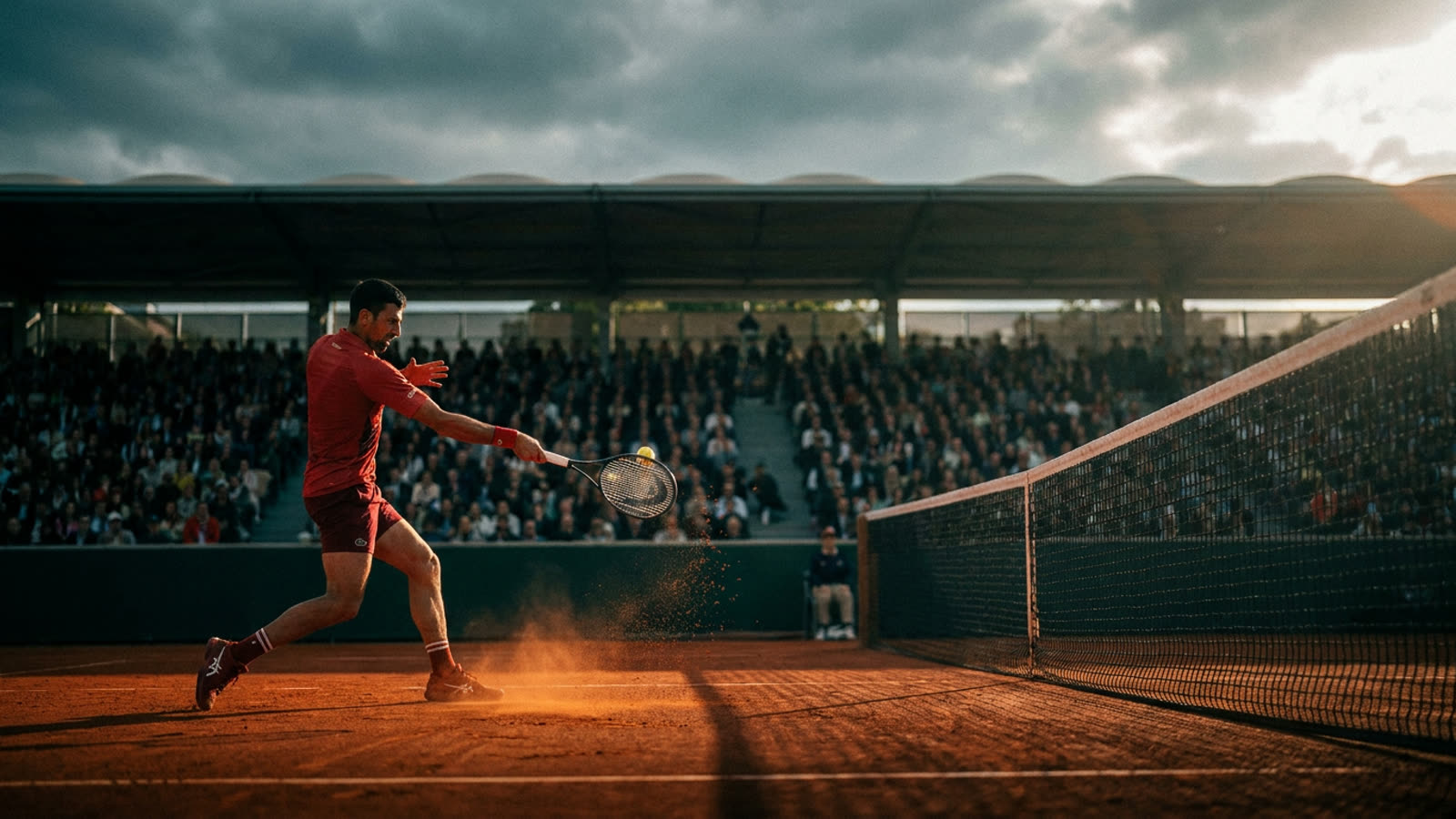
The 2026 French Open men's final presents a genuine rarity in modern tennis: a championship match that the sport's collective intelligence failed to anticipate, and that betting markets are still struggling to properly value.
Alexander Zverev, the German who has spent nearly a decade oscillating between brilliance and bewildering collapse, will face Italy's Flavio Cobolli on Sunday in a final that has confounded the prediction industry. The odds have been volatile all week, with Zverev installed as a clear favorite but at prices that suggest bookmakers themselves are hedging against their own models.
The Zverev paradox
Zverev's career has been a masterclass in unfulfilled potential. The 29-year-old possesses the physical tools and technical foundation of a multi-Slam champion, yet his Grand Slam cabinet contains just one major trophy. His serve is among the tour's most formidable weapons; his mental fortitude in decisive moments has historically been his Achilles heel.
That he has reached another major final is not itself surprising. That he has done so playing some of his most composed tennis in years—and against a draw that cleared unexpectedly early of top-tier opposition—speaks to either genuine maturation or fortunate circumstances. Perhaps both.
Cobolli's improbable run
The Italian's path to Sunday defies easy explanation. Cobolli entered Roland Garros ranked outside the top 30, a clay-court specialist whose game had shown flashes of brilliance without ever producing a result of this magnitude. His semifinal victory was his first win over a top-10 opponent at a major.
What Cobolli lacks in pedigree he compensates for with a relentless baseline game optimized for the red dirt. His forehand generates heavy topspin that kicks unpredictably on clay, and his fitness allows him to extend rallies until opponents crack. Whether these tools are sufficient against Zverev's power remains the central question.
Market uncertainty
The betting lines have been instructive in their instability. Zverev opened as a substantial favorite, but the spread has tightened as money has flowed toward Cobolli from bettors who see value in the underdog's form. The implied probability gap between the two players is narrower than in any French Open final in recent memory featuring such disparate rankings.
This reflects genuine analytical uncertainty rather than mere public sentiment. Cobolli's run has produced data points that traditional models struggle to incorporate: his serve-return numbers against top opposition have improved dramatically over the fortnight, while his unforced error rate has dropped to levels he has never sustained across a full tournament.
Our take
Zverev should win this match. He is the better player, the more experienced finalist, and the one with less to lose. But "should" has been a treacherous word in his career, and Cobolli has spent two weeks proving that the expected outcome is merely a starting point for negotiation. The French Open has given us a final that rewards attention rather than assumption—a genuine contest between a favorite who has never quite been what he could be and an underdog who might be becoming something new.