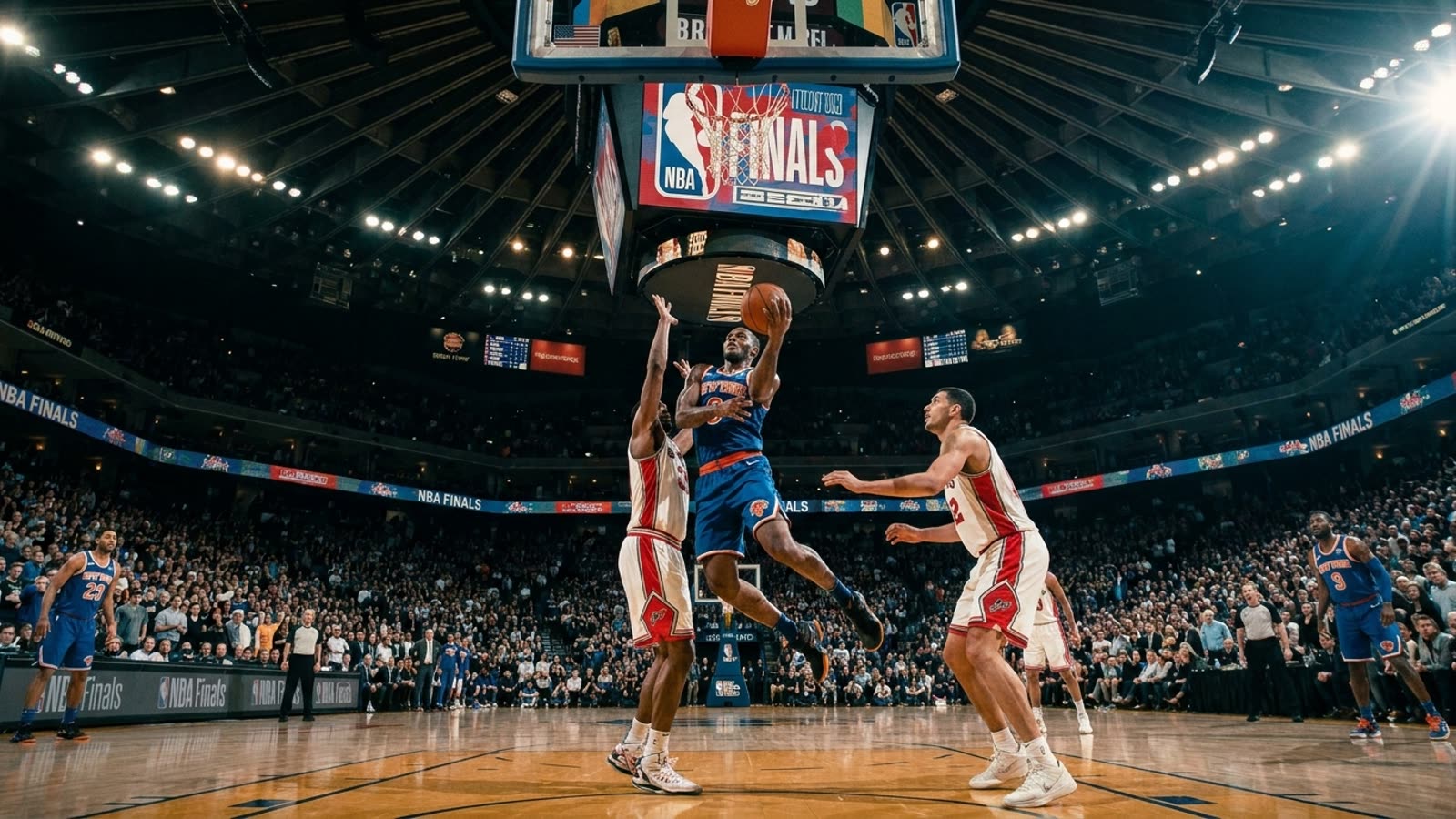
The NBA Finals have always rewarded excess — the extra pass, the extra possession, the extra gear that separates champions from contenders. But Game 3 between the Knicks and Spurs tested the very limits of what a playoff basketball game can contain, producing a spectacle so statistically improbable that league historians will be cross-referencing box scores for weeks.
What unfolded was not merely a competitive basketball game but a stress test of human endurance wrapped in the trappings of professional sport. Multiple overtime periods. Career-high performances from role players thrust into expanded minutes. Shooting percentages that oscillated wildly between historically efficient and comically poor, sometimes within the same quarter. The final buzzer, when it mercifully arrived, felt less like a conclusion than a ceasefire.
The numbers that don't make sense
Record-breaking is a phrase that gets deployed carelessly in sports media, but Game 3 earned the designation honestly. The combined minutes logged by both starting lineups exceeded totals not seen since the shot-clock era's early experiments with pace. Free-throw attempts ballooned as referees struggled to manage increasingly physical play from exhausted defenders. And the game's total possessions approached figures typically reserved for regular-season contests between tanking teams content to run and gun without consequence.
More striking than the aggregate statistics, however, was the distribution of individual performances. Players who had averaged single-digit scoring through the first two games suddenly found themselves carrying offensive loads typically reserved for franchise cornerstones. Whether this represents genuine playoff emergence or merely the statistical noise that accompanies extreme sample sizes remains an open question.
What it means for the series
The conventional wisdom holds that marathon playoff games favor the younger, deeper team. By that logic, San Antonio's developmental core should feel emboldened heading into Game 4. The Spurs' rotation weathered the extended minutes without catastrophic injury, and their bench contributors acquitted themselves admirably when pressed into service.
But conventional wisdom has proven unreliable throughout these Finals. New York's veteran-heavy roster has repeatedly defied predictions of physical decline, and the Knicks' championship experience may prove more valuable than raw athleticism as the series grinds toward its conclusion. Having navigated pressure moments in previous playoff runs, New York's core understands that exhaustion is universal — the question is which team processes it more productively.
Our take
Game 3 was simultaneously the best and worst advertisement for modern NBA basketball. The drama was undeniable, the stakes palpable, and the individual performances genuinely memorable. But the product also revealed the league's ongoing tension between entertainment value and player welfare. Commissioner Adam Silver has spent years defending the playoff format's grueling demands, arguing that postseason intensity is precisely what separates basketball from lesser spectacles. After watching two franchises push their rosters to physiological extremes, one wonders whether that argument will age well. The Finals resume in two days. Both medical staffs will be working overtime.