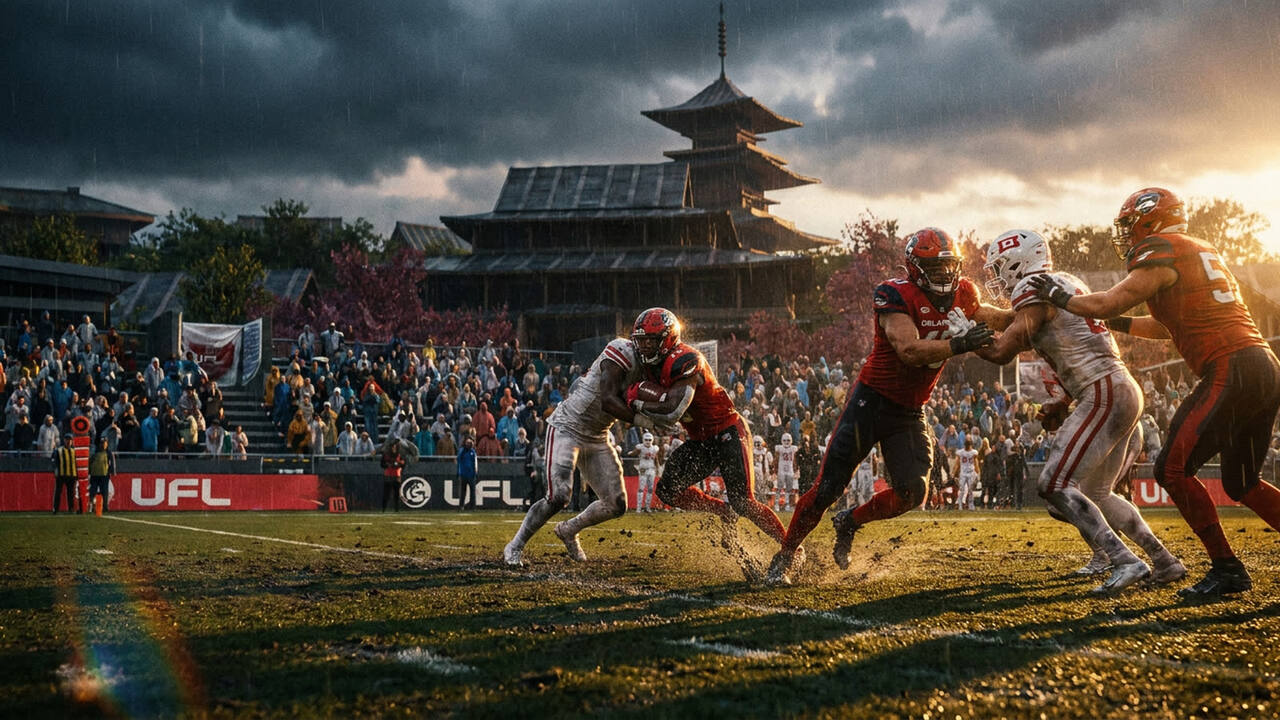
For decades, spring football has been American sports' most persistent delusion—a belief that the nation's appetite for the game is so insatiable that it can support professional leagues in the NFL's off-season. The USFL, the XFL (twice), the AAF: all promised revolution, all delivered bankruptcy filings. Yet here we are in June 2026, with the United Football League staging playoff games that people are actually watching, and the Orlando Storm hosting the DC Defenders in a semifinal that feels less like a novelty and more like a legitimate sporting event.
The difference this time is unglamorous but crucial: the UFL was built by accountants, not visionaries. When the USFL and XFL merged in 2024, the combined entity inherited something neither league had managed alone—a cost structure that didn't require NFL-level television money to survive. Player salaries remain modest. Travel is regionalized. Production values are professional but not extravagant. The result is a league that can turn a small profit on modest ratings rather than hemorrhaging cash while chasing impossible scale.
The Orlando-DC matchup
The Storm enter as favorites, having posted the UFL's best regular-season record behind a defense that ranked first in points allowed. DC countered with the league's most efficient passing attack, a vertical scheme that exploits the talent gap between UFL cornerbacks and receivers. The game shapes up as a classic strength-versus-strength collision—exactly the kind of narrative that spring leagues have historically failed to generate because they couldn't retain enough talent to produce meaningful tactical variation.
What's notable is the venue: Orlando's 25,000-seat stadium will be near capacity, a far cry from the cavernous NFL facilities that made earlier spring leagues look like high school games played in professional settings. The UFL learned that atmosphere matters more than capacity, and that lesson alone might be worth more than any television contract.
Why this iteration might stick
The UFL's survival theory rests on three pillars. First, it serves as a genuine developmental pathway for NFL-caliber players who need game reps—a function the NFL itself acknowledges it cannot provide. Second, it offers sports bettors content during the gambling industry's deadest months, a revenue stream that didn't exist when the original USFL launched in 1983. Third, and perhaps most importantly, it has managed expectations. No one is promising that the UFL will rival the NFL. The pitch is simpler: competent football in the spring, priced accordingly.
The playoffs will test whether casual interest can convert to genuine fandom. A Storm-Defenders game in June competes with the NBA Finals, the French Open, and the early buzz of World Cup preparation. That's brutal counter-programming. But the UFL doesn't need to win that competition—it just needs to survive it.
Our take
Spring football's graveyard is littered with leagues that tried to be something they weren't. The UFL's modest ambition—be good enough, be cheap enough, be patient enough—is either the formula that finally works or the most boring way to fail. After watching Orlando and DC this weekend, we'll have a better sense of which. For now, the mere fact that we're discussing UFL playoff implications in 2026 rather than reading another post-mortem counts as progress.