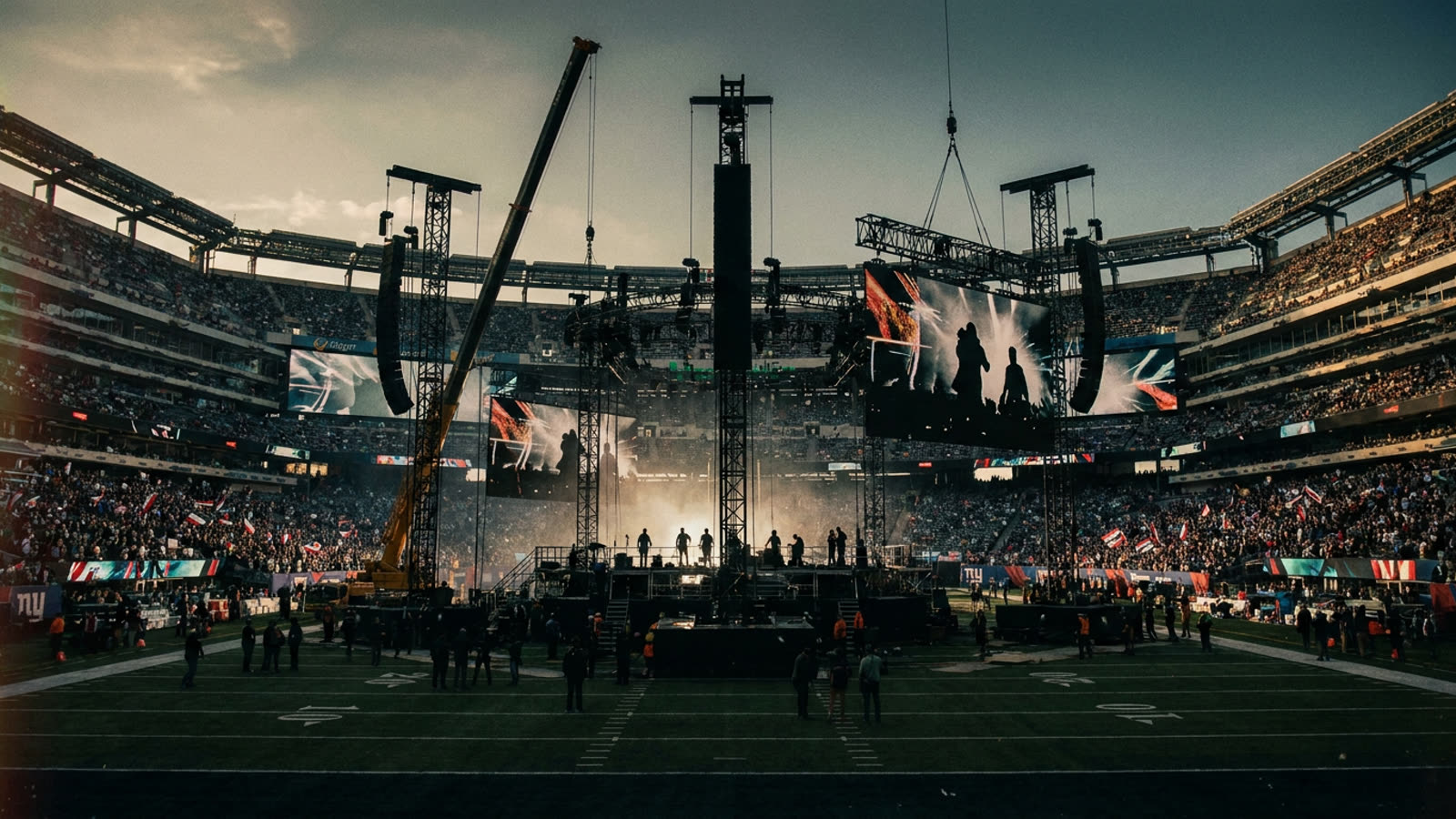
For decades, FIFA resisted the obvious. While the Super Bowl transformed its halftime show into a cultural tentpole that sometimes overshadows the game itself, the World Cup final clung to a strange austerity—a trophy presentation, some fireworks, maybe a local pop star nobody outside the host country recognized. That era ends this summer.
The announcement that Madonna, Shakira, and BTS will share the stage at the 2026 World Cup final represents more than a booking coup. It's FIFA's clearest admission yet that global football's commercial ceiling requires borrowing from American sports entertainment.
The arithmetic of attention
The Super Bowl halftime show reaches roughly 120 million American viewers. The World Cup final commands over a billion globally—yet historically generated a fraction of the sponsorship premium per eyeball. FIFA president Gianni Infantino has spent years studying this gap, and the halftime show is his most aggressive attempt to close it.
The performer selection is surgically calculated. Madonna brings boomer nostalgia and European credibility. Shakira, whose "Waka Waka" became the unofficial 2010 World Cup anthem, offers Latin American resonance and tournament heritage. BTS delivers the Asian market and a younger demographic that increasingly consumes sports through social clips rather than full broadcasts. Together, they represent a demographic Venn diagram that no single artist could achieve.
The gamble beneath the glitter
Football purists will bristle, and their complaints aren't entirely misplaced. The World Cup final already runs long, and a fifteen-minute production number—with the staging, sound checks, and inevitable technical delays—risks bloating an event that derives power from its relative simplicity. The Super Bowl can absorb spectacle because American football is built around interruption. Football is continuous, and its final is meant to feel like a coronation, not a variety show.
There's also the question of whether this transplants cleanly across cultures. The Super Bowl halftime show works partly because it's American excess celebrating itself. A World Cup final in North America featuring predominantly Western pop acts may feel less like global celebration than cultural imperialism with better choreography.
Our take
This was always inevitable, and pretending otherwise was FIFA's last act of self-delusion. The organization that sold a World Cup to Qatar for reasons that had nothing to do with football tradition was never going to leave billions in entertainment revenue on the table indefinitely. Whether the halftime show enhances or cheapens the World Cup depends entirely on execution—and on whether FIFA understands that the final's existing drama is a feature, not a problem to be solved with pyrotechnics. The performers are undeniably A-list. The question is whether football needed a list at all.