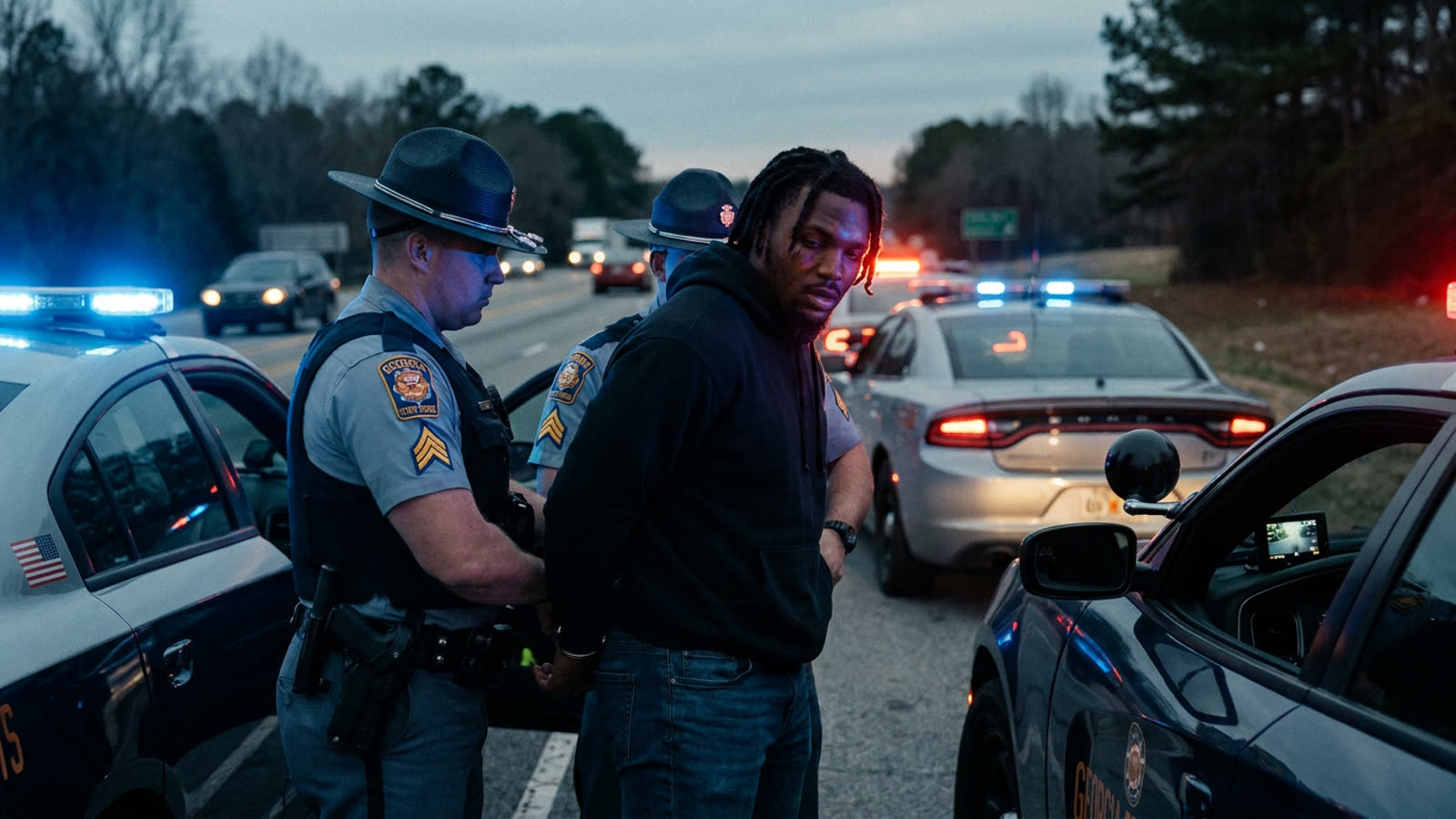
The Philadelphia Eagles have spent the offseason building what they hope will be a Super Bowl-caliber defense. Nakobe Dean, their third-year inside linebacker, spent part of his building a rap sheet. Dean was arrested in Georgia after being clocked at 135 miles per hour—a speed that, for context, exceeds the top velocity of most NASCAR races and roughly doubles the posted limit on American interstates.
The charge is reckless driving, though "reckless" feels almost quaint for traveling at a speed where a sneeze becomes a fatality risk. Dean, a former Georgia Bulldog and third-round pick in 2022, has been a key piece of Philadelphia's defensive rebuild, starting all seventeen games last season. Now he joins a growing roster of NFL players who treat the offseason like an invitation to audition for the next Fast & Furious installment.
The league's velocity problem
Dean's arrest is not an isolated incident but part of a recurring genre. NFL players and extreme speed have become distressingly synonymous during league downtime. Henry Ruggs III's 2021 crash at 156 mph killed a young woman and ended his career. Dwayne Haskins was struck and killed while walking on a Florida highway in 2022. Just last year, multiple players faced charges for triple-digit driving. The pattern suggests something beyond individual recklessness—perhaps a culture where young men with elite physical reflexes and substantial disposable income convince themselves that rules of physics are negotiable.
The Eagles, for their part, have issued the standard boilerplate about being "aware of the situation" and allowing the legal process to unfold. This is the correct corporate response and also the entirely useless one. Dean faces a misdemeanor charge that will likely result in fines and a suspended license, not jail time. The NFL's personal conduct policy could theoretically apply, but the league has historically treated traffic offenses as parking tickets unless someone dies.
What 135 mph actually means
At that speed, Dean was covering nearly 200 feet per second—roughly the length of two-thirds of a football field every tick of the clock. Reaction time becomes irrelevant. Braking distance becomes theoretical. A deer, a pothole, a moment of inattention, and a promising career becomes a cautionary tale narrated by Bob Costas.
Dean is twenty-four years old, entering a contract year, and presumably interested in maximizing his earning potential. Traveling at speeds that would get a pilot grounded suggests either profound arrogance or a disconnect between on-field discipline and off-field judgment that teams will quietly note.
Our take
The NFL has spent years investing in player safety—concussion protocols, padded practice limits, targeting penalties. Yet the league remains curiously passive about the offseason behaviors that kill and maim players at rates no helmet can prevent. Dean will likely face minimal consequences, return to Philadelphia's starting lineup, and be remembered for this incident only if something worse follows. That's the pattern. The question is whether anyone with authority—teams, the league, the union—decides that 135 mph on a public road warrants more than a press release. History suggests they won't. The next headline is already being written, somewhere on an empty highway, by a young man who believes he's invincible.