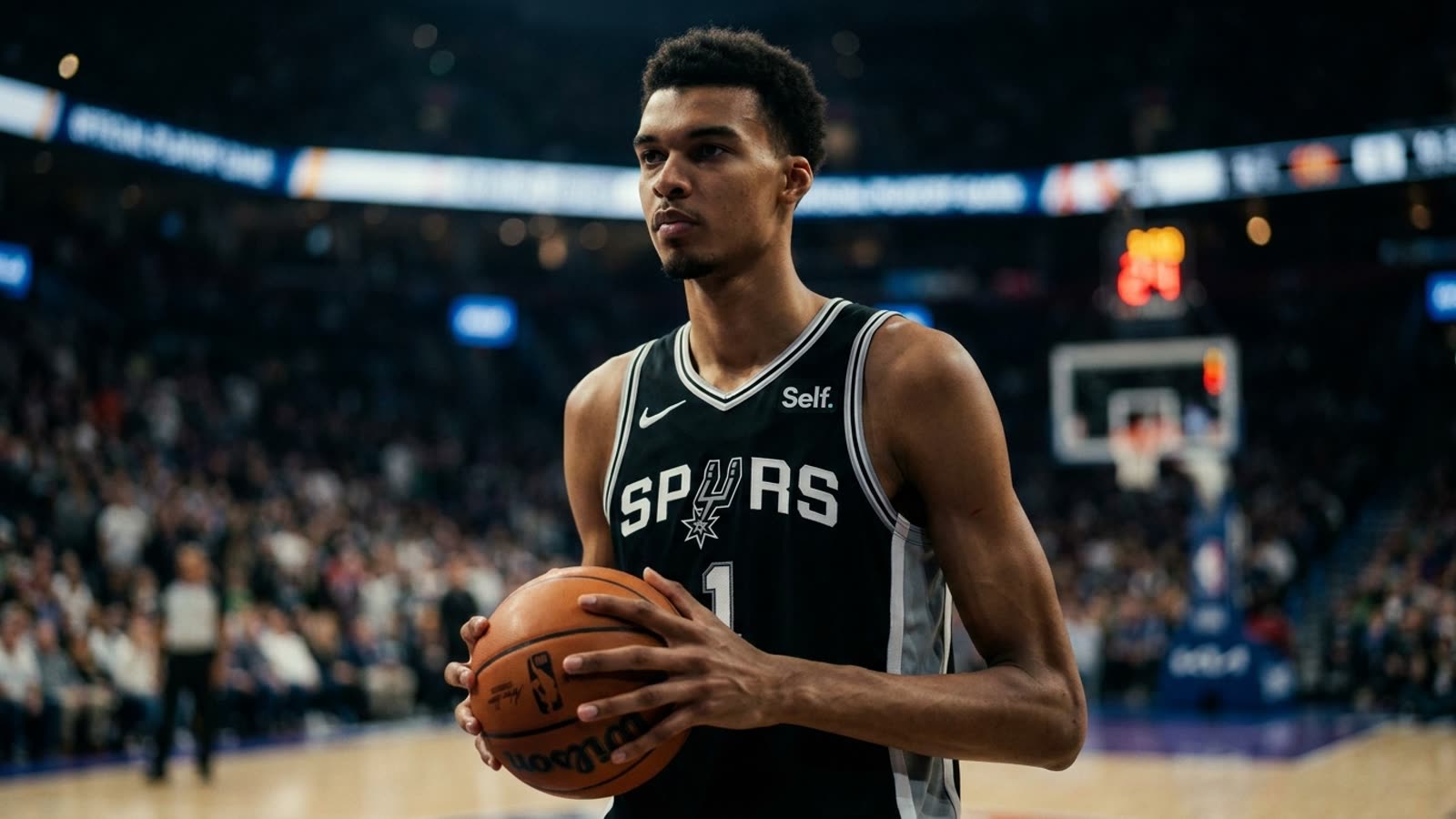
Victor Wembanyama's regular season numbers have been so absurd—averaging north of 25 points, 10 rebounds, and nearly 4 blocks per game while shooting from ranges that would make Dirk Nowitzki blush—that we have collectively agreed to treat them as normal. They are not normal. They are the statistical output of a player who should not exist, a 7-foot-4 point-forward-center hybrid with guard handles and a sniper's touch. But the playoffs are where mythology either solidifies or shatters, and Game 2 against the Thunder represents the first real examination of whether Wembanyama can translate regular-season dominance into postseason survival.
The Spurs' return to the playoffs after a five-year absence is a pleasant storyline for the San Antonio faithful, but let us be honest about the stakes: nobody outside the 210 area code genuinely believes this roster is a championship contender. What matters is the education. Wembanyama is 21 years old and has played exactly one playoff game in his life. Oklahoma City, meanwhile, has spent three years building a roster specifically designed for moments like this—Shai Gilgeous-Alexander's surgical mid-range game, Chet Holmgren's length, and a defensive scheme that can switch everything without bleeding points.
The Thunder's blueprint
Oklahoma City's defensive approach in Game 1 offered a preview of how elite teams will attack Wembanyama for the next fifteen years: force him into decisions. The Thunder ran actions that put him in pick-and-roll coverage where he had to choose between protecting the rim and chasing shooters to the perimeter. They exploited his occasional over-help tendencies. They made him work on offense by denying his preferred catch spots and forcing contested threes rather than the rhythm looks he feasts on against lesser opponents. None of this stopped him from putting up impressive numbers, but it did reveal seams.
What Game 2 demands
The adjustment period is where stars separate from superstars. Wembanyama's processing speed has been remarkable throughout his brief career, but playoff series are chess matches played at knife-fight pace. Can he recognize Oklahoma City's tendencies quickly enough to counter them within a single game? Can he maintain his defensive impact while shouldering an even heavier offensive load as the Thunder inevitably tighten their rotations? The Spurs' supporting cast—competent but not elite—means Wembanyama cannot hide in secondary actions. He must be the primary engine, the release valve, and the last line of defense simultaneously.
Our take
Win or lose tonight, the Spurs are not advancing past Oklahoma City. That is not the point. The point is calibration—for Wembanyama, for the franchise, for everyone projecting his career arc. If he looks lost against playoff intensity, the timeline extends. If he looks like he belongs, the league's competitive balance shifts faster than anyone anticipated. We are watching the rough draft of what might become the most dominant player since peak LeBron. Game 2 is just another paragraph, but paragraphs accumulate into chapters, and chapters into legacies.