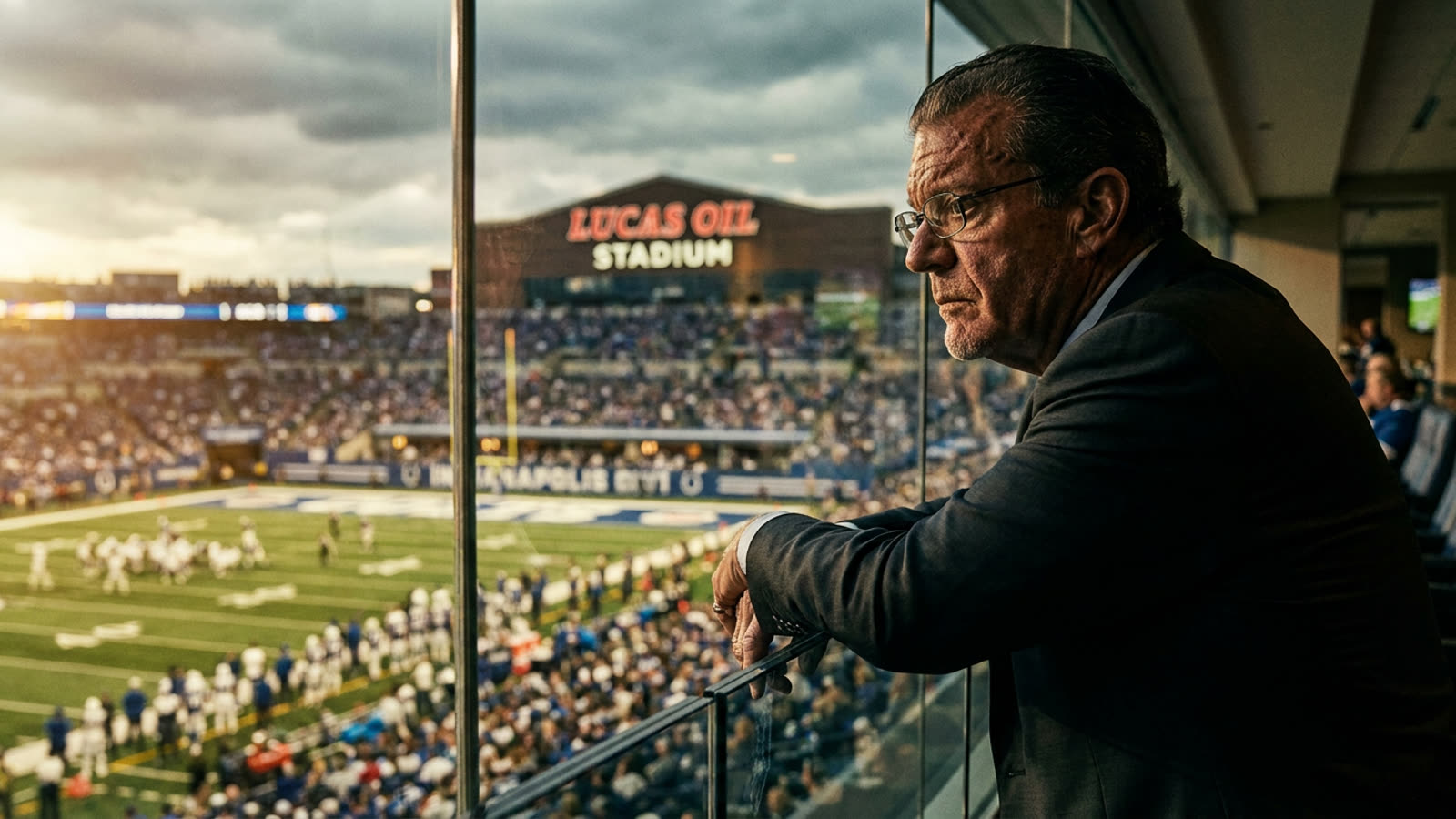
Most NFL owners arrive at the job through one of two routes: they inherit generational wealth and buy a trophy asset, or they build a fortune elsewhere and purchase their way into the club. Jim Irsay did neither and both. He was born into football royalty but raised as if the franchise might vanish tomorrow, trained from elementary school to understand salary caps, stadium politics, and the peculiar economics of professional sports.
A new feature exploring Irsay's upbringing reveals what those around the Colts have long understood: the owner who collects rock memorabilia, tweets philosophical musings at odd hours, and once offered a million dollars for a Super Bowl ring is also one of the most operationally sophisticated executives in American sports. The contradiction resolves when you understand that Irsay's father, Robert, began preparing his son for ownership while other kids were learning multiplication tables.
The curriculum of inheritance
By third grade, according to the reporting, young Jim was accompanying his father to league meetings, absorbing the arcane negotiations over television contracts and revenue sharing that would later define the modern NFL. Where other heirs might have been shielded from business until adulthood, Irsay was immersed in it—a deliberate strategy by Robert Irsay to ensure the franchise stayed in family hands and stayed competitive.
The approach was unusual even by the standards of dynastic sports ownership. The Rooneys in Pittsburgh and the Maras in New York kept football in the family, but they didn't typically bring children into ownership meetings. Robert Irsay, perhaps because he was a self-made owner who bought the Colts rather than inheriting them, seemed determined to compress decades of business education into his son's formative years.
The method behind the eccentricity
This background helps explain why Irsay, despite a public persona that can seem erratic, has overseen a remarkably stable organization. The Colts have employed just four head coaches since he took over in 1997. They built Lucas Oil Stadium without the acrimony that plagued other cities. They transitioned from Peyton Manning to Andrew Luck with a grace that eluded teams facing similar quarterback departures.
Irsay's personal struggles—including a 2014 arrest and subsequent treatment for addiction—have been public and painful. But the franchise has never reflected that turbulence in its operations, a separation of personal and professional that suggests the childhood training took hold.
Our take
The NFL loves its self-made mythology, the stories of owners who built empires from nothing. Irsay's story is more interesting precisely because it's the opposite: a man manufactured for a specific purpose who then had to figure out how to be a human being within that role. His eccentricities aren't despite his preparation—they may be because of it. When you've been groomed for one job since childhood, the rest of life becomes the space where you improvise.