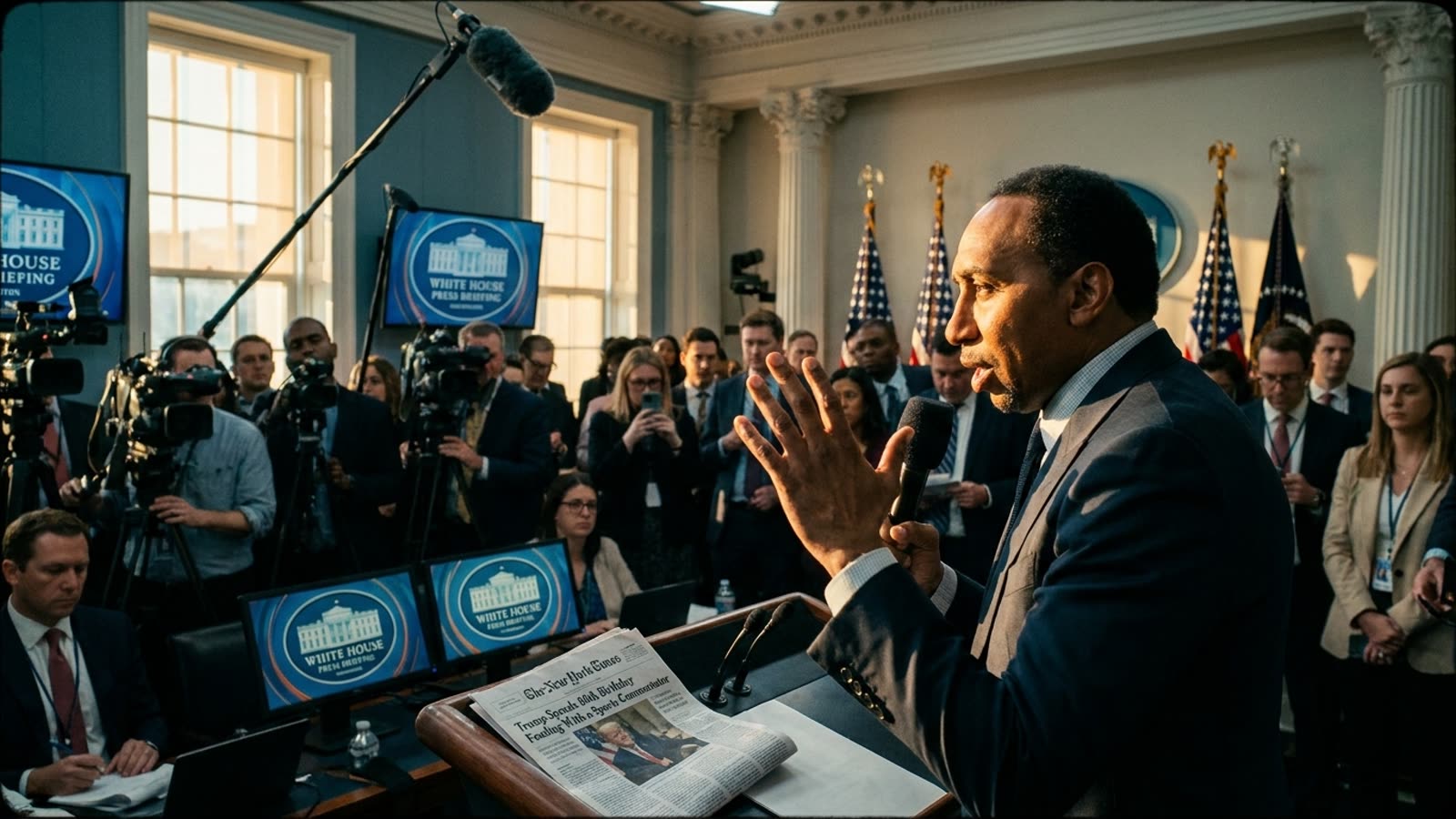
The leader of the free world, on the occasion of his eightieth birthday, chose to spend a portion of his day publicly attacking a cable sports personality. This is not parody; it is the state of American governance in 2026.
President Trump doubled down on his criticism of Stephen A. Smith over the weekend, extending a feud that has consumed presidential bandwidth even as his administration simultaneously manages Iran nuclear negotiations and hosts an unprecedented UFC fight card on the White House grounds. The juxtaposition tells you everything about how this presidency allocates its most precious resource: attention.
The grievance portfolio
Smith, ESPN's voluble basketball analyst, has been intermittently critical of Trump for years—hardly unusual for a media figure, hardly worthy of sustained presidential focus. Yet Trump has returned to the well repeatedly, treating Smith as though he were a foreign adversary rather than a man paid to have loud opinions about point guards.
The pattern is familiar to anyone who has observed Trump's political career: perceived slights are catalogued, stored, and revisited with the dedication others might reserve for policy briefs. What distinguishes this moment is the sheer density of competing demands. The Iran deal appears to be approaching a signing ceremony. The White House is literally hosting mixed martial arts fights. And still, the president finds bandwidth for Stephen A. Smith.
What it costs
Presidential attention is finite. Every hour spent nursing a media grudge is an hour not spent on the thousand other matters that cross the Resolute Desk. Previous administrations understood this implicitly—even presidents who loathed the press generally delegated their contempt to subordinates.
Trump has inverted this norm, making personal combat with critics a visible, ongoing feature of his presidency. The question is whether this represents a strategic choice (keeping opponents off-balance, energizing supporters) or simply an inability to let perceived insults pass. After a decade in politics, the evidence suggests the latter.
Our take
There is something clarifying about watching an octogenarian president, on his birthday, pick fights with a sports commentator while cage matches unfold on his lawn and nuclear diplomacy hangs in the balance. It strips away any pretense that the office has changed the man. The grievance is the point—not a distraction from governance but, increasingly, a substitute for it. Smith will survive the attention. Whether the same can be said for the dignity of the presidency is another matter.