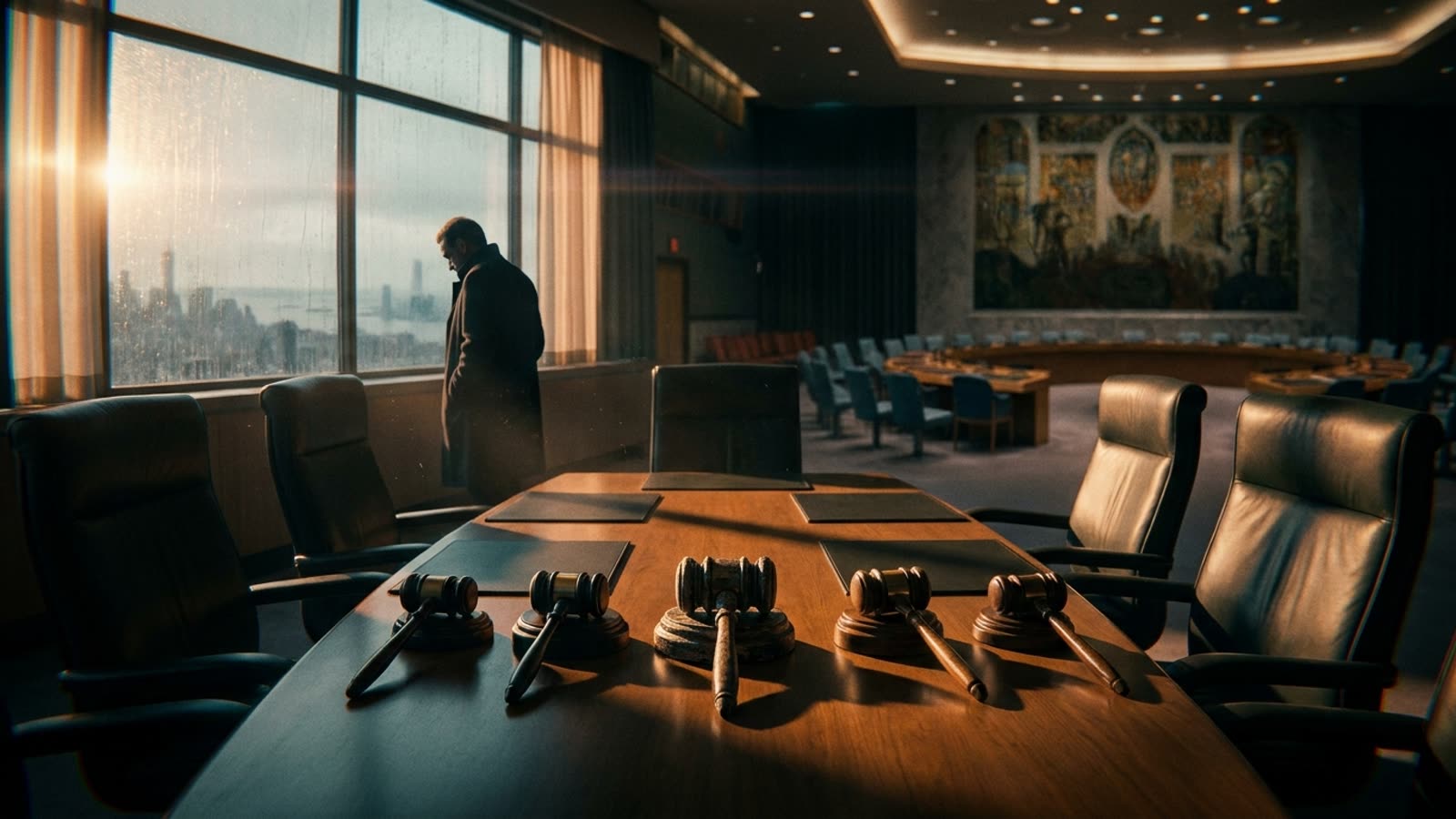
The United Nations Security Council meets in a chamber designed to suggest equality: a horseshoe table, fifteen seats, each nation's nameplate identical in size. The visual is a lie. Five of those seats come with a superpower that the other ten can never possess—the ability to stop history with a single word.
The veto is the most consequential procedural mechanism in international relations, yet it is routinely misunderstood. It does not require explanation or justification. It cannot be overridden. It transforms the Security Council from a deliberative body into a hostage situation where any of the five permanent members—the United States, Russia, China, France, and the United Kingdom—can unilaterally prevent action on matters of international peace and security. This is not a bug. It is the founding bargain.
The Yalta logic
The veto emerged from the wreckage of the League of Nations, which had required unanimity among all members and consequently achieved nothing when it mattered most. At the 1945 San Francisco Conference, the great powers insisted on a different architecture: a small council with enforcement teeth, but only if those teeth could never bite them. The Soviet Union was particularly adamant. Stalin's negotiators made clear that without the veto, there would be no Soviet participation, and without Soviet participation, there would be no United Nations worth having.
The smaller nations protested. Australia's foreign minister called the veto "a fifth wheel on the coach of progress." But the calculus was brutally simple: a flawed institution with the major powers inside was preferable to a pristine one they ignored. The veto was the price of admission.
How it actually functions
A Security Council resolution requires nine affirmative votes from the fifteen members and no veto from any of the P5. Abstention does not count as a veto—a crucial distinction that allows permanent members to signal disapproval without blocking action. This creates a rich grammar of diplomatic positioning: a "yes" endorses, a "no" from a non-permanent member is protest, an abstention from a P5 member is permission granted reluctantly, and a veto is absolute refusal.
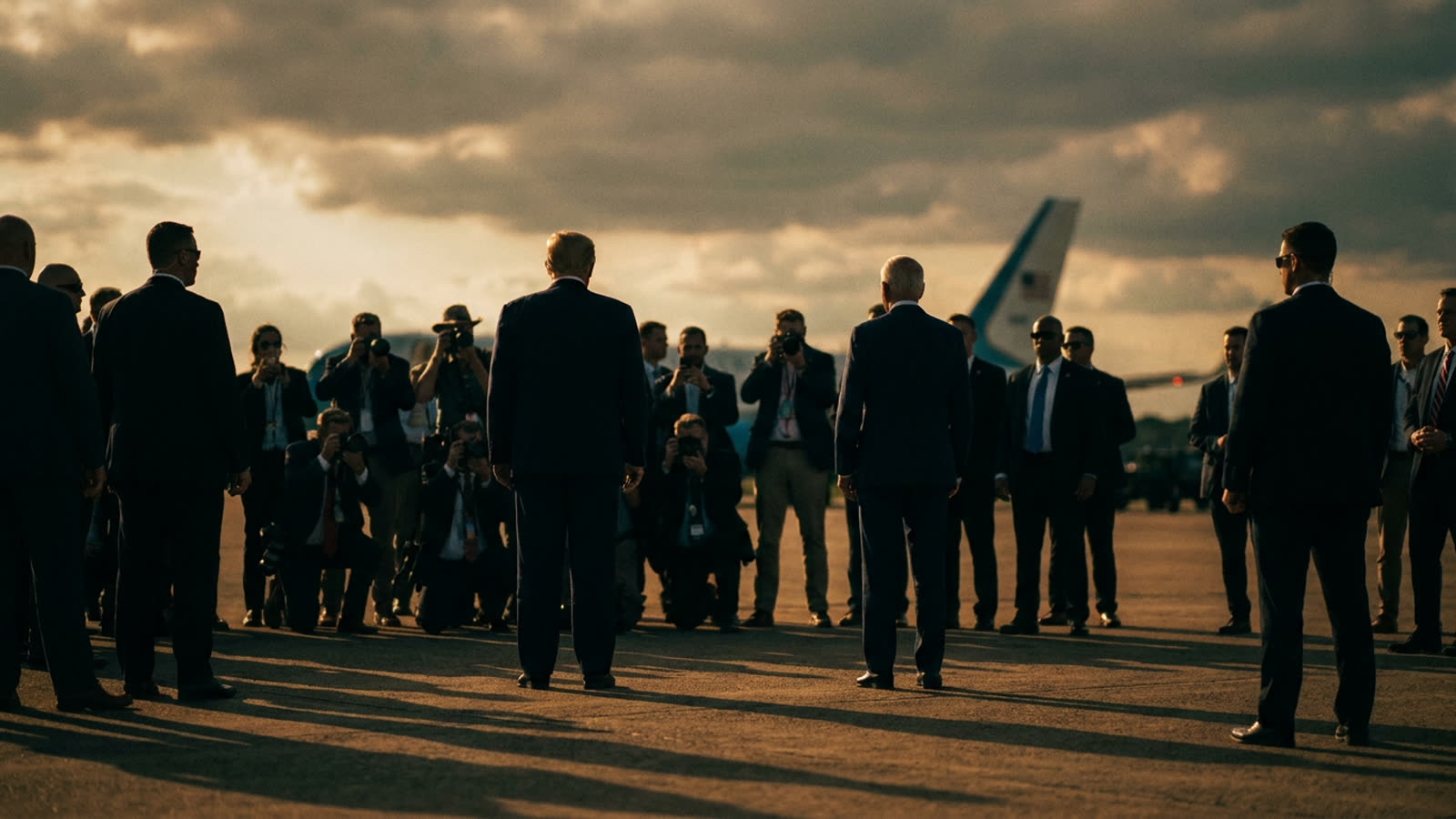
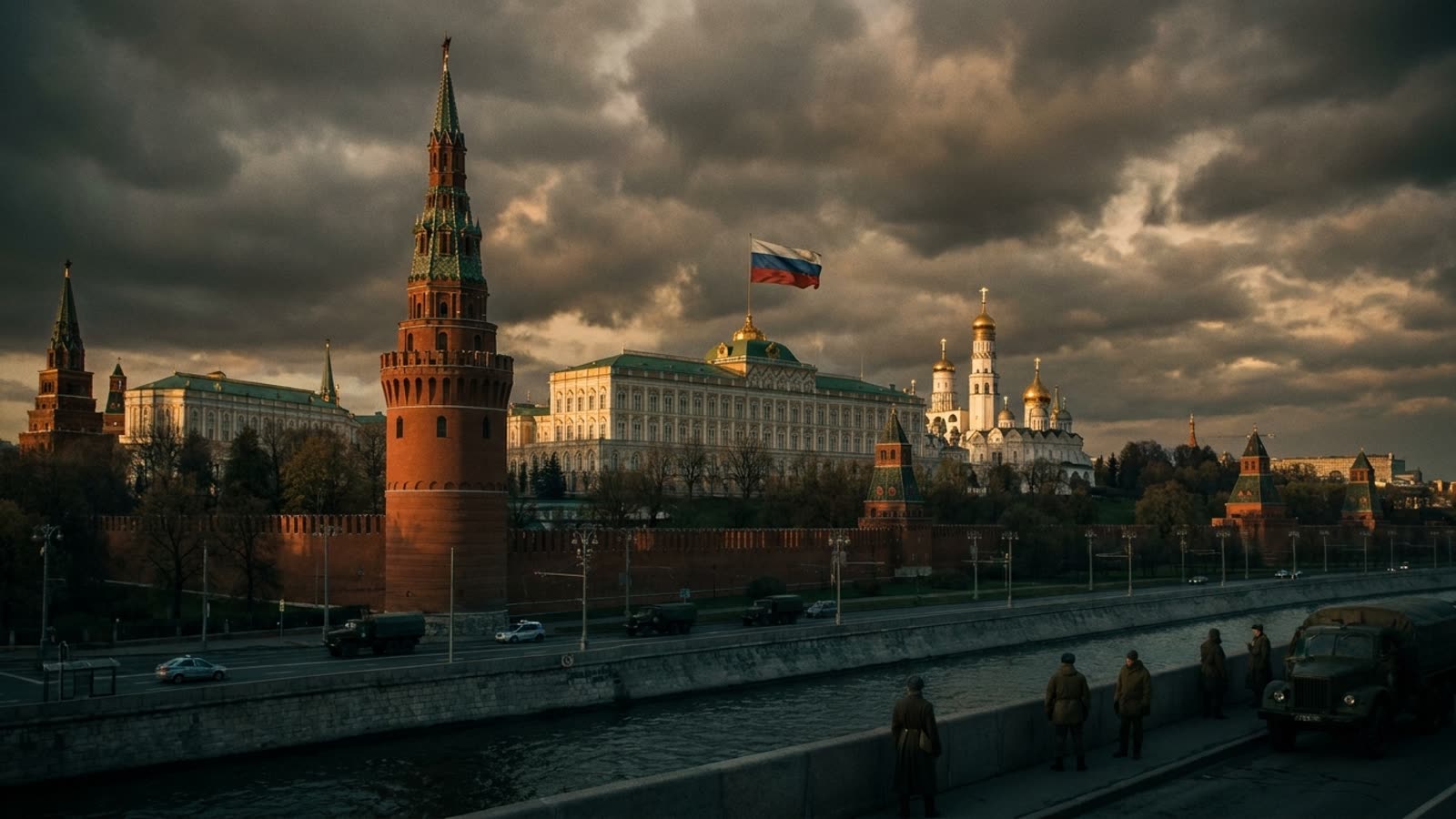
The veto has been wielded hundreds of times since 1945, though patterns have shifted dramatically. The Soviet Union cast dozens of vetoes in the early Cold War years, often blocking new UN memberships. The United States, which did not use its veto until 1970, has since deployed it most frequently on resolutions concerning Israel. Russia has vetoed repeatedly on Syria. China uses its veto sparingly but strategically, often in concert with Russia.
What statistics miss is the veto's shadow power. Countless resolutions are never introduced because their drafters know a veto awaits. This "pocket veto" effect is impossible to quantify but arguably more significant than the formal tallies.
The reform that never comes
Proposals to abolish or constrain the veto are perennial and perpetually doomed. The UN Charter requires any amendment to be ratified by two-thirds of member states, including all five permanent members. Asking the P5 to vote away their own privilege is asking them to act against their institutional interest—a request that has, unsurprisingly, never succeeded.
More modest reforms occasionally gain traction. France has proposed that P5 members voluntarily refrain from vetoing resolutions addressing mass atrocities. The Accountability, Coherence and Transparency Group pushes for veto-wielders to explain their reasoning publicly. These efforts nibble at the edges without touching the core architecture.
Our take
The veto is neither an accident of history nor a correctable flaw. It is the honest expression of how power actually distributes itself in international affairs—a reminder that institutions reflect the interests of those strong enough to shape them. Critics who call for its abolition are not wrong about its injustice; they are merely describing a world that does not exist. The Security Council works precisely as designed: it enables collective action only when the great powers agree, and guarantees paralysis when they do not. That this frustrates humanitarians is true. That it has prevented great-power war for eight decades is also true. The veto is the price we pay for keeping the dangerous players inside the room.