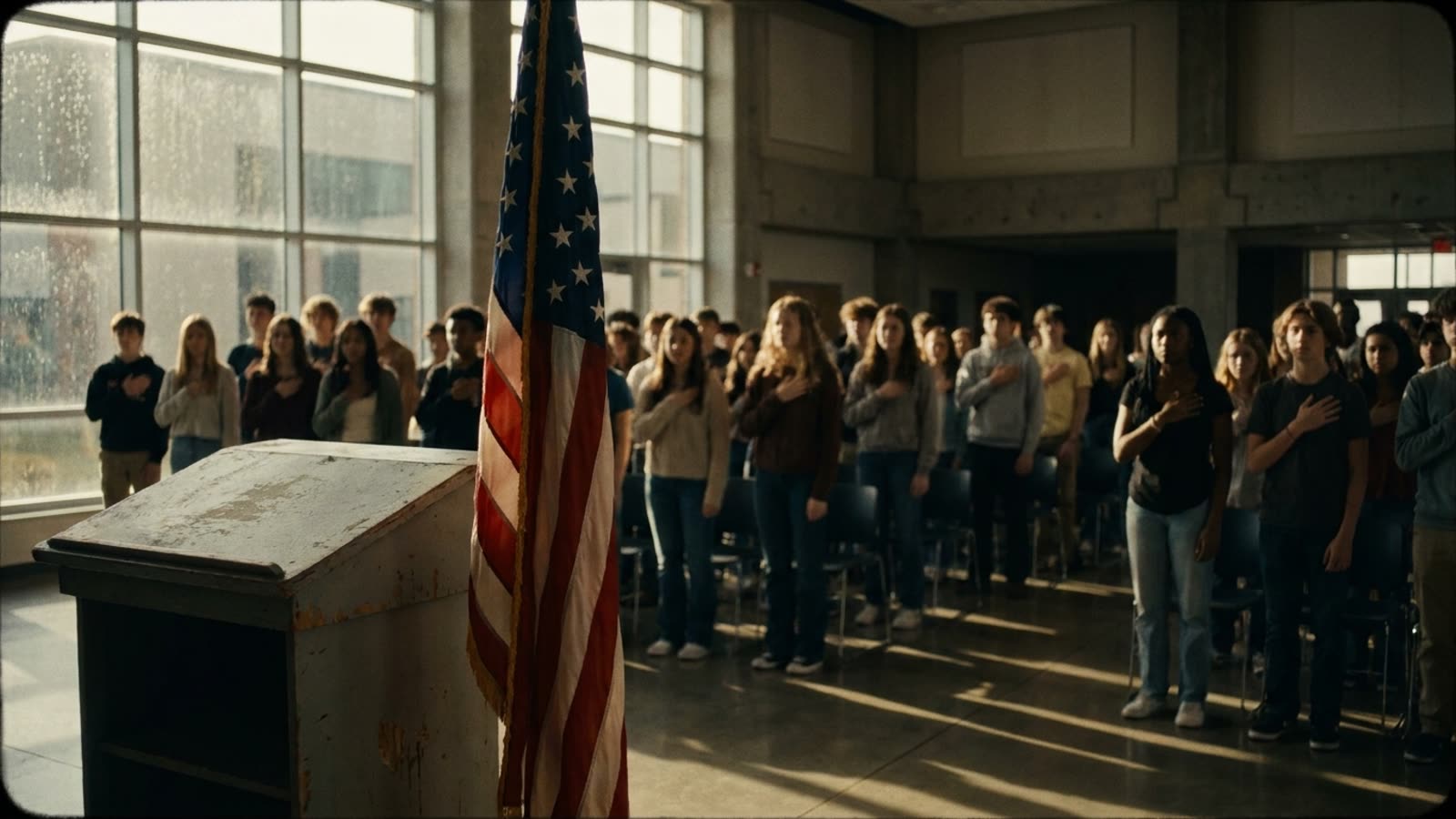
The White House's new national civics competition was designed to be a feel-good exercise in flag-waving, a way for the administration to claim the mantle of patriotic education while rewarding students who could demonstrate sufficient enthusiasm for American greatness. What it has produced instead is something far more interesting: a cohort of teenage finalists who are articulating a more sophisticated understanding of citizenship than the contest's architects apparently intended.
The students advancing through the competition's rounds have not, by and large, offered the uncomplicated tributes to American exceptionalism that the program seemed to expect. Instead, they have delivered nuanced meditations on what it means to love a country whose ideals and practices often diverge—the kind of critical patriotism that has defined the American tradition from Frederick Douglass to James Baldwin to the dissenting justices of the Supreme Court.
The contest's awkward design
The competition, announced earlier this year as part of the administration's broader education agenda, invited high school students to submit essays and presentations on American civics. The framing materials emphasized "pride in our nation's founding" and "gratitude for American freedoms," language that suggested a preference for celebration over examination. But the judges—a mix of educators and administration appointees—have found themselves evaluating submissions that treat the Constitution as a living argument rather than a settled monument.
One semifinalist from Ohio reportedly structured her presentation around the gap between the Declaration of Independence's promises and the lived experience of various American communities across two and a half centuries. Another, from Texas, examined how the same First Amendment that protects his right to enter the contest also protects speech he finds abhorrent. These are not the testimonials of grateful subjects; they are the arguments of citizens who take their country's stated principles seriously enough to measure it against them.
What the White House wanted
The administration's civics push has been part of a broader effort to reshape education around what officials have called "patriotic" values, a project that has included curriculum guidance emphasizing positive narratives of American history and skepticism toward what the president has termed "radical" academic frameworks. The contest was meant to be a showcase for this vision, producing young ambassadors for an uncomplicated American story.
The teenagers, it turns out, had other ideas. Many of the finalists have expressed in interviews what might be called patriotic ambivalence—a genuine attachment to American ideals coupled with clear-eyed acknowledgment of American failures. Several have noted the irony of competing in a contest sponsored by an administration whose policies they oppose, while simultaneously recognizing that the ability to voice that opposition is itself an American inheritance worth defending.
Our take
There is something genuinely hopeful in watching a generation of students refuse the false choice between blind loyalty and cynical rejection. The teenagers navigating this contest have intuited what their elders in government seem to have forgotten: that the most durable patriotism is the kind that holds a nation accountable to its own best arguments. The White House wanted a civics lesson. It got one—just not the one it planned.