Thursday night in the NBA was less a pair of play-off games than an announcement. In Oklahoma City, the defending champion Thunder beat the Los Angeles Lakers 125–107, moving to 2–0 in the Western Conference semifinals. In Detroit, the Pistons beat the Cleveland Cavaliers 107–97, matching that 2–0 lead in the East. The two top seeds in their conferences won, again, decisively, and in the process exposed the actual shape of the 2026 playoffs: youth, depth, and coaching are beating star power and legacy.
Oklahoma City looks untouchable
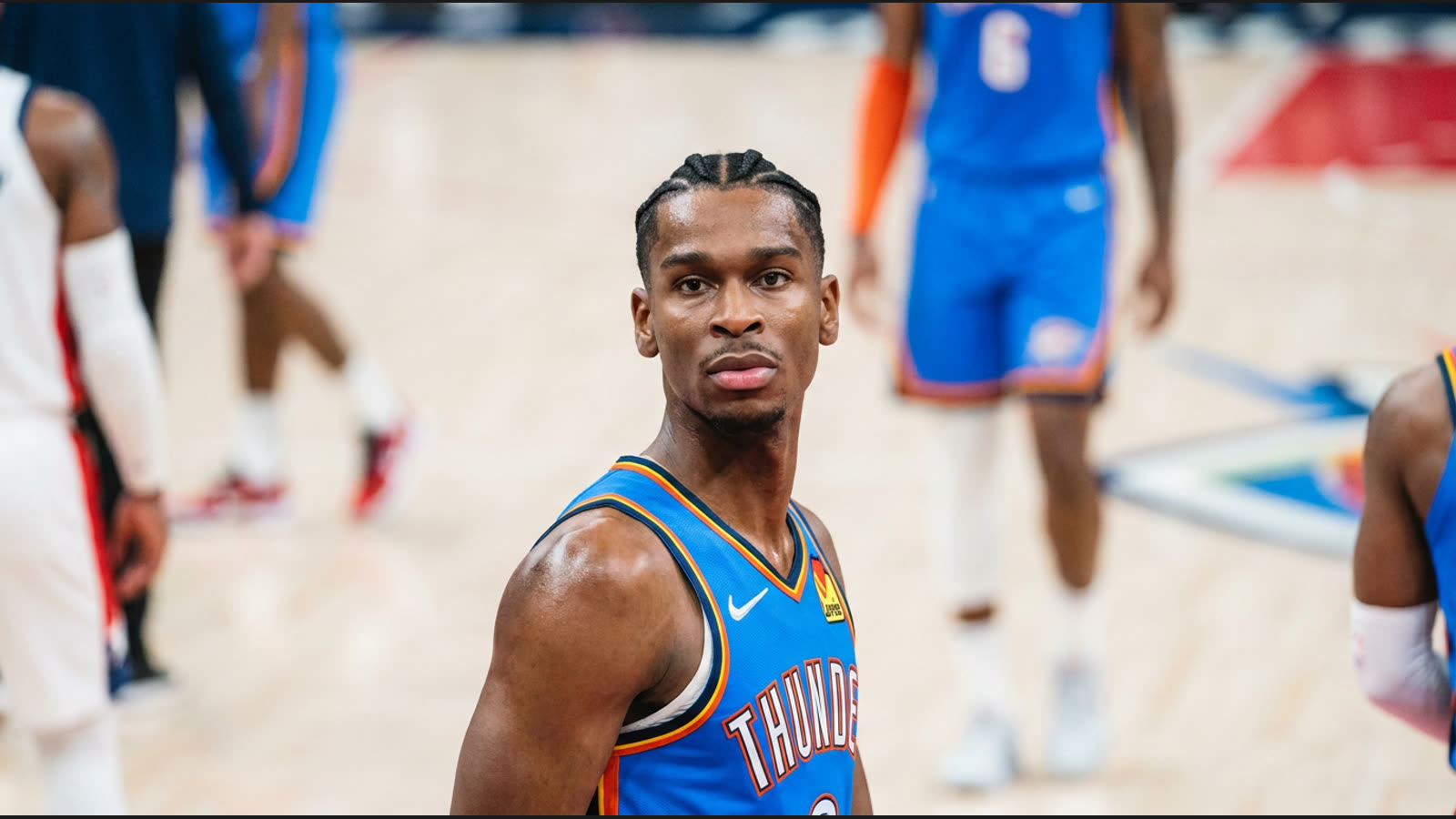
Shai Gilgeous-Alexander, the reigning MVP, played only 28 minutes after picking up early fouls. He finished with 22 points anyway. Chet Holmgren added 22 of his own. The Thunder's bench produced the kind of composite that rarely makes highlight reels but consistently wins playoff series: six players in double figures, two-way pressure across forty-eight minutes, a third-quarter run that turned a five-point Lakers lead into a thirteen-point deficit in roughly six minutes of basketball.
LeBron James scored 23. It was not enough, and, more damningly, it did not look like it was going to be enough. At 41, James is still capable of stretches of unmistakable brilliance. What he no longer appears capable of is dragging an uneven roster through a series against a team that has actually built itself properly.
The Cade Cunningham arrival
In Detroit, the story was Cade Cunningham, whose 25 points and 10 assists against Cleveland were less notable than the twelve points he scored in the fourth quarter—the closing stretch of a close game that he simply took over. Pistons coach J.B. Bickerstaff called him "the killer, the closer." Tobias Harris added 21 points, his seventh consecutive 20-plus-point playoff game, a level he never reached in back-to-back regular-season games.
The league has turned over
The Thunder are Oklahoma City, not Los Angeles. The Pistons are Detroit, not Boston. The 2026 semifinals are being defined by mid-market, draft-built, coach-driven rosters—exactly the teams the league's modern superstar-trade era was supposed to sideline. Both sides travel for Saturday's Game 3s. The series are not over. But the pattern, emphatically, is set.
Our take
The NBA is publicly a star-driven product. Thursday night was a reminder that in May, it is a systems-driven game. Oklahoma City and Detroit have systems. The Lakers have LeBron James and the Cavaliers have three star scorers who cannot defend. The playoffs are telling us, again, which of those actually matters.