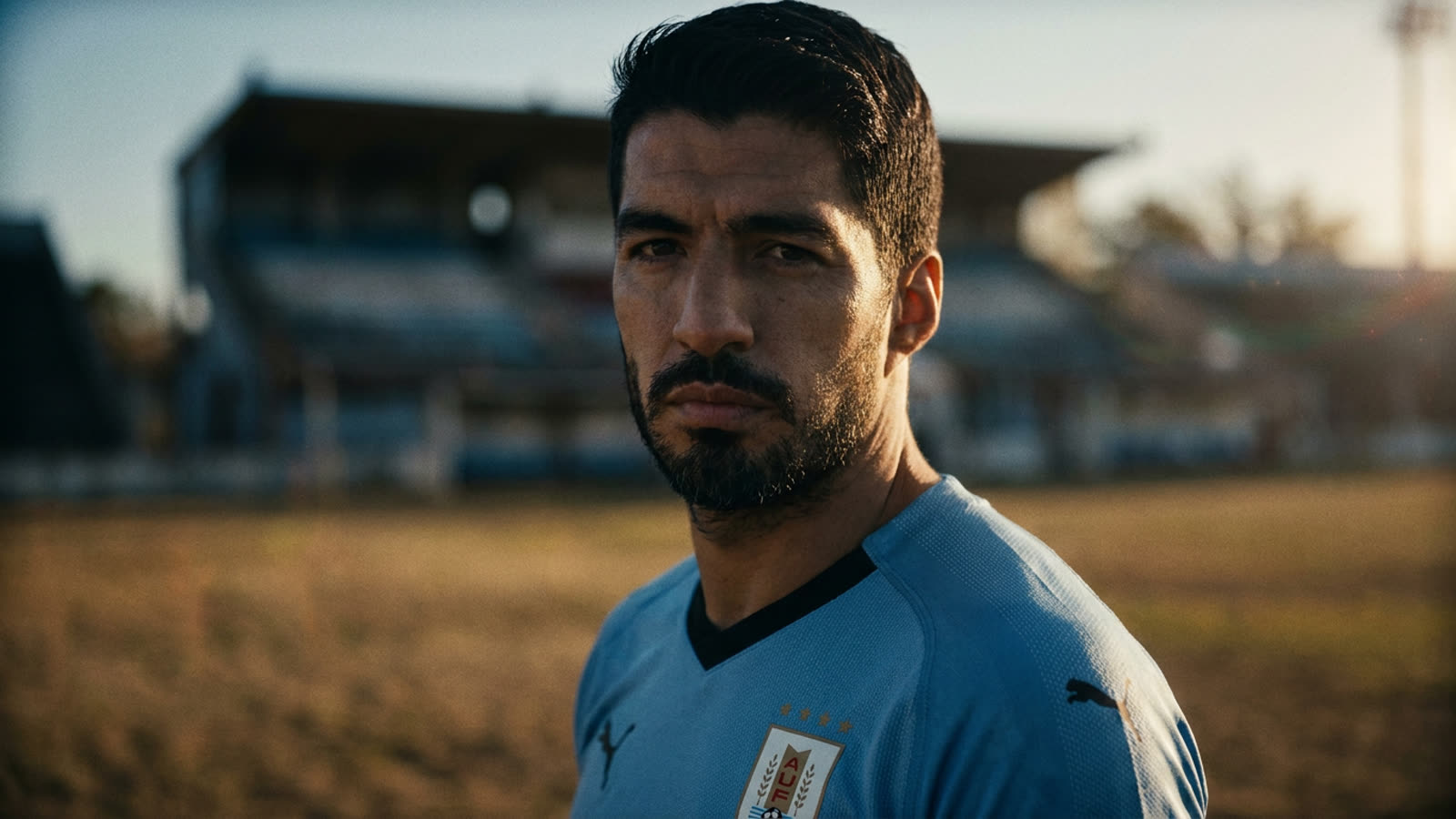
When Luis Suárez tells reporters he would "never say no" to representing Uruguay at this summer's World Cup, the instinct is to file it under nostalgia—a fading star reluctant to accept the final whistle. That reading misses the point entirely. Suárez isn't lobbying for a roster spot; he's articulating something more interesting about how small footballing nations manage the transition between eras.
Uruguay finds itself in an unusual position. The generation that delivered a Copa América title in 2011 and a World Cup semifinal in 2010 has largely dispersed: Diego Godín retired, Edinson Cavani stepped back from the national team, and Suárez himself announced his international farewell after the 2024 Copa América. Yet the next wave—Darwin Núñez, Federico Valverde, Ronald Araújo—hasn't quite coalesced into a unit capable of deep tournament runs. Marcelo Bielsa's squad qualified comfortably but has shown inconsistency in competitive matches.
The economics of experience
For Uruguay, carrying a 39-year-old forward isn't about sentiment. It's about arithmetic. A World Cup squad contains 26 players; reserving one slot for a figure who can steady a dressing room, absorb pressure in knockout football, and still finish half-chances isn't romantic indulgence. It's risk management. Suárez scored 69 goals in 142 caps. Even at diminished pace, his spatial intelligence and penalty-box instincts remain elite. More critically, he's one of the few players alive who has won a World Cup knockout match for Uruguay in the modern era.
Bielsa has historically valued tactical discipline over reputation, but he also understands leverage. Having Suárez available—even as a bench option—gives him a card to play when younger legs tire in the heat of North American summers.
What Suárez is really saying
The striker's phrasing matters. He didn't campaign; he deferred. "If Uruguay needed him" is the operative clause. Suárez is signalling availability without demanding inclusion, a posture that preserves his dignity while leaving Bielsa room to manoeuvre. It's the kind of public diplomacy that ageing stars rarely execute cleanly—contrast it with the messy final chapters of Wayne Rooney or Zlatan Ibrahimović at international level.
Whether Bielsa actually picks up the phone depends on variables neither man controls: Núñez's form, Araújo's fitness, the draw. But the option now exists in public, which means the conversation has shifted from "should Suárez come back?" to "under what circumstances?"
Our take
There's a tedious strain of football discourse that insists legends must know when to leave. Suárez has already left. What he's offering now is something different—conditional service, available if required, no ego attached. Uruguay would be foolish to reject that outright. Small nations don't have the luxury of discarding experience for aesthetics. If Suárez can still contribute in the 75th minute of a quarterfinal, the only question is whether Bielsa is pragmatic enough to use him.