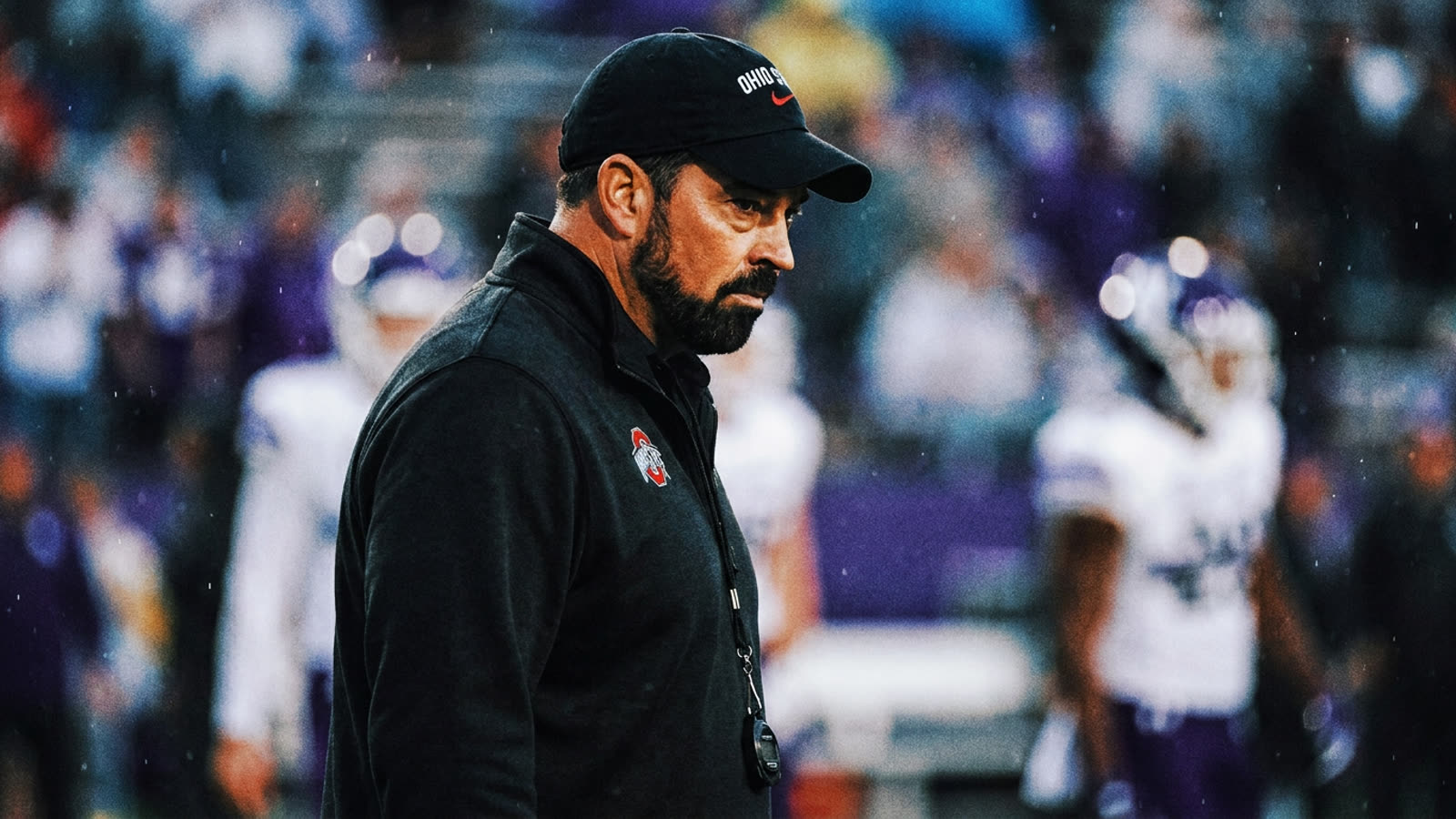
When the son of Ohio State's head coach commits to Northwestern, the recruiting rankings become irrelevant. What matters is what R.J. Day's decision says about the state of college football's most visible program—and the impossible position his father occupies within it.
The Class of 2027 quarterback announced his commitment to the Wildcats on Sunday, choosing a program that went 4-8 last season over the one his father has turned into a perennial playoff contender. On paper, it makes no sense. In context, it makes all the sense in the world.
The burden of the name
R.J. Day is, by most accounts, a capable quarterback prospect—not a five-star, not a project, somewhere in the productive middle. At Ohio State, he would have been the most scrutinized third-string quarterback in program history. Every incompletion in practice would leak. Every depth chart decision would be parsed for nepotism or its opposite. The discourse would be unbearable before he ever took a meaningful snap.
At Northwestern, he gets to be a football player. The Wildcats, under David Braun, are building something modest and coherent. They play in the same conference now, thanks to realignment, but the expectations are calibrated to reality. R.J. Day can develop, struggle, improve, and fail without becoming a referendum on his father's judgment.
What it reveals about Columbus
Ryan Day has won more than 80 percent of his games at Ohio State. He has also failed to beat Michigan in four of his last five attempts, lost a national championship game to a rival, and watched his program become a case study in the transfer portal's destabilizing effects. The pressure in Columbus is no longer about winning—it is about winning in a specific way, against specific opponents, with a specific aesthetic.
That R.J. Day looked at this environment and chose a different path is not a criticism of his father. It is an acknowledgment of what the job has become. The modern Power Four head coach is a CEO, a recruiter, a portal manager, a NIL negotiator, and a media performer. The idea that he could also be a present father to a son navigating the same sport is almost quaint.
The Northwestern angle
For the Wildcats, this is a minor recruiting win with major symbolic value. They are not getting a future Heisman winner. They are getting a quarterback who chose their program over the most resource-rich operation in the country. That story will be told on every living room visit for the next three years.
Braun, who stabilized Northwestern after a hazing scandal nearly sank the program, has built his pitch around culture and development. R.J. Day's commitment is the most visible validation of that pitch yet.
Our take
This is a small story with a large shadow. College football has become so professionalized, so transactional, so relentlessly high-stakes that even the children of its architects are seeking shelter elsewhere. R.J. Day will play quarterback at Northwestern, and he may or may not be any good. But his decision to go there—to choose anonymity over inheritance—is the most honest commentary on the sport his father has spent a decade trying to master. Sometimes the best recruiting pitch is simply: we will let you breathe.