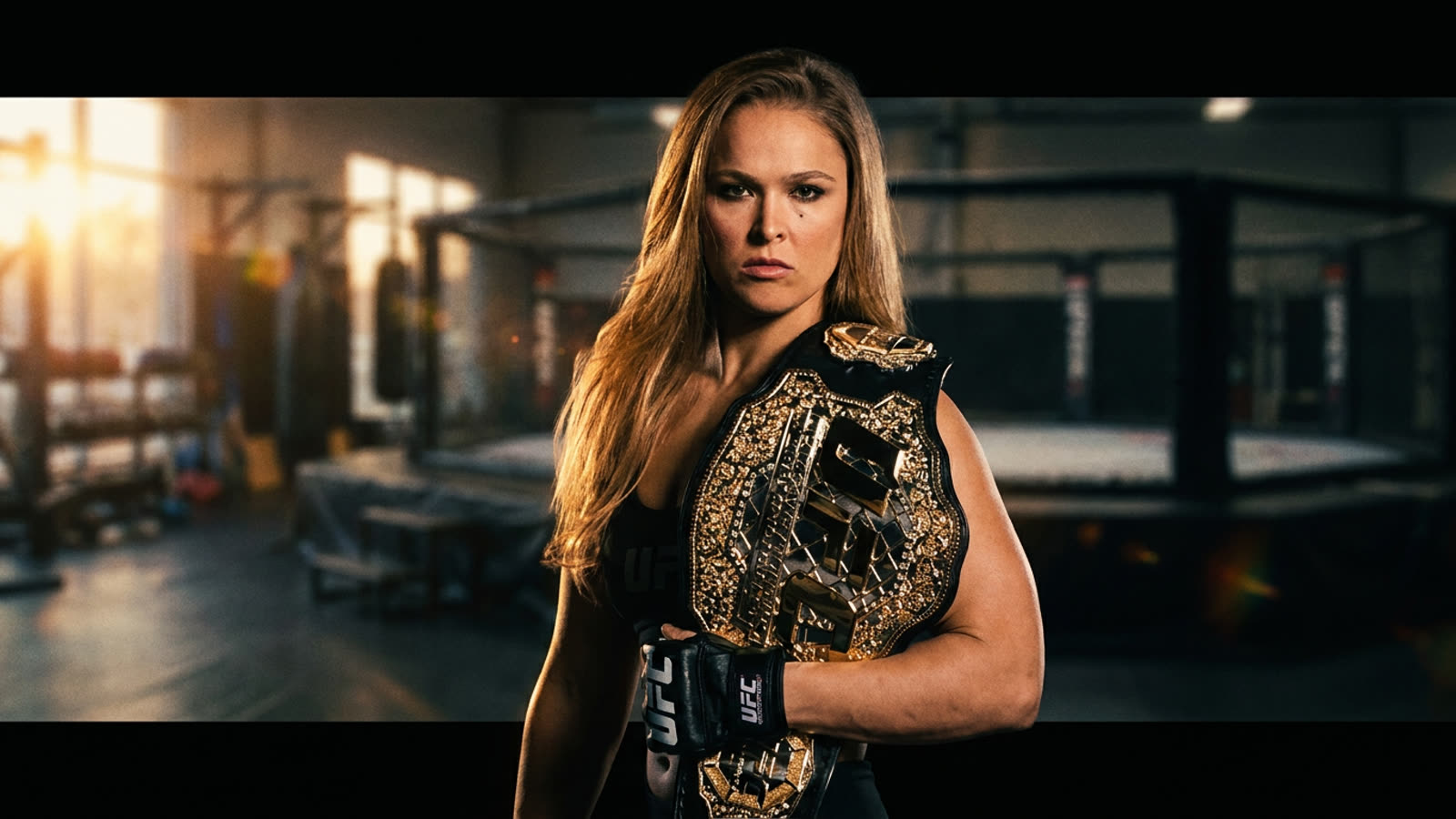
The most significant women's MMA fight in years will take place Saturday in Los Angeles, and it has nothing to do with the UFC. Ronda Rousey, the athlete who dragged women's fighting from sideshow curiosity to pay-per-view headliner, is ending a ten-year retirement to face Gina Carano—the woman she never got to fight when both were at their peaks. That Rousey is promoting the event herself tells you everything about where combat sports have drifted and where she believes they need to go.
Rousey's absence from the cage since 2016 has done nothing to diminish her gravitational pull. She remains the only fighter, male or female, whose cultural footprint extended so far beyond the octagon that her losses felt like national news events. The back-to-back knockouts by Holly Holm and Amanda Nunes ended her competitive career in brutal fashion, but they also froze her in amber as the sport's most compelling what-if. At 39, she returns not to chase a belt but to settle an older score and prove a broader point.
The fight that never was
Cavalier historians forget that before Rousey, there was Carano. The "Face of Women's MMA" in the late 2000s, Carano headlined Strikeforce events and appeared on the cover of ESPN The Magazine before the UFC had a women's division at all. She left fighting for Hollywood in 2009, the same year Rousey was still competing in judo. The two never shared a cage when it would have mattered most. Saturday's bout is less a title fight than a generational reckoning—two women who built the house finally meeting inside it.
Rousey as promoter
The more interesting story may be happening outside the ring. Rousey is not merely headlining this card; she is bankrolling and producing it. After years of criticizing Dana White's treatment of fighters and the UFC's revenue splits, she is attempting to model an alternative. The event reportedly offers participating athletes a significantly higher percentage of gate and broadcast revenue than standard UFC contracts. Whether this is sustainable or merely a vanity project funded by WWE earnings and Hollywood residuals remains to be seen. But Rousey has always understood that visibility is leverage, and she is spending hers.
The body at 39
No amount of promotional savvy can disguise the physical reality. Rousey has not competed professionally in a decade. Her judo-based game was built on explosive hip throws and suffocating ground control—skills that degrade with age and inactivity. Carano, 43, has been similarly dormant. Saturday's fight may be technically sloppy, even anticlimactic. But Rousey has never been primarily about technical perfection. She was always about narrative force, the ability to make people care about a fight before a single punch was thrown. That talent, at least, appears undiminished.
Our take
Rousey's return is equal parts nostalgia trip and business experiment, and both deserve to be taken seriously. She changed combat sports once by proving women could sell arenas. If she can now prove fighters can own their own labor, the second act may matter more than the first. The fight itself is almost beside the point—though we suspect Rousey knows exactly how to make it feel like the only point that matters.