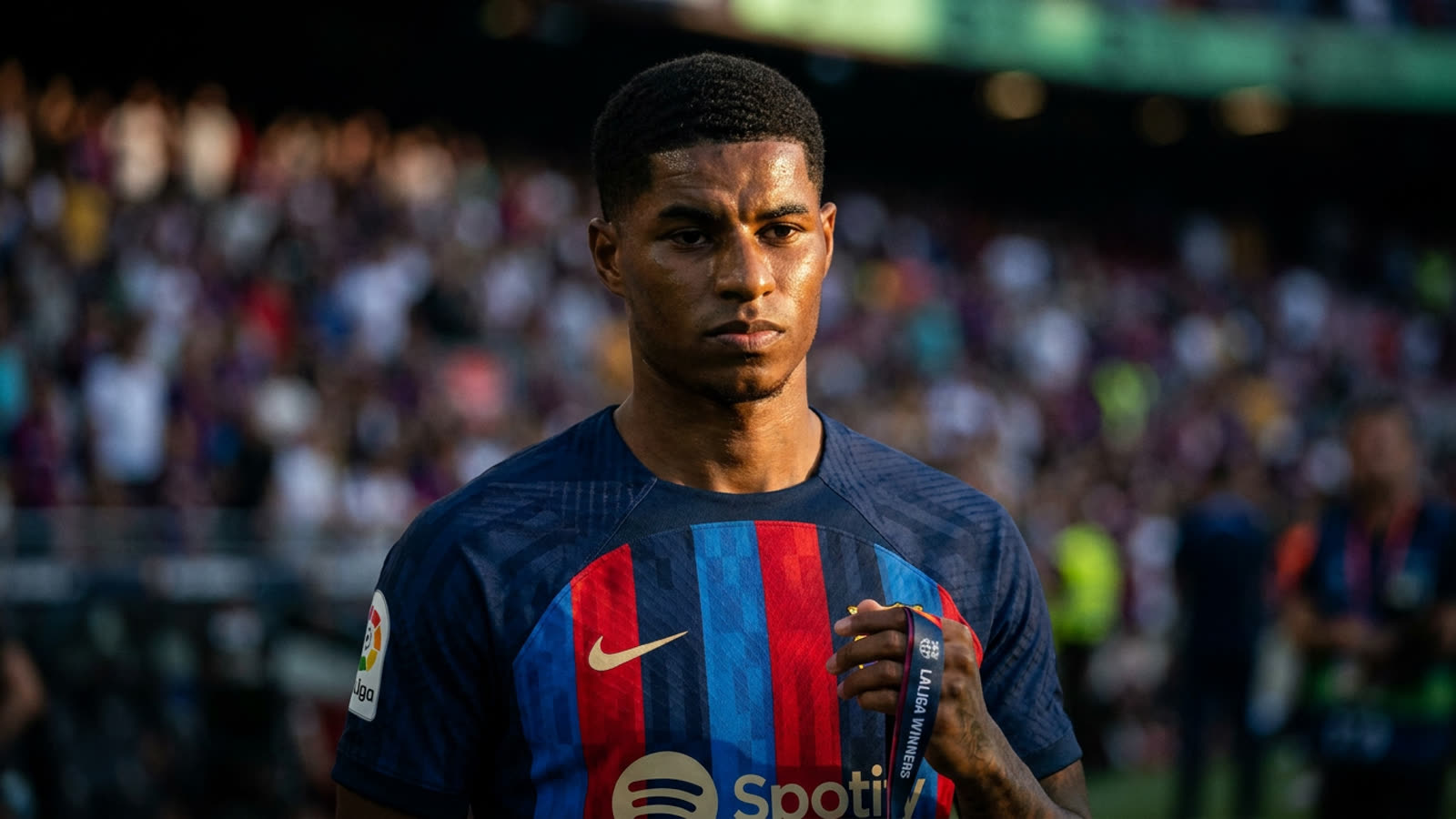
Six months ago, Marcus Rashford was training alone at Carrington, frozen out by Ruben Amorim and reduced to tabloid fodder about nightclub appearances. On Sunday night, he wheeled away at the Santiago Bernabéu having just scored the goal that clinched La Liga for Barcelona—his outstretched arms a portrait of vindication that will haunt Manchester United's hierarchy for years.
The 2-1 victory over Real Madrid was not merely a title decider; it was a coronation. Barcelona's second consecutive league championship, secured in the most theatrical venue imaginable, cements their return to domestic dominance after a half-decade of financial chaos and institutional dysfunction. But the story belongs to Rashford, whose January loan move was greeted with skepticism in Catalunya and relief in Manchester.
The goal that rewrote the narrative
Rashford's 73rd-minute strike was pure instinct—a first-time finish from Pedri's cutback that gave Thibaut Courtois no chance. It was his fourteenth goal in all competitions since arriving, a tally that has transformed him from reclamation project to folk hero. The Camp Nou faithful, watching on screens across the city, will remember where they were when an Englishman delivered their league title in Madrid.
The symbolism is almost too neat. Rashford, once the golden boy of English football, had become a cautionary tale about talent squandered and attitude questioned. Barcelona, once the template for modern football, had become a cautionary tale about financial hubris. Both needed each other more than either would admit.
What this means for the summer
Barcelona's purchase option, reportedly set at €45 million, now looks like the bargain of the decade. United, who desperately need the funds and the squad space, will have no leverage to negotiate upward. Rashford, for his part, has made clear through intermediaries that he has no interest in returning to a club that publicly questioned his commitment.
The broader implications ripple through European football's transfer market. Premier League clubs sitting on unhappy assets—Chelsea's bloated squad comes to mind—will study the Rashford template: cut losses, accept the loan, hope the player's value recovers elsewhere. It rarely works this well.
Our take
Rashford's Barcelona chapter is a reminder that context shapes players as much as talent does. The suffocating scrutiny of English football, the tabloid ecosystem that treats every night out as a moral failing, the managerial instability at Old Trafford—these were not excuses, but they were factors. In Spain, Rashford found a club that needed him to be good, not perfect. He responded by being excellent. United's loss is now quantifiable: one La Liga title, delivered by a player they gave away.