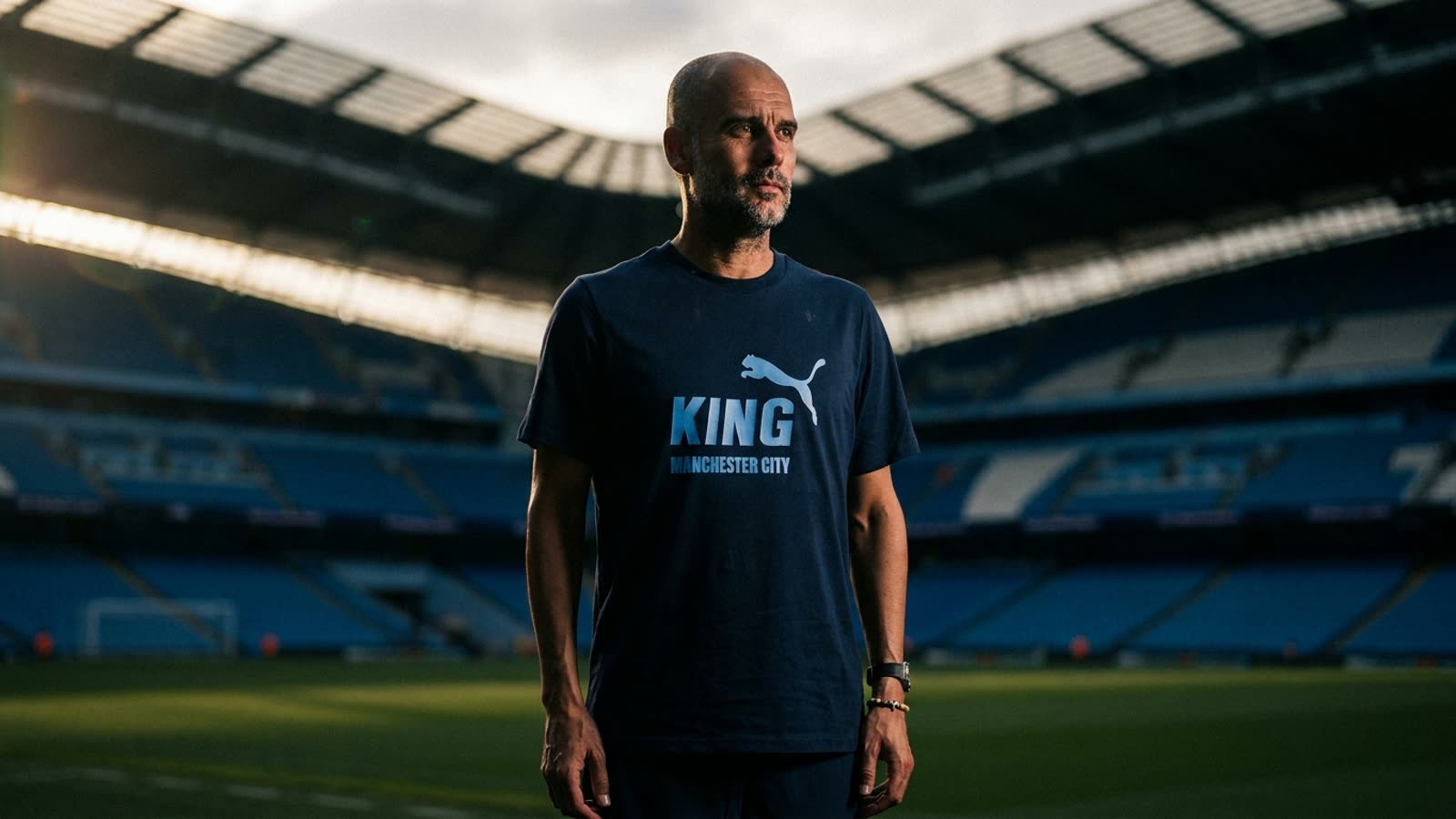
Manchester City are preparing for Pep Guardiola's departure at the end of the season, and the most remarkable aspect of this news is how unremarkable the club seems to find it. Sources describe the mood at the Etihad as one of resigned acceptance rather than panic—the posture of an organization that has spent years building systems designed to outlast any single individual, even the most transformative manager in its history.
Guardiola arrived in Manchester in 2016 with a mandate to turn a wealthy, ambitious club into a genuinely elite one. He delivered something more: a complete philosophical overhaul that redefined not just City but the entire Premier League. The tiki-taka principles he refined at Barcelona became the tactical baseline against which every English manager was measured. His teams won six league titles, a Champions League, and countless domestic cups. More importantly, they made dominance look inevitable.
The succession question
City's recruitment team has been quietly assembling a shortlist for months, though no frontrunner has emerged publicly. The challenge is existential: how do you replace someone who didn't just win trophies but fundamentally changed how the organization thinks about football? Previous Guardiola successions—at Barcelona, at Bayern Munich—produced mixed results. Both clubs remained competitive but never quite recaptured the same sense of aesthetic and competitive superiority.
The timing is significant. City face ongoing questions about their financial fair play case, and Guardiola's presence has served as both shield and distraction. His departure will refocus attention on the club's governance at precisely the moment they'd prefer it elsewhere.
A legacy beyond silverware
Guardiola's influence extends far beyond the trophy cabinet. He transformed the physical infrastructure of English football, pushing clubs to invest in training facilities and analytics departments. He changed how academies develop players, prioritizing technical comfort under pressure over raw athleticism. Half the managers in the Premier League are, in some sense, Guardiola disciples—coaches who absorbed his principles either directly or through osmosis.
The players he developed—Phil Foden, Erling Haaland, the revolving door of fullbacks repurposed as midfielders—will carry his fingerprints for years. So will the expectations. City supporters now consider anything less than a title challenge a failure, a standard that seemed laughable when Guardiola arrived at a club that had won exactly two league championships in the previous 44 years.
Our take
Guardiola's departure feels less like an ending than a graduation. He came to prove that his methods could work outside Barcelona's unique ecosystem, and he proved it so thoroughly that the proof became boring. The question now is whether City have absorbed enough of his DNA to sustain excellence without him—or whether they'll discover, as Barcelona and Bayern did, that some things simply cannot be systematized. Either way, English football owes him a debt it will spend the next decade trying to repay.