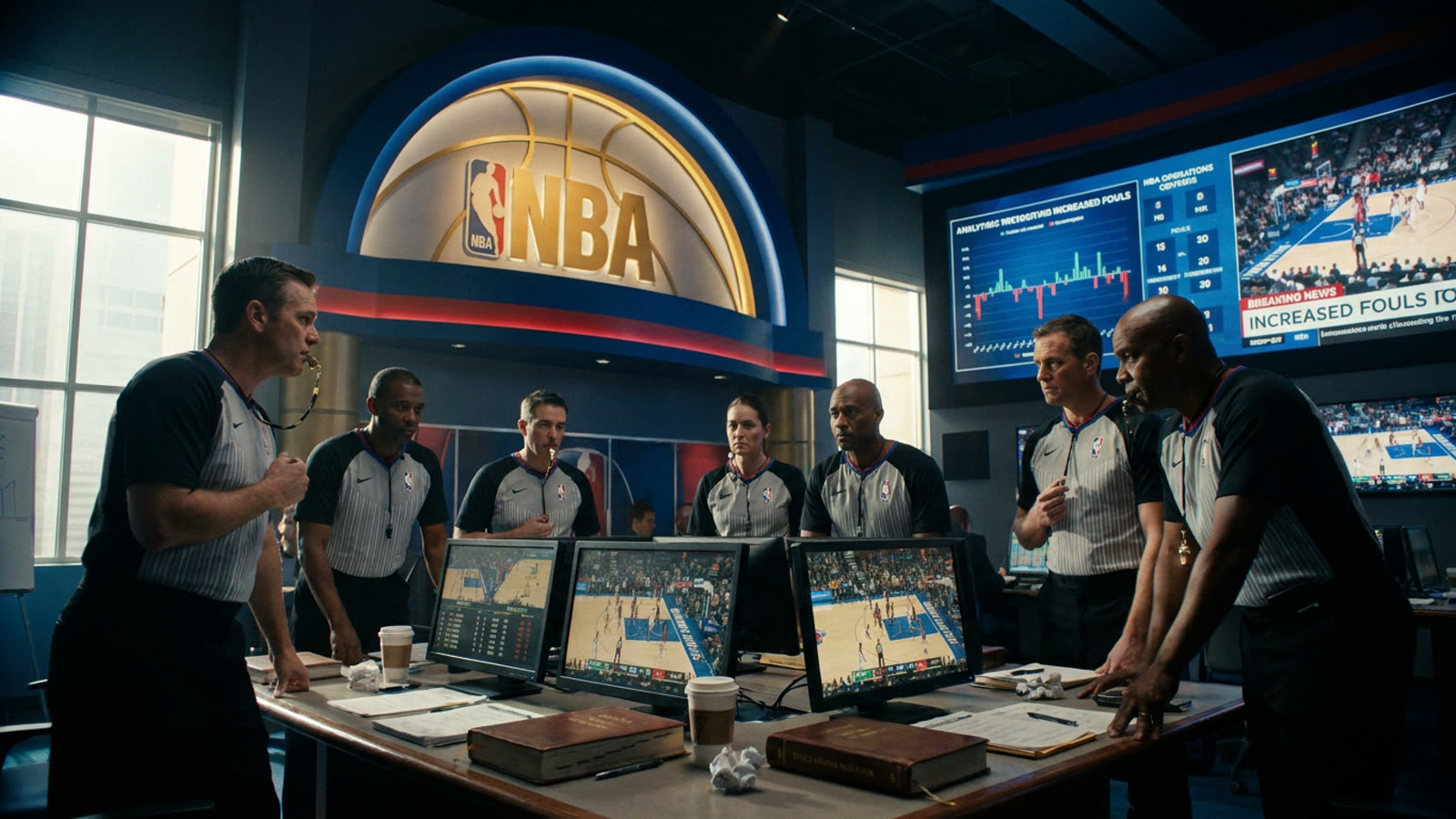
The NBA has a whistle problem, and it would very much like you to believe that the problem is actually a feature.
League officials confirmed this week that referees are calling approximately 11% more personal fouls per game in these playoffs compared to the regular season—one of the largest regular-season-to-postseason differentials in league history. Rather than acknowledge this as a potential issue affecting competitive integrity, the NBA defended the spike as a natural consequence of playoff intensity. The subtext is clear: the league believes more contact deserves more calls, and if that fundamentally alters how the games are played, so be it.
The numbers tell a different story
Historically, playoff basketball has been defined by refs "letting them play"—a tacit understanding that the postseason rewards physicality and that ticky-tack fouls called in January have no place in May. This year's data inverts that tradition entirely. An 11% increase means roughly four to five additional fouls per game, which translates to more free throws, more foul trouble for key players, and more stoppages that disrupt rhythm and flow. For teams built around defensive intensity—Cleveland's switchable lineups, Minnesota's bruising frontcourt—the new officiating standard is an unexpected variable that wasn't present during 82 games of preparation.
Why the league won't budge
The NBA's public defense of its referees is partly institutional loyalty and partly strategic positioning. Commissioner Adam Silver has spent years trying to make the game more palatable to casual viewers, and free-flowing offense sells better than grinding defensive battles. More fouls mean more possessions, more points, and more opportunities for stars to operate in space. If Donovan Mitchell gets to the line twelve times instead of seven, the highlight package writes itself. The league may genuinely believe it's improving the product, even as purists argue it's sanitizing the very physicality that makes playoff basketball compelling.
There's also a liability dimension. In an era of heightened attention to player safety and load management, the NBA can point to aggressive foul-calling as evidence it's protecting its assets. When a hard screen or a hip-check in the paint draws a whistle, the league has documentation that it took action.
Our take
The NBA is gaslighting its own audience. Playoff basketball has always been a different sport—slower, more physical, with higher stakes per possession—and that distinction is precisely what made it appointment viewing. By flooding games with whistles, the league is homogenizing its product at the exact moment it should be showcasing what makes the postseason special. Defending an 11% spike as normal isn't transparency; it's spin. The referees aren't the problem. The directive they're following is.