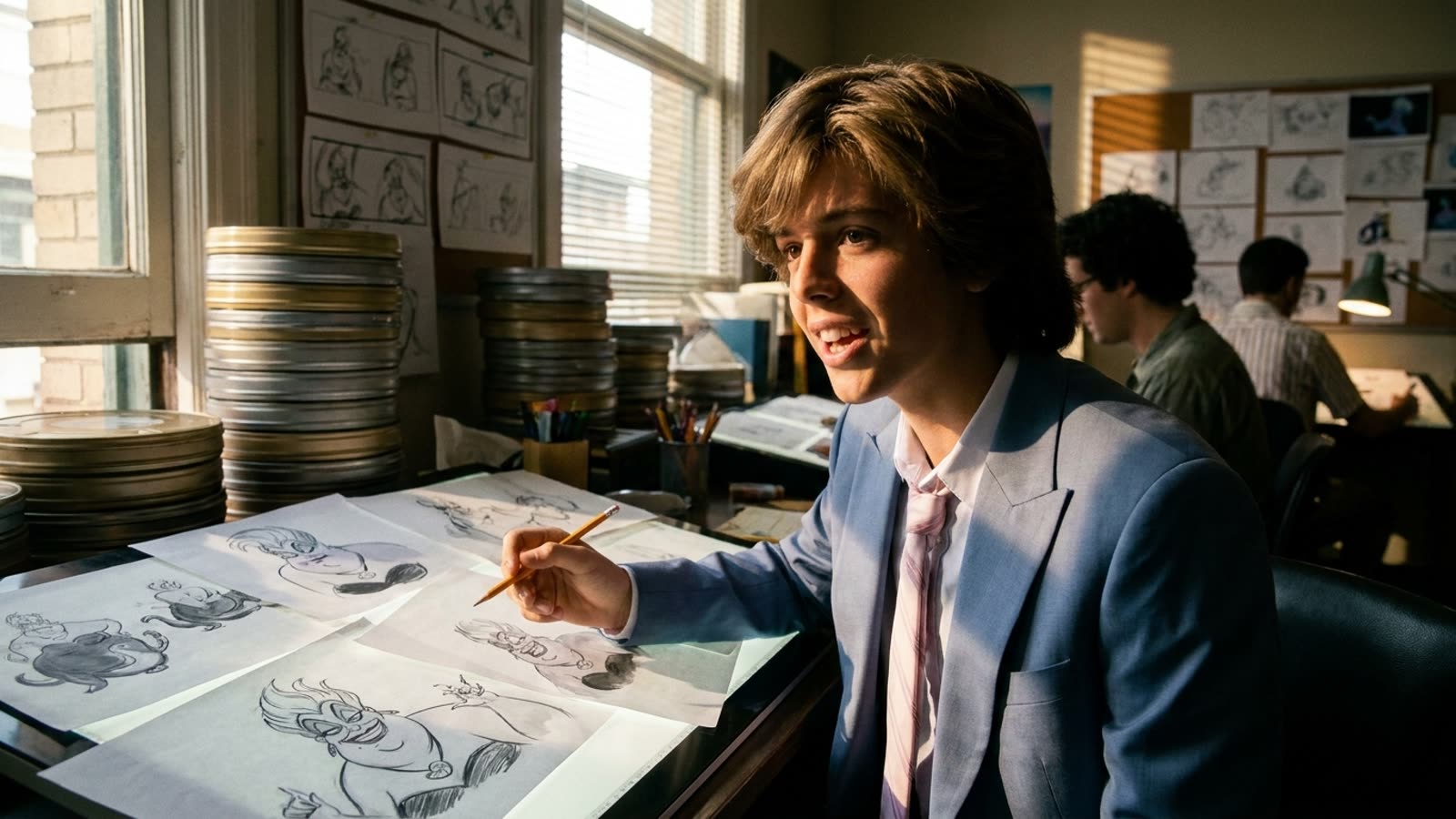
The death of an animator rarely makes headlines, which is precisely the problem. Luis de la Rosa, who spent decades at Walt Disney Animation Studios drawing some of the most memorable villains in the company's history, has died — and with him goes another link to an era when animated antagonists were crafted frame by painstaking frame rather than rendered by algorithm.
De la Rosa's pencil gave life to Ursula's tentacular menace in The Little Mermaid, Jafar's serpentine ambition in Aladdin, and Scar's languid cruelty in The Lion King. These weren't mere drawings; they were performances, each gesture and expression the product of an animator who understood that great villainy requires charisma as much as threat.
The Renaissance's unsung architects
The Disney Renaissance of 1989-1999 is typically credited to executives like Jeffrey Katzenberg or composers like Alan Menken. The animators who actually made the films move tend to receive posthumous appreciation at best. De la Rosa belonged to a generation trained in the classical tradition — the so-called "Nine Old Men" lineage — who could make a two-dimensional drawing breathe with psychological complexity.
His specialty was antagonists, the characters that require the most precise calibration. A hero can be broadly appealing; a villain must be specific, seductive, and ultimately repellent in exactly the right measure. Watch Ursula's theatrical hand gestures or Jafar's cobra-like stillness and you're seeing De la Rosa's draftsmanship channeling decades of theatrical tradition into 24 frames per second.
The extinction of a craft
Disney's last traditionally animated theatrical feature was Winnie the Pooh in 2011. The studio that built its empire on hand-drawn animation has effectively abandoned the medium, and the animators who mastered it are aging out of the industry with few successors. Computer animation offers efficiency and spectacle, but something ineffable has been lost — the slight wobble of a hand-drawn line, the warmth of visible craft.
De la Rosa's death arrives as the industry debates whether AI-generated animation represents the next frontier or the final betrayal of the animator's art. The question is not merely technical but philosophical: can a villain generated by machine learning ever possess the malevolent soul that De la Rosa's pencil conjured?
Our take
The great Disney villains endure because someone like Luis de la Rosa understood that evil, properly rendered, is more interesting than goodness. His Ursula didn't just threaten Ariel; she seduced audiences into half-rooting for her. That's not a skill you can automate. As the animators of the Renaissance generation pass on, we're losing more than craftspeople — we're losing the institutional memory of how to make drawn characters feel dangerous, alive, and irreplaceable.