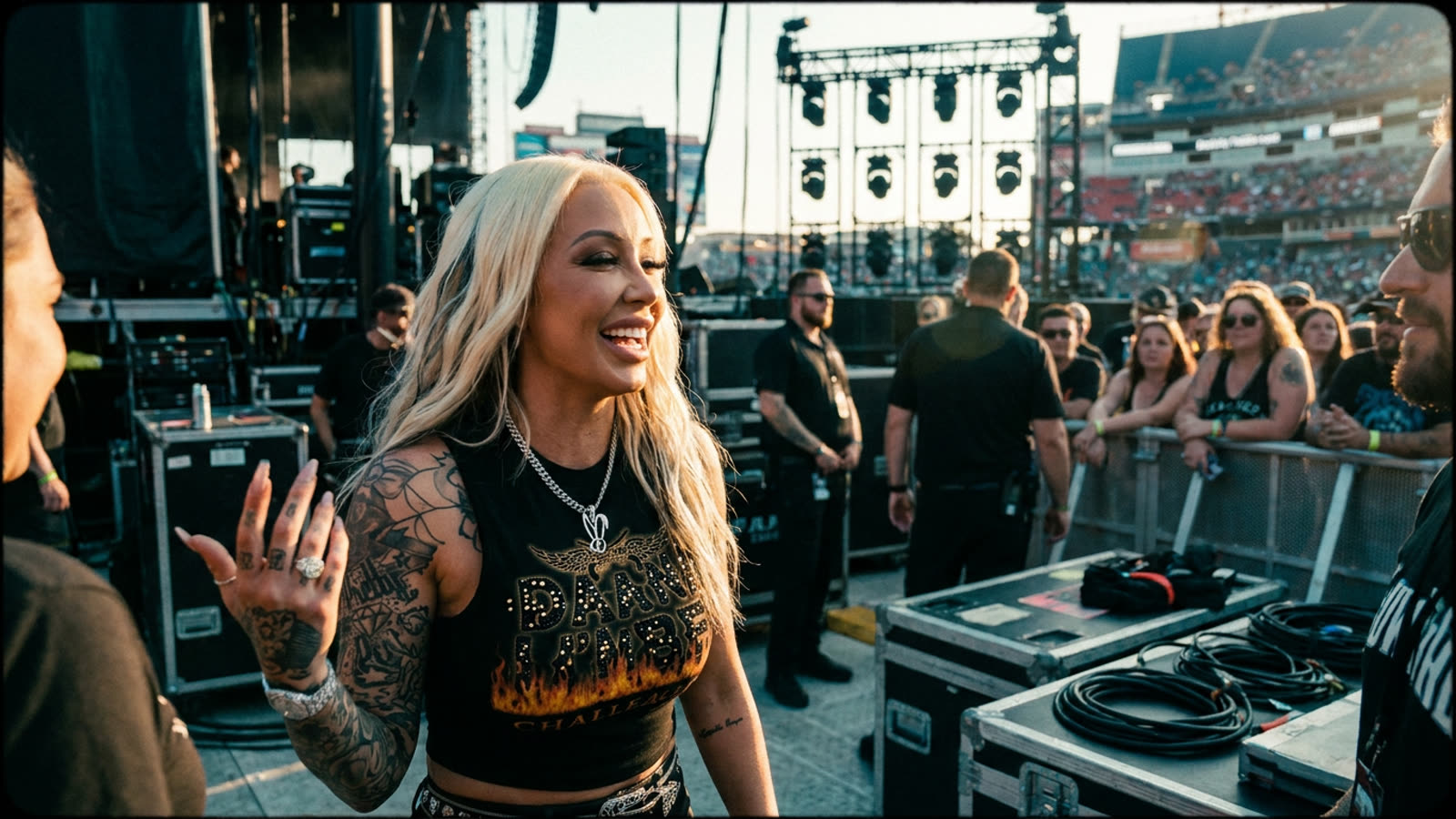
When Jelly Roll accepted his first Grammy earlier this year, the camera cut to his wife in the audience, mascara streaming, fist raised. Bunnie XO—born Alyssa DeFord, 44—has never pretended to be a conventional Nashville wife. She spent years in adult entertainment, battled addiction, and now hosts one of the most downloaded wellness podcasts in the country. Her husband's meteoric rise from prison-tattooed outcast to arena headliner has made her visibility unavoidable. What she's done with that visibility is considerably more interesting than the typical celebrity-spouse playbook.
Bunnie's podcast, Dumb Blonde, pulls seven-figure monthly downloads by doing something talk shows rarely attempt: letting guests unspool their trauma without interruption or judgment. The format is deceptively simple—long conversations, minimal editing, no gotcha moments—but the guest list reads like a who's who of people the mainstream industry would rather forget. Former addicts, sex workers, abuse survivors, and occasionally A-listers who want to discuss something other than their latest project. The through-line is Bunnie herself, who treats her own history as neither shameful nor heroic, just material.
The sobriety question
Jelly Roll has been open about his past substance abuse, and Bunnie has matched that candor with her own recovery narrative. But she's also been unusually frank about the strain that touring, fame, and constant public scrutiny place on sobriety. In recent interviews, she's discussed the couple's decision to build sober-friendly routines into his road schedule—no after-parties, early call times, therapists on speed dial. It's the kind of unsexy infrastructure that rarely makes headlines but often determines whether a career survives its own success.
What distinguishes Bunnie from the wellness-influencer crowd is her refusal to sand down the edges. She still curses freely, still posts unfiltered selfies, still talks about her years dancing in clubs without the requisite hand-wringing. The message is less "I've transcended my past" than "my past is part of the package, take it or leave it."
A different kind of influence
Nashville has always had complicated relationships with its women—particularly those who don't fit the approved molds. Bunnie XO fits none of them. She's not a singer, not a songwriter, not a demure plus-one smiling from the wings. She's a media entrepreneur with a devoted audience that overlaps only partially with her husband's fanbase. Her merchandise sells. Her live shows sell out. She's built something that would exist whether or not Jelly Roll had ever charted.
That independence matters. Celebrity marriages often founder on the asymmetry of fame, the slow erosion that comes when one partner becomes an accessory to the other's narrative. Bunnie has sidestepped that trap by maintaining her own gravitational pull—and by being relentlessly, sometimes uncomfortably, herself.
Our take
The entertainment industry loves a redemption arc, but it usually prefers them neatly packaged: the bad years safely in the past, the present scrubbed clean for sponsorship deals. Bunnie XO refuses that bargain. She's built a career on the premise that messy pasts and functional presents can coexist—that honesty, even when it makes publicists nervous, is its own kind of brand. Whether that model scales as her husband's fame intensifies remains to be seen. But she's already proved that the Nashville wife role, like most roles, is optional.