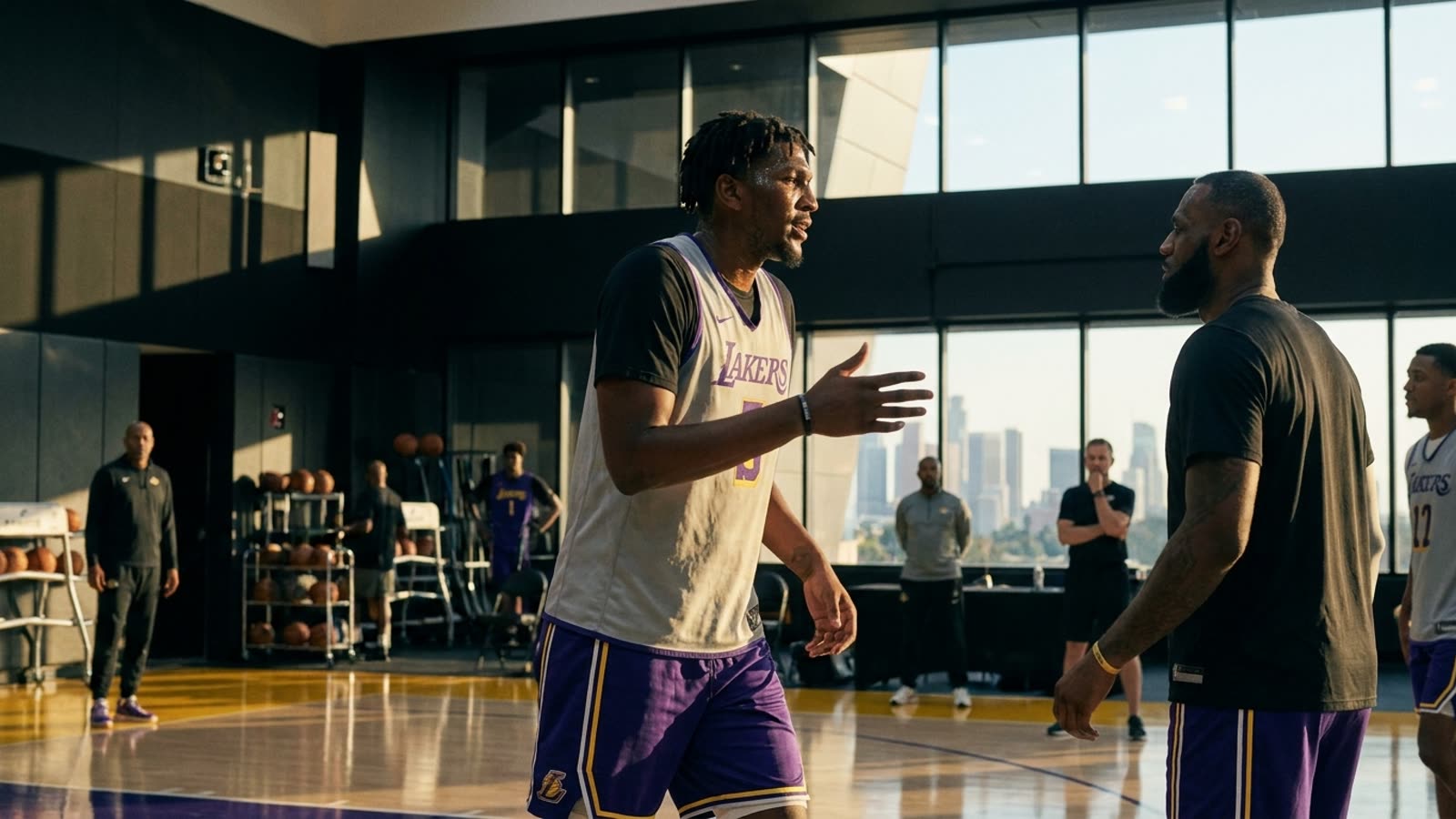
The Los Angeles Lakers have agreed to terms with Kevon Looney, the 30-year-old center who won four NBA championships with the Golden State Warriors, according to multiple reports. The deal represents a sensible if unspectacular addition to a roster that desperately needs reliable interior depth—and a front office that remains in pursuit of larger ambitions it may never secure.
Looney spent his entire nine-year career in Golden State, where he evolved from a late first-round afterthought into one of the league's most dependable playoff performers. His offensive rebounding, defensive positioning, and preternatural calm in high-leverage moments made him indispensable to the Warriors' dynasty. Now he joins a Lakers franchise that has cycled through centers with alarming frequency since the 2020 championship.
The fit makes sense on paper
Looney addresses a specific Lakers deficiency: they need a center who can defend without fouling, set screens without demanding touches, and rebound without clogging passing lanes. His career averages—modest scoring, elite offensive rebounding rate, minimal turnovers—describe a player who understands his role. At his best, Looney functions as connective tissue, the kind of player whose value appears in wins more than statistics.
The Lakers have lacked that archetype since Dwight Howard's brief, effective 2020 stint. Subsequent experiments with DeAndre Jordan, Thomas Bryant, and various small-ball lineups produced inconsistent results. Looney offers stability, even if his athleticism has declined and his rim protection was never elite.
The Kuminga question looms larger
Yet the more revealing detail is what the Lakers haven't done. Reports indicate Los Angeles remains in pursuit of Jonathan Kuminga, Looney's former teammate and a far more consequential target. Kuminga, 23, represents the kind of athletic, versatile forward who could anchor a post-LeBron James roster. Golden State has reportedly resisted trade overtures.
The Lakers' free agency pattern has become familiar: secure competent veterans while chasing transformative moves that rarely materialize. They signed Looney; they're still pursuing Kuminga. The gap between those two transactions captures the franchise's broader predicament. They can attract experienced professionals seeking late-career stability and Los Angeles lifestyle. They struggle to acquire ascending talent through trade, constrained by depleted draft capital and salary complications.
Our take
Looney is a fine signing—a professional who will contribute useful minutes and never embarrass the organization. But the Lakers don't need fine. They need a coherent vision for what comes after the LeBron era, which is either ending or already ended depending on how one interprets last season's first-round exit. Signing championship role players from other teams' dynasties is not a strategy; it's nostalgia dressed as roster construction. Looney deserves better than serving as evidence that the Lakers are still trying. So do Lakers fans.