When Sweden finished third at the 1994 World Cup, the global spotlight fell on the flowing blond hair and clinical finishing of Kennet Andersson and Martin Dahlin. The man who made their attacking freedom possible—the one standing between the posts with preternatural calm—has since faded into the footnotes of tournament history. This is an injustice worth correcting.
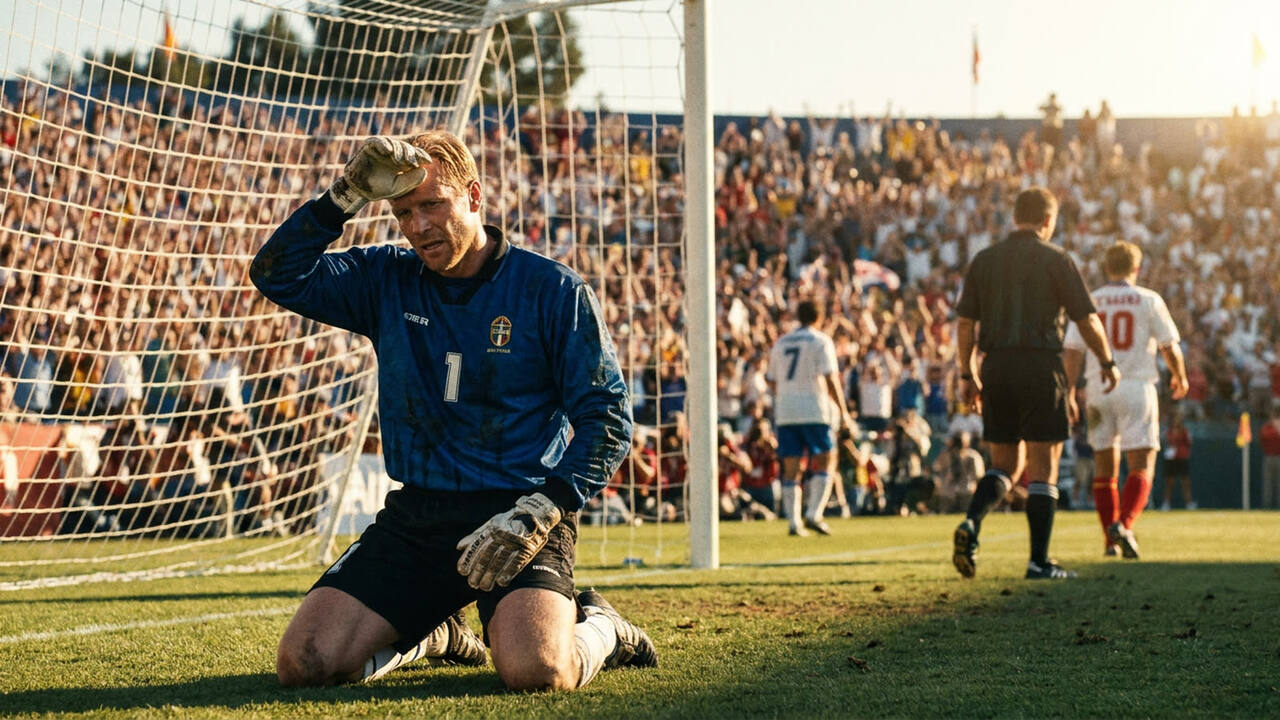
Thomas Ravelli was thirty-four years old during that American summer, an age when most goalkeepers begin calculating their pension contributions rather than their World Cup ambitions. He had already earned more than a hundred caps for Sweden, a remarkable figure for any era, and his IFK Göteborg career had delivered domestic titles and European nights. But the 1994 tournament was something else entirely: a five-week demonstration of what happens when experience, reflexes, and an almost irritating composure converge at precisely the right moment.
The architecture of Swedish pragmatism
Tommy Svensson's Sweden were not a side built on fantasy. They defended in compact banks, transitioned quickly, and relied on their goalkeeper to clean up the inevitable moments when opponents found space. Ravelli was not merely adequate in this role—he was the structural foundation. Against Cameroon in the group stage, he produced a string of saves that kept Sweden level before they found a winner. Against Romania in the quarterfinal, with the match destined for penalties, he saved two spot-kicks to send his nation through.
That shootout performance alone should have cemented his reputation. Penalty saves require a particular cocktail of preparation, intuition, and nerve. Ravelli possessed all three in abundance. He studied opponents, committed early when necessary, and crucially, never appeared rattled. The Romanians, featuring Gheorghe Hagi at the peak of his powers, had no answer.
The semifinal and what might have been
Brazil ended Sweden's run in the semifinal, and Romário's winner exposed the limitations of defensive pragmatism against genuine genius. Yet Ravelli was not at fault. He had kept Sweden in a match where they were outclassed for long stretches, and the third-place playoff victory over Bulgaria—four goals conceded across seven matches—confirmed his tournament's excellence.
The statistics tell part of the story: Sweden conceded just four times in seven games, and Ravelli's save percentage ranked among the tournament's best. But statistics flatten the texture of his performance. There was the way he commanded his area, organizing a defense that included the veteran Jonas Thern and the young Patrik Andersson. There was his distribution, quick and purposeful, feeding Sweden's counterattacks before opponents could reset.
Our take
Goalkeeping history tends to remember the flamboyant and the tragic: Yashin's black jersey, Banks's save, Barthez's eccentricities. Ravelli offered neither drama nor disaster—just relentless competence elevated to artistry. At an age when decline is expected, he delivered arguably his finest performances on the sport's largest stage. That Sweden have not come close to matching that 1994 result in the decades since only underscores how much they owed to the man in goal. Some players become legends through moments; Ravelli became one through consistency so smooth it was easy to overlook. It should not be overlooked any longer.