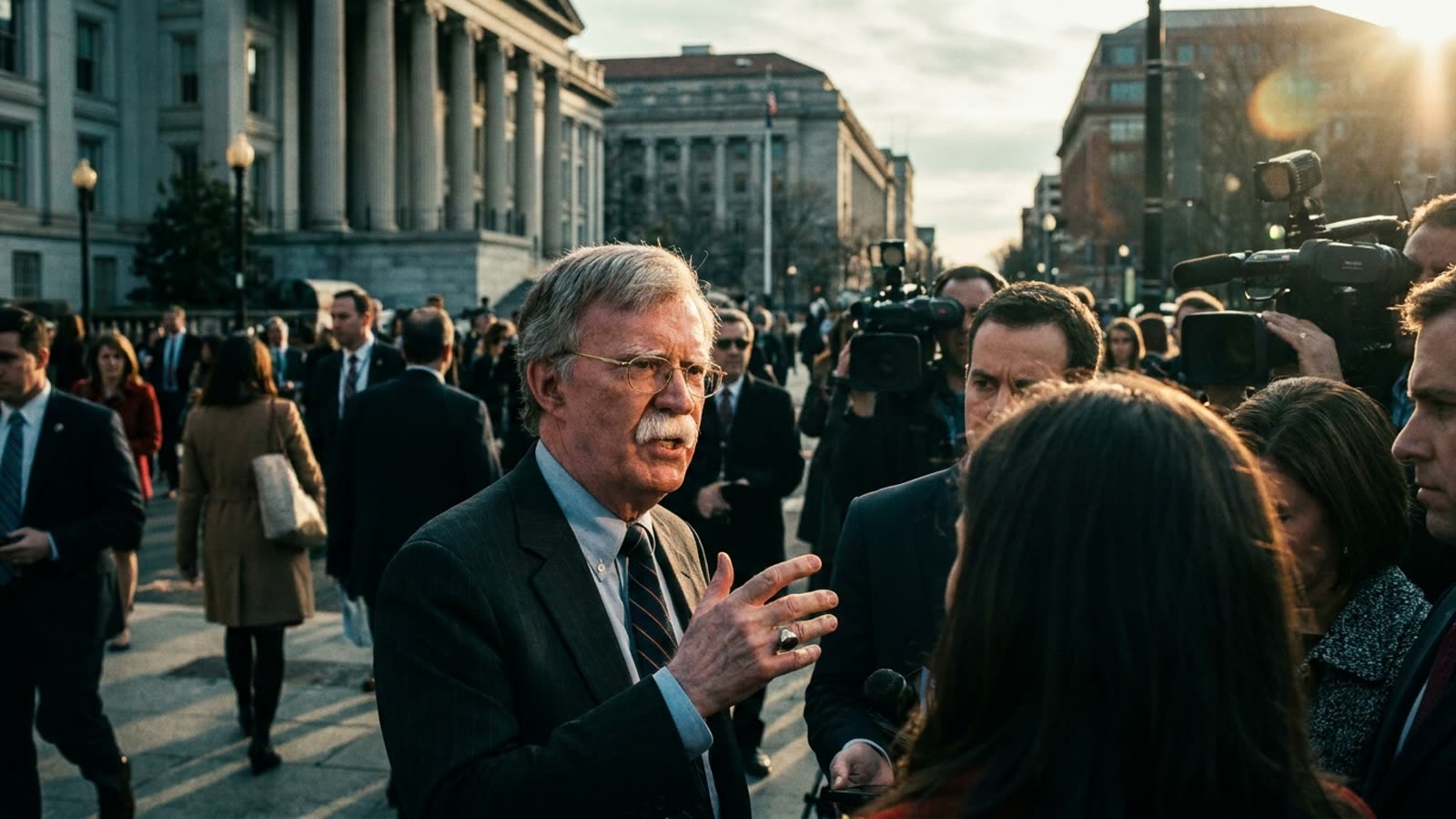
The man Donald Trump once fired for being too hawkish on Iran has returned to deliver an inconvenient verdict on the president's celebrated diplomatic achievement: it won't last.
John Bolton, who served as Trump's national security adviser until their acrimonious split in 2019, has emerged as the most prominent conservative critic of the administration's recent agreement with Tehran. His assessment—that the deal represents a temporary pause rather than a durable peace—carries particular weight precisely because Bolton cannot be dismissed as a partisan opponent or a dove uncomfortable with American power projection.
The hawk's dilemma
Bolton's critique strikes at the heart of Trump's foreign policy brand. The president has long positioned himself as a dealmaker who can achieve through personal negotiation what traditional diplomacy cannot. The Iran agreement, reached after months of escalating tensions that included attacks on oil infrastructure and shipping in the Strait of Hormuz, was meant to vindicate this approach.
But Bolton argues that the fundamental dynamics driving Iranian behavior remain unchanged. Tehran's regional ambitions, its support for proxy forces, and its nuclear aspirations have not been addressed by an agreement focused primarily on de-escalation. The former adviser's position reflects a broader skepticism within hawkish Republican circles that any negotiated settlement with the Islamic Republic can produce lasting strategic benefits for the United States.
Timing and tactics
Bolton's public intervention comes at a delicate moment. Iran's apparent violation of the agreement's terms in the Strait of Hormuz—which Trump himself characterized as "foolish"—has already raised questions about Tehran's commitment to the deal's provisions. The administration faces a choice between enforcing consequences that could collapse the agreement entirely or accepting violations that undermine its credibility.
This is precisely the dynamic Bolton predicted. His argument has always been that Iran views negotiations as a tactical maneuver rather than a strategic shift, using diplomatic processes to relieve pressure while preserving its fundamental objectives. Whether or not one accepts this analysis, the recent incident lends it uncomfortable plausibility.
Our take
Bolton is a known quantity—his views on Iran have been consistent for decades, and his personal grievances with Trump are well documented. But that predictability doesn't make his critique wrong. The administration's Iran deal was always more ceasefire than settlement, designed to buy time rather than resolve underlying conflicts. Bolton is simply saying out loud what many in Washington already suspect: the clock is ticking, and nobody has a plan for when it runs out.