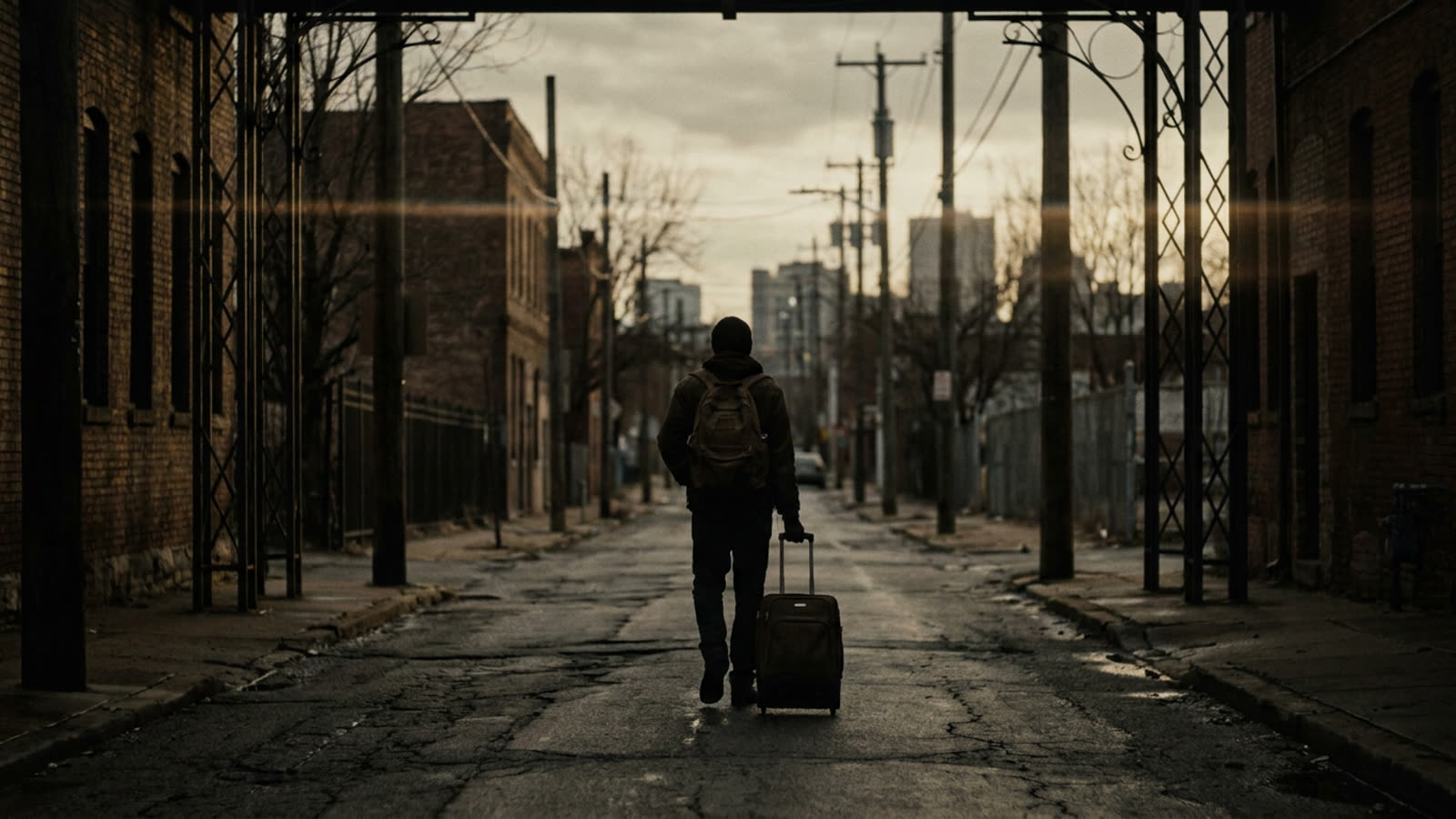
The Supreme Court's decision to side with the Trump administration on Temporary Protected Status is not merely a legal ruling—it is the judicial branch formally endorsing the premise that promises made by previous administrations to vulnerable populations carry no binding weight. Hundreds of thousands of people who came to the United States legally, worked legally, paid taxes, bought homes, and raised American children have just learned that "temporary" was always a trapdoor.
The ruling allows the administration to terminate TPS designations and deny work-permit renewals for nationals of countries including El Salvador, Honduras, Haiti, and Sudan. Some of these designations have been in place for over two decades. The people affected are not recent arrivals gaming a loophole; they are long-term residents who followed every rule, renewed every permit, and built their lives on the explicit assurance of the federal government that they could remain.
The legal architecture of abandonment
The Court's reasoning rests on a formalist reading of executive discretion: TPS is, by statutory design, temporary, and the executive branch retains authority to determine when conditions in a home country have sufficiently improved. What this framing ignores is the decades of bipartisan practice that treated TPS as a de facto permanent status for populations the government had no intention of actually removing. Congress never created a pathway to permanent residency for TPS holders, and successive administrations never forced the issue. The result was a legal limbo that functioned, for all practical purposes, as permission to stay.
Justice Sotomayor's dissent reportedly drew an audible reaction from Justice Alito—a rare breach of courtroom decorum that suggests the internal temperature of this decision. Her argument, that the government cannot in good conscience invite people to build lives and then revoke that invitation decades later, did not carry the day. The majority held that good conscience is not a constitutional standard.
The economic and human arithmetic
The immediate impact falls on an estimated 300,000 to 400,000 TPS holders and their families, including roughly 200,000 American-citizen children. These are not abstract numbers. They represent nurses, construction workers, small-business owners, and taxpayers who will now face the choice of self-deportation to countries many left as children or undocumented status in the only country they know as home.
Businesses in agriculture, hospitality, and healthcare—sectors already facing labor shortages—will lose experienced, legal workers with no replacement pipeline. The economic logic of mass removal has never been sound; the administration's position has always been that the symbolic value of enforcement outweighs the practical costs. The Court has now ratified that calculus.
Our take
This ruling is legally defensible and morally incoherent. The government spent decades telling people they could stay, and the Court has now confirmed it can change its mind whenever it likes. The decision will not make America safer, richer, or more orderly. It will make it a country where following the rules offers no protection, and where the phrase "nation of immigrants" requires an asterisk. The people affected will not disappear; they will simply become invisible, undocumented, and afraid. That is not immigration policy. It is abandonment dressed in robes.