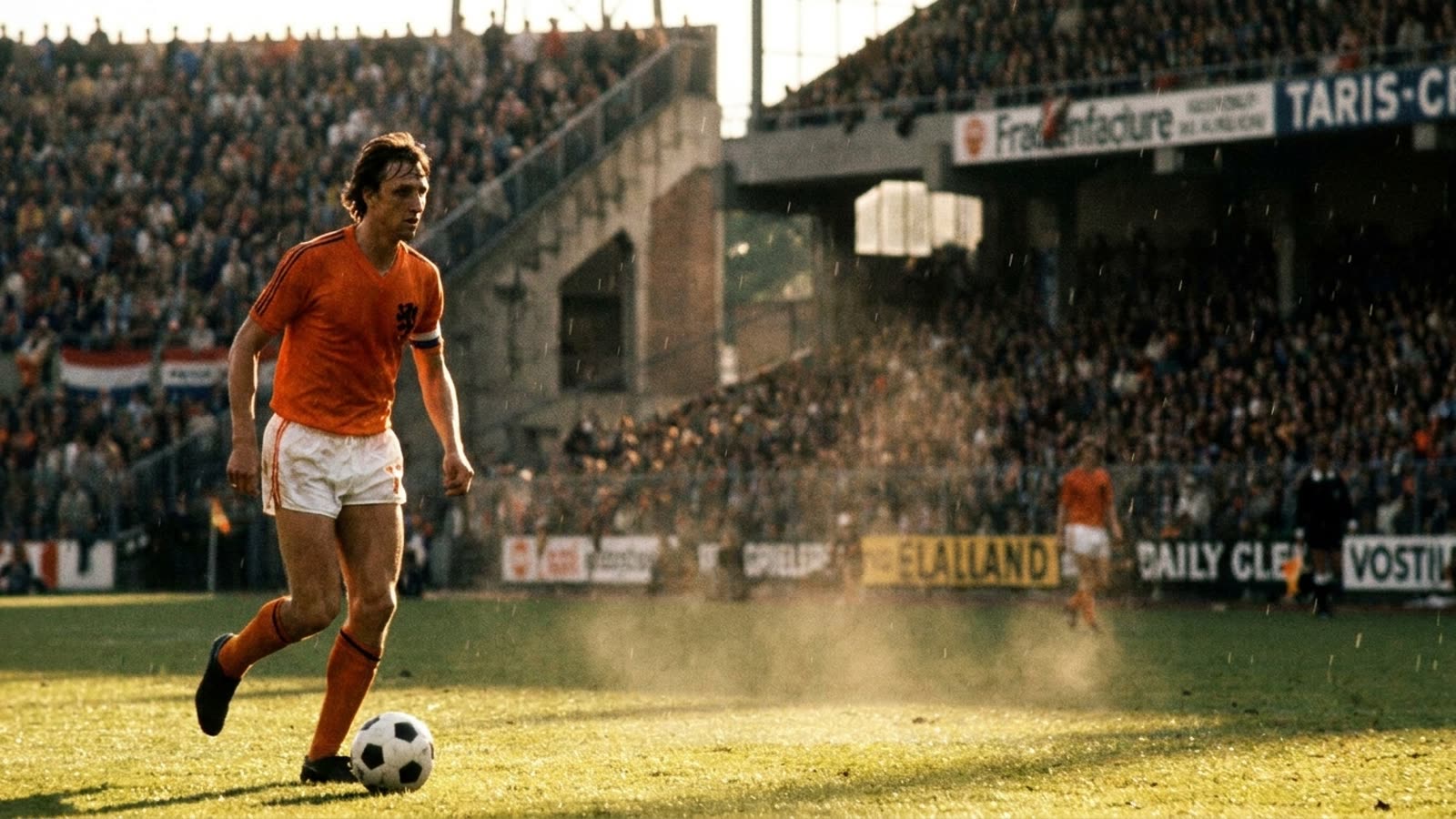
There is a moment in the 1974 World Cup, Netherlands versus Sweden, when Johan Cruyff receives the ball with his back to goal, a defender breathing down his neck. What happens next takes perhaps two seconds. Cruyff feints to pass, drags the ball behind his standing leg with the inside of his other foot, and pirouettes away into space the defender didn't know existed. The Swedish player is left grasping at physics that no longer apply.
The Cruyff Turn, as it would come to be known, was not merely a piece of skill. It was a statement of philosophy: that football is not a sport of force but of intelligence, that space is not given but created, that the beautiful and the effective need not be enemies.
The total footballer
Cruyff emerged from Ajax Amsterdam's youth academy in the 1960s and quickly became the embodiment of "Total Football," the tactical revolution pioneered by coach Rinus Michels. The system demanded that every outfield player be capable of playing every outfield position, that the team move as a single organism expanding and contracting across the pitch. It required extraordinary technical ability and even more extraordinary spatial awareness. Cruyff possessed both in quantities that seemed almost unfair.
He won three consecutive European Cups with Ajax and three Ballon d'Or awards, but statistics capture Cruyff the way a photograph captures a river. What made him singular was the way he thought about the game while playing it, the way he seemed to exist several seconds ahead of everyone else on the pitch. Defenders marking him often described the sensation of guarding a ghost.
The manager's shadow
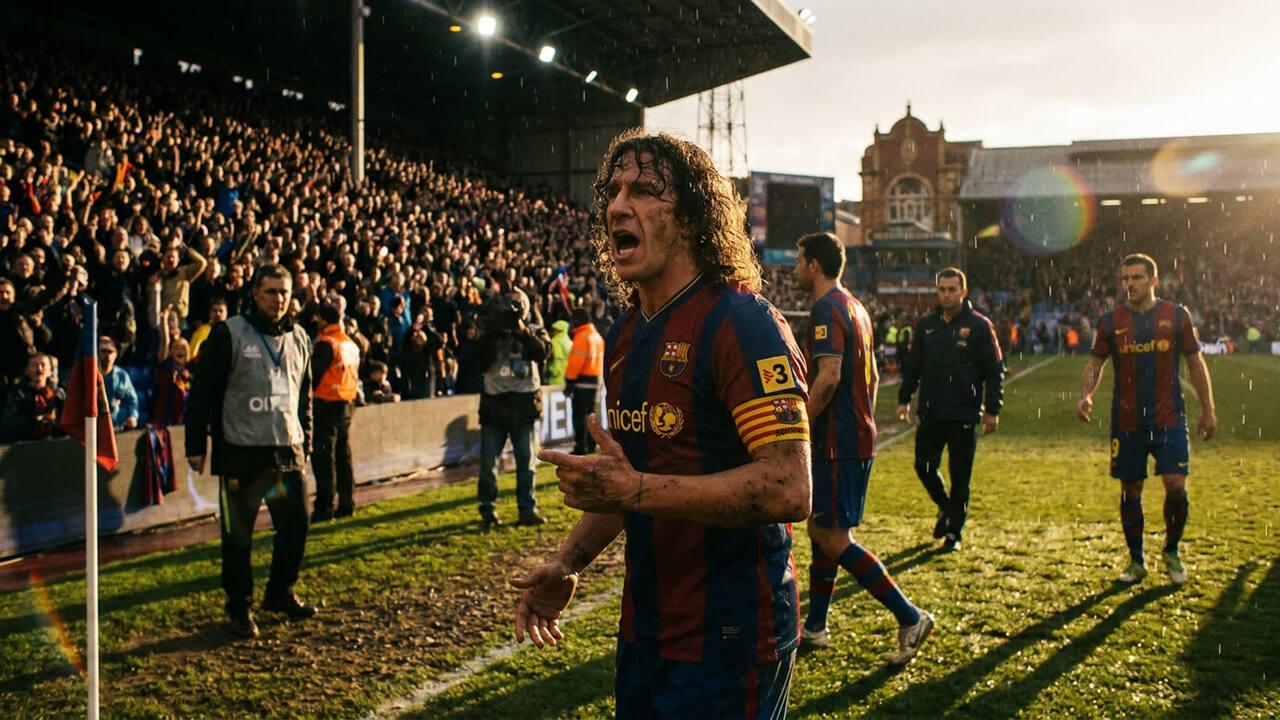
Cruyff's influence extended far beyond his playing career. As manager of Barcelona from 1988 to 1996, he constructed the "Dream Team" that won four consecutive La Liga titles and the club's first European Cup. More importantly, he established the footballing philosophy that would define Barcelona for decades: possession as control, pressing as aggression, youth development as religion. The famed La Masia academy became a factory for players who thought about football the Cruyff way.
Pep Guardiola, a defensive midfielder in Cruyff's Dream Team, would later become the most successful coach of his generation by essentially elaborating on his mentor's ideas. The tiki-taka that mesmerized the world under Guardiola's Barcelona and Spain's national team was Cruyff's Total Football refined for the modern era. When Manchester City win titles playing intricate possession football, they are, in a meaningful sense, still playing Cruyff's game.
Our take
Football history is littered with players who were faster, stronger, perhaps even more naturally gifted than Johan Cruyff. What separates him is that he understood the sport as a language and spent his life expanding its vocabulary. Every team that prioritizes intelligence over industry, every academy that teaches children to think before they kick, every moment of improvised genius on a football pitch carries something of his DNA. He died in 2016, but the turn he invented against Sweden remains the sport's most elegant argument that football is, at its best, an art form with a scoreboard.