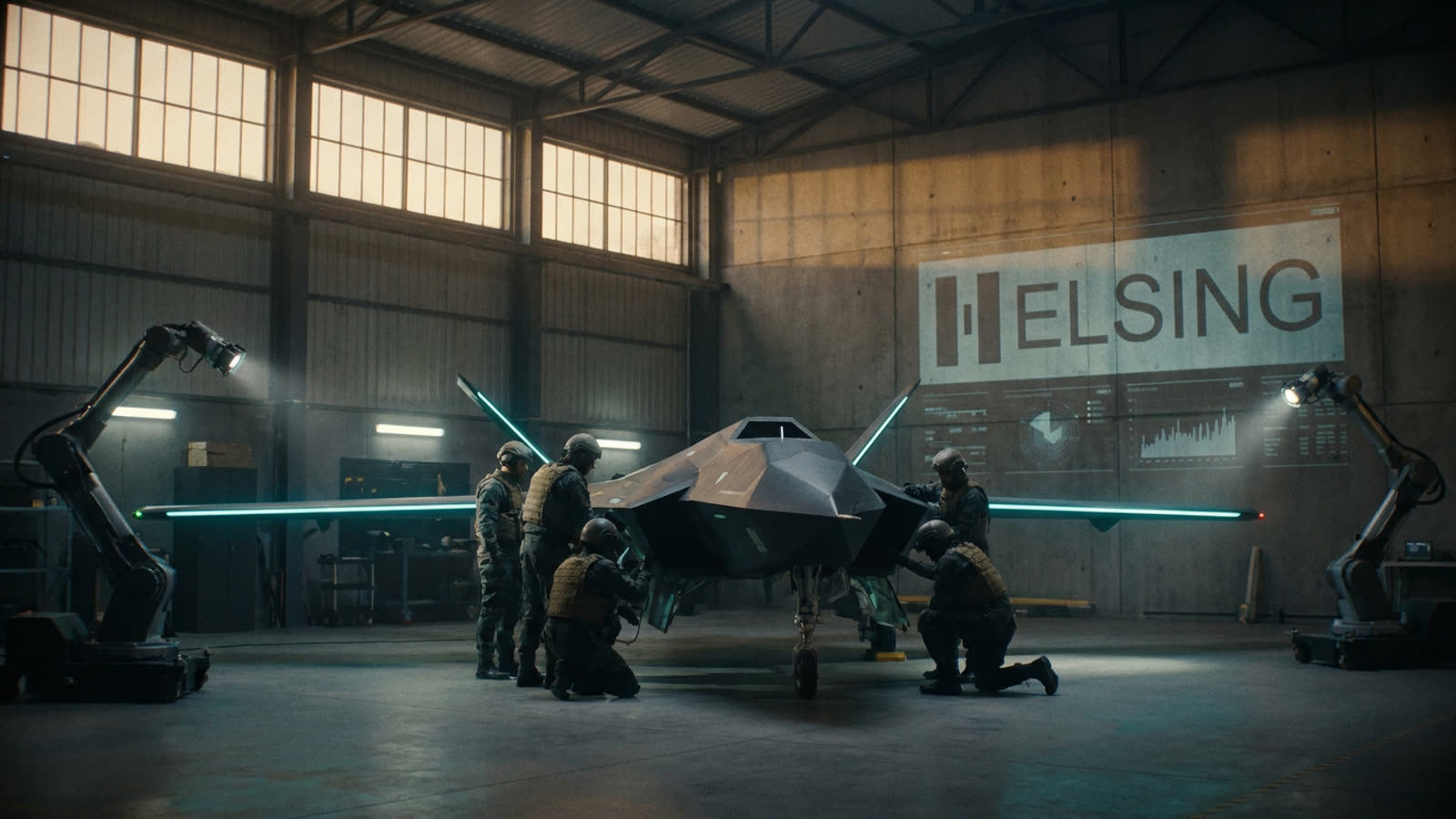
Three years ago, European venture capital had an unofficial rule: defense was dirty money. Pension funds wouldn't touch it, ESG mandates forbade it, and founders who wanted to build weapons went to Washington. That consensus is now rubble. Helsing, a Munich-based drone and AI-defense company backed by Spotify founder Daniel Ek, is raising $1.2 billion at a valuation of $18 billion—a figure that would make it one of Europe's most valuable private technology companies, period.
The round is remarkable not just for its size but for its speed. Helsing was founded in 2021 and has kept a low profile, revealing little about its actual products beyond vague references to autonomous systems and battlefield AI. Yet investors are piling in as if the company were already printing revenue. The logic is straightforward: Europe's defense budgets are surging, NATO members are scrambling to rearm, and the continent has almost no homegrown champions in the autonomous-weapons space. Helsing is positioning itself as the answer to a question governments are desperate to solve.
Why now
The timing is not accidental. Germany has committed to a €100 billion special fund for its military, and Poland is now spending more on defense as a share of GDP than the United States. Ukraine's battlefield has demonstrated that cheap, AI-guided drones can neutralize tanks and artillery worth orders of magnitude more. Traditional defense contractors—Rheinmetall, BAE Systems, Leonardo—are tooled for slow procurement cycles and legacy platforms. Helsing is betting it can move faster, iterating software the way a Silicon Valley startup would.
Daniel Ek's involvement adds celebrity credibility and, crucially, signals that tech-world money no longer considers defense taboo. Ek has been vocal about Europe's need to take security seriously, and his backing gives institutional investors cover to follow.
The valuation question
Eighteen billion dollars is a staggering number for a company with limited public revenue and no proven battlefield track record. For context, Palantir—a far more established defense-tech player—traded at roughly $50 billion after two decades of government contracts. Helsing's valuation implies investors expect it to capture a significant slice of European defense modernization, a bet that requires both technological success and navigating the Byzantine procurement processes of multiple governments.
Skeptics note that defense contracting is not software-as-a-service: margins are thinner, sales cycles are longer, and political winds shift. A change in government in Berlin or a peace settlement in Ukraine could cool the market overnight. But backers argue that the structural shift is irreversible—that Europe has finally internalized the lesson that security cannot be outsourced to Washington.
Our take
Helsing's round is less about one company than about a continental mood swing. European capital is no longer embarrassed by defense; it is enthusiastic. Whether that enthusiasm survives contact with actual procurement bureaucracies remains to be seen, but the signal is clear: the old taboo is dead, and the money is moving.