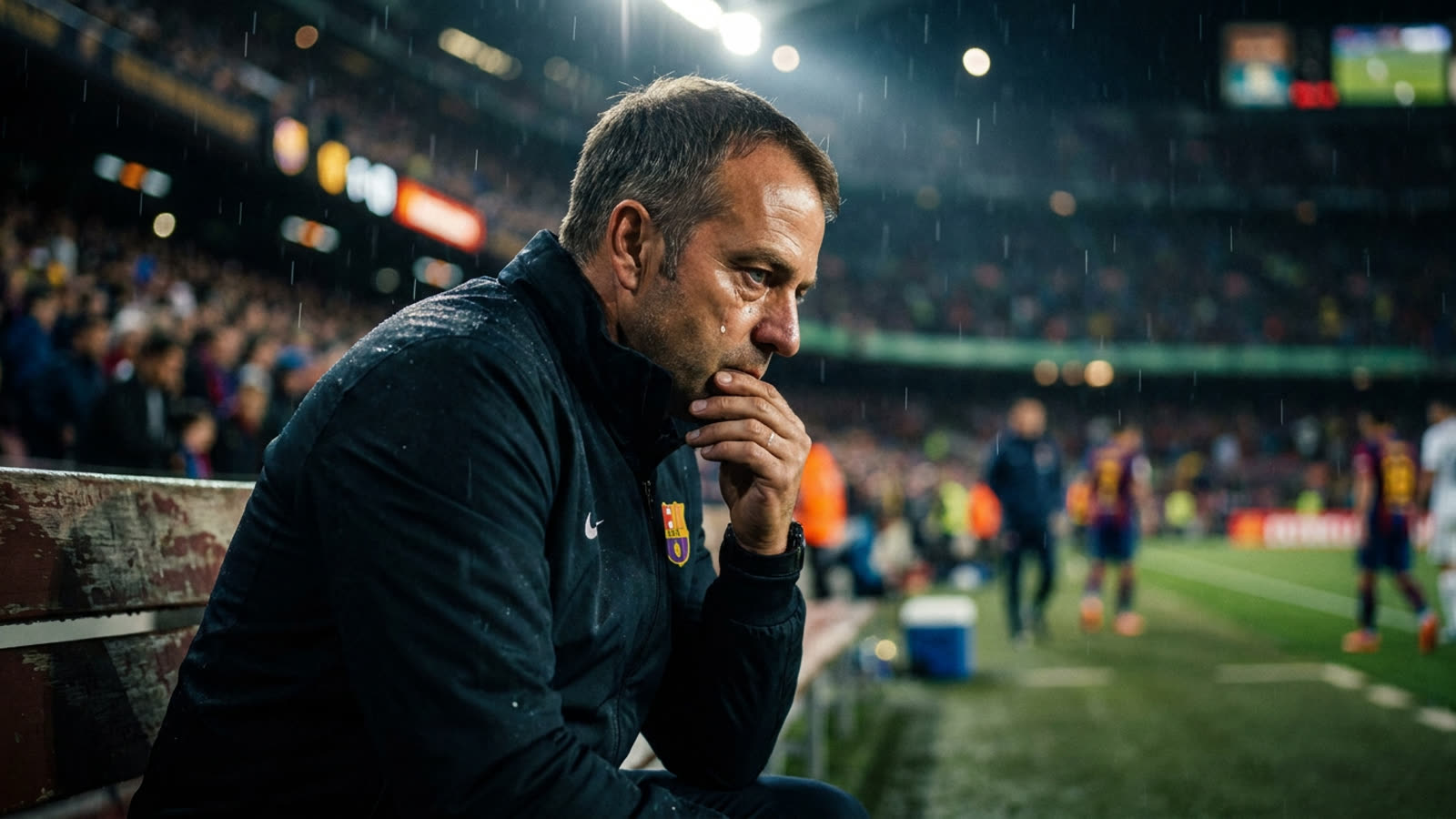
When Barcelona take the pitch against Real Madrid on Sunday evening, their manager will be standing on the touchline in the immediate aftermath of losing his father. Hansi Flick has chosen—or felt compelled—to lead his side in the most consequential match of their season rather than step away to grieve. The club has framed this as his decision. The football world will frame it as admirable. Neither framing interrogates why we've built a sport where this choice feels necessary at all.
The stakes are genuinely significant: Barcelona can clinch their second consecutive La Liga title with a victory, and they'll do so against their fiercest rivals, without Kylian Mbappé on the opposing side. From a purely tactical standpoint, the timing couldn't be better. From a human standpoint, the timing is grotesque.
The myth of irreplaceability
Football management operates on the assumption that the head coach's physical presence is non-negotiable. Assistant managers exist. Tactical plans are set days in advance. The players know their roles. Yet the industry perpetuates the notion that a manager stepping away for a family death would somehow constitute abandonment—a dereliction that no amount of grief could excuse.
This is, of course, nonsense dressed up as professionalism. Managers miss matches for illness, suspension, and occasionally even vacation during international breaks. The machine continues. But bereavement occupies a different category in football's unwritten code: it's the ultimate test of commitment, and the only acceptable answer is to show up.
What we're really celebrating
When pundits inevitably praise Flick's "dedication" and "mental strength" in the coming days, they'll be reinforcing a toxic bargain. The message to every coach, player, and staff member in professional football is unambiguous: your grief is your problem, and the schedule waits for no one. The German's presence on the touchline won't be a testament to his character; it will be an indictment of a culture that made staying feel like the only viable option.
Barcelona, to their credit, reportedly offered Flick the choice. But choices made under institutional pressure aren't truly free. The 60-year-old knows that stepping away would invite questions, however subtle, about his commitment at the precise moment his team is poised for glory. The calculation is obvious, even if it shouldn't have to be made.
Our take
Hansi Flick deserves the space to mourn his father without a camera capturing his every reaction to a misplaced pass. That he won't get it—that he's apparently chosen not to take it—says less about him than about football's fundamental inability to treat its people as human beings first and employees second. If Barcelona win the title tonight, the headlines will celebrate the triumph. They should mourn what it cost.