The four largest Western European economies have announced they will lift sanctions on Iran in coordination with the emerging American deal, and the speed of their capitulation tells you everything about where power actually resides in the transatlantic relationship.
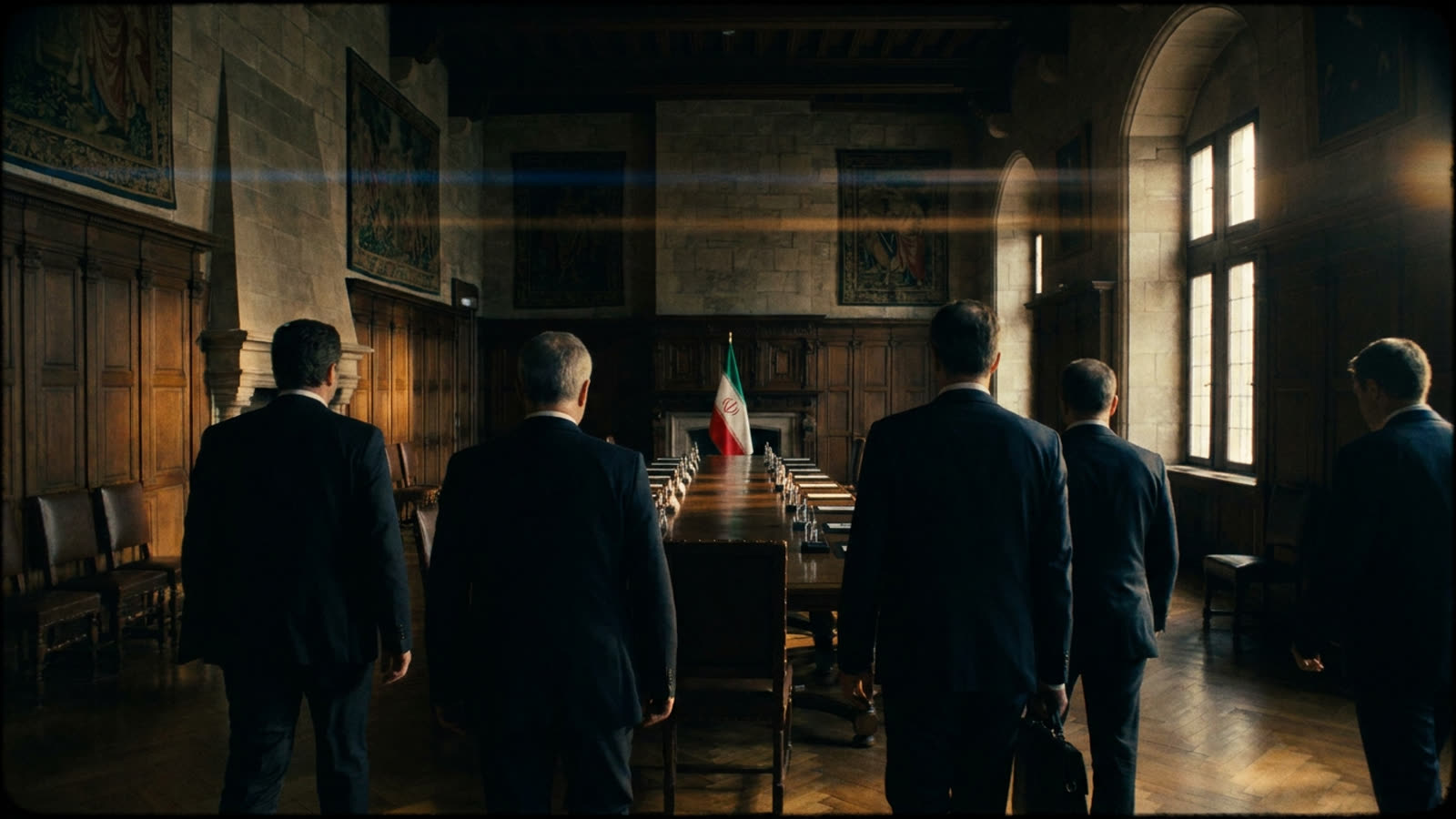
Britain, France, Germany, and Italy issued a joint statement confirming their readiness to remove economic restrictions on Tehran once the US-Iran framework is formalized. The move comes barely a week after the Trump administration signaled it had reached preliminary terms with Iranian negotiators—terms that European capitals had no meaningful role in shaping.
The illusion of independent policy
For years, European leaders insisted they could maintain an autonomous Iran policy. After the US withdrew from the 2015 nuclear agreement during Trump's first term, Brussels created INSTEX, a special-purpose vehicle meant to facilitate trade with Tehran outside the dollar system. It processed almost nothing. European banks, terrified of American secondary sanctions, refused to touch Iranian transactions regardless of what their governments promised.
The lesson was clear then, and it is clearer now: European economic sovereignty exists only to the extent Washington permits it. When the US decides to sanction a country, Europe follows. When the US decides to make peace, Europe follows faster.
What the deal actually means
The framework reportedly includes an oil sanctions waiver allowing Iranian crude back onto global markets, nuclear enrichment caps that fall short of the original JCPOA limits, and security guarantees that remain deliberately vague. European governments will provide diplomatic cover and economic normalization, receiving in return the privilege of doing business with a market of ninety million people they could have accessed years ago had they possessed the institutional courage to defy Washington.
The timing is not coincidental. With the World Cup underway and global attention focused elsewhere, the announcement lands softly. European leaders can present coordination as multilateral success rather than subordination.
The regional calculation
For Tehran, European buy-in matters less for economic reasons—China and Russia have been willing partners throughout the sanctions era—than for legitimacy. A deal blessed by the E3 plus Italy looks like international consensus rather than bilateral capitulation to American pressure. Iranian negotiators can tell domestic hardliners they extracted concessions from the entire Western bloc.
For Gulf states and Israel, the European announcement confirms their irrelevance to the process. Whatever security concerns they raised in European capitals were evidently insufficient to slow the rush toward normalization.
Our take
There is nothing inherently wrong with lifting sanctions on Iran if the strategic logic supports it. What is remarkable is the pretense that this represents European decision-making at all. Four major democracies, with combined economies exceeding America's, have once again demonstrated that their foreign policy independence is purely notional. They will sanction whom Washington sanctions and forgive whom Washington forgives, on Washington's timeline, according to Washington's terms. The honest framing would acknowledge this reality rather than dress it up as coordination among equals.