The Premier League title race may have been settled not by a goal, but by the absence of one.
At the London Stadium on Sunday, Arsenal were clinging to a 1-0 lead courtesy of Leandro Trossard's 83rd-minute strike when West Ham appeared to have snatched the most dramatic of equalisers deep into stoppage time. The stadium erupted. Arsenal players sank to the turf. And then, as has become ritual in modern football, everyone turned to wait for the screen.
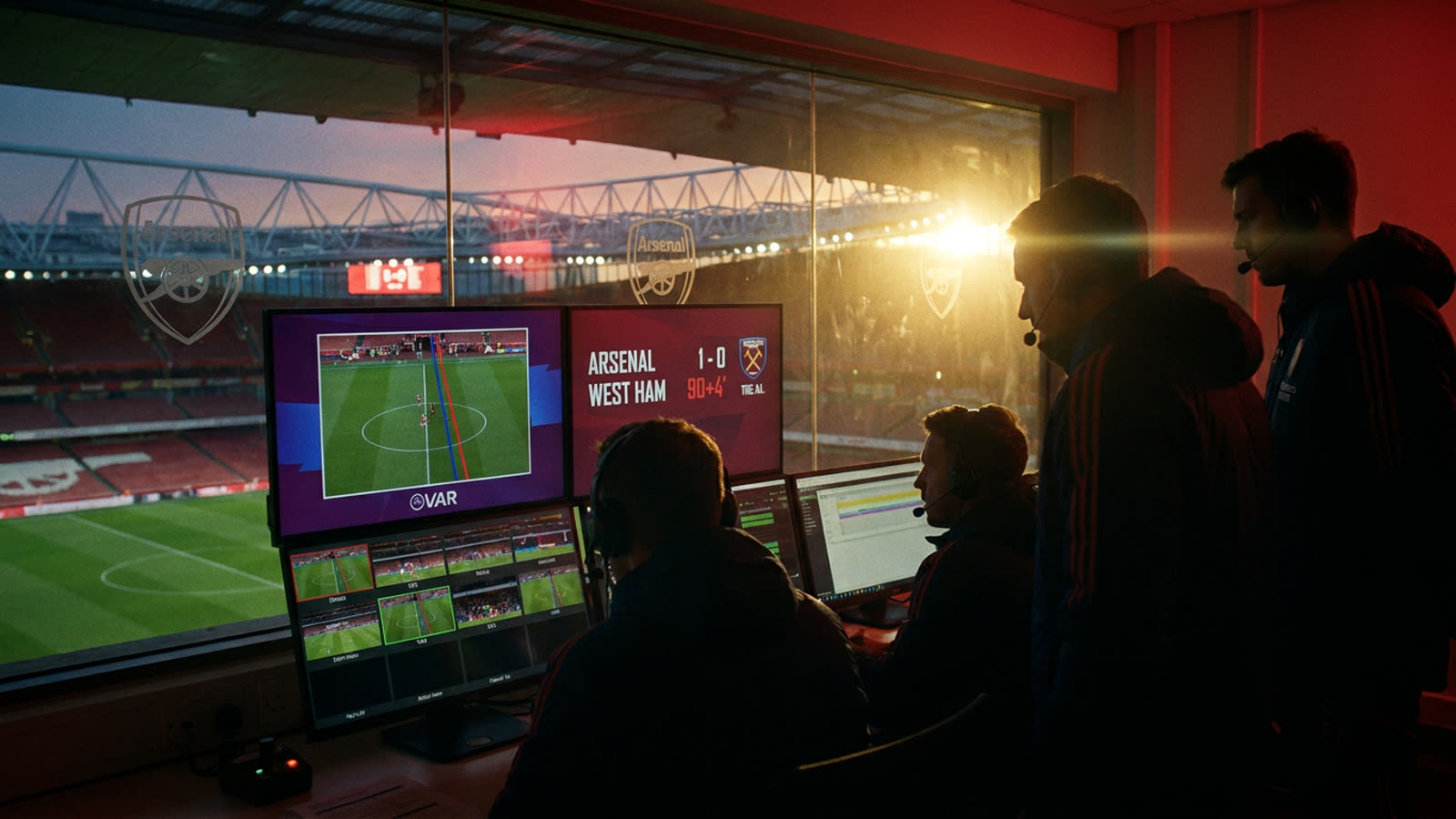
Four minutes and eleven seconds later, VAR ruled the goal out. Arsenal's 22-year title drought moved closer to its end. Mikel Arteta called the decision "brave." West Ham called it something else entirely.
The call that changes everything
The specifics of the disallowed goal will be dissected endlessly in the coming days, but the broader implications are already clear. Arsenal now need only navigate their remaining fixtures without catastrophe to secure a championship that has eluded them since the Invincibles of 2003-04. That's a generation of supporters who have never seen their club lift the Premier League trophy.
Arteta's post-match comments were telling. Rather than celebrating the result, he praised the officials for their courage—an implicit acknowledgment that the decision could easily have gone the other way, and that everyone in the stadium knew it. Football matches are not supposed to hinge on the interpretation of freeze-frames, but this one did.
The VAR paradox deepens
This is precisely the scenario VAR was designed to prevent: controversial decisions determining titles. Instead, it has merely shifted the controversy from the pitch to the review room. The technology promised objectivity but delivered a different kind of subjectivity—one mediated through camera angles, frame rates, and the judgment calls of officials watching screens rather than play.
West Ham will feel aggrieved. Their fans certainly do. But the Premier League's position will be that the system worked as intended, that the correct call was made according to the laws of the game. Whether "correct" and "just" are synonyms in this context is a question football has been wrestling with since VAR's introduction, and one it shows no signs of resolving.
What comes next for Arsenal
The mathematics now favour Arteta's side heavily. Liverpool and Manchester City, the only realistic challengers, would need Arsenal to collapse in spectacular fashion while they themselves run the table. It's not impossible, but it requires the kind of capitulation that this Arsenal side has shown no tendency toward. They are, if nothing else, remarkably difficult to beat.
The coronation is not yet official, but the champagne is on ice. North London is preparing for a celebration two decades in the making.
Our take
There is something deeply unsatisfying about a title race that may be decided by a VAR review rather than a moment of brilliance or a catastrophic error. Arsenal have been the best team in England this season—that much is not in dispute. But the manner in which they may clinch it, through a disallowed goal in the 94th minute of a match they were losing control of, feels like a verdict delivered by committee rather than earned on the pitch. Football's embrace of technological officiating was supposed to eliminate injustice. Instead, it has simply made injustice more precise, more reviewable, and somehow more contentious. Arsenal will take the title gladly, and they will deserve it. But this is not how anyone wanted the story to end.