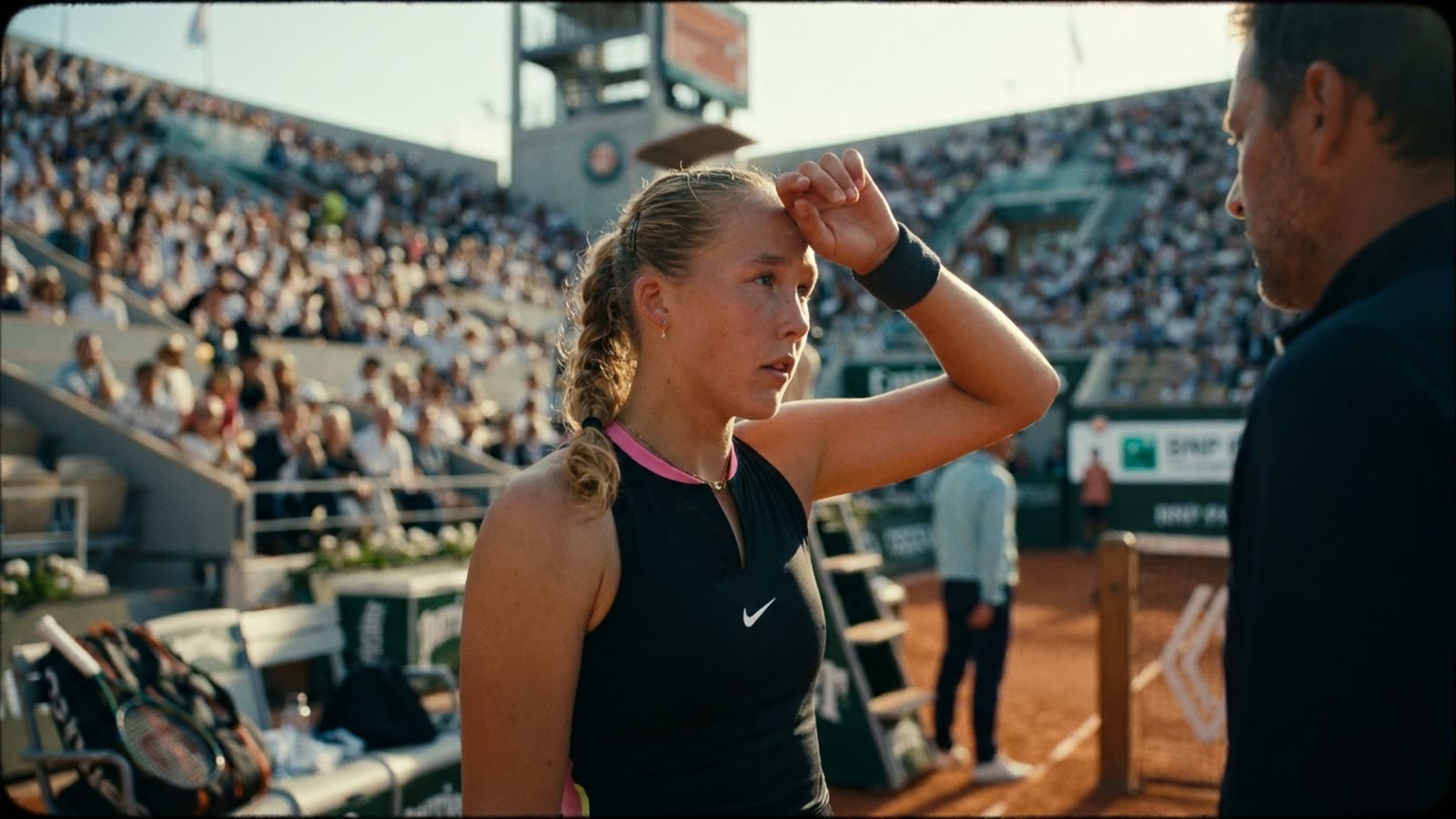
A seventeen-year-old who was playing junior tournaments two years ago will contest the French Open final this weekend, and the tennis establishment is scrambling to recalibrate its projections.
Mirra Andreeva's surge through the Roland Garros draw is not merely a feel-good underdog story—it is the arrival of a player whose technical completeness and competitive composure have been evident since she first appeared on the WTA tour. What separates Andreeva from the parade of promising teenagers who flame out after one good fortnight is the breadth of her game: a two-handed backhand with genuine pace, a serve that has improved markedly in the past twelve months, and the kind of court sense that cannot be coached.
The Russian pipeline keeps producing
Despite the geopolitical isolation that has complicated Russian athletes' participation in international sport since 2022, the country's tennis infrastructure continues to generate elite talent at a remarkable rate. Andreeva joins a lineage that includes Maria Sharapova, Svetlana Kuznetsova, and more recently Daria Kasatkina and Mirra's own contemporary, Diana Shnaider. The common thread is rigorous early training, often beginning before age five, combined with a willingness to relocate families across continents in pursuit of competitive development.
Andreeva has been based in France for much of her junior career, a practical decision that allowed access to European clay-court tournaments and insulated her from some of the bureaucratic complications facing athletes who train primarily in Russia. Her French Open run carries a certain narrative symmetry.
What the final means for the tour
The WTA has spent years searching for a post-Serena protagonist who can command mainstream attention. Iga Świątek has won multiple majors but struggles to break through to casual sports fans in the way Williams once did. Coco Gauff has the charisma and the American market but has yet to dominate consistently at the highest level. Andreeva offers something different: a player young enough to define the next decade, with a game suited to all surfaces and a demeanor that suggests she is unbothered by the magnitude of the moment.
Her opponent in the final will be a significant test. Whether she wins or loses, the tournament has already established her as a top-ten player in waiting. Sponsors and broadcasters are paying attention.
Our take
Tennis loves a coronation, and Andreeva's Paris fortnight has all the ingredients: youth, talent, a compelling backstory, and the kind of on-court poise that makes observers reach for comparisons to all-time greats. The comparison is premature but not absurd. At seventeen, she is already more complete than most players ranked in the top twenty. The question is no longer whether she will win a major, but how many.